Overview
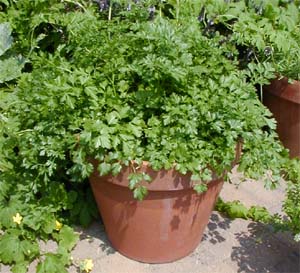
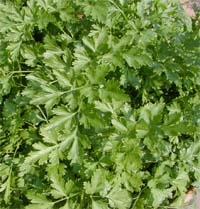
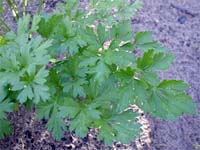
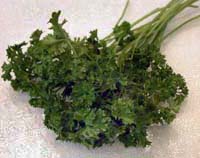
Parsley, Petroselinum crispum, is a hardy biennial in the carrot family (Apiaceae or Umbelliferae) generally grown for its flavorful, dark green leaves that are a rich source of vitamin C, vitamin A and iron. The varieties neapolitanum (plain, flat, or Italian parsley) and crispum (common or curly-leaved parsley) are grown for their leaves, while the lesser-known var. tuberosum (Hamburg or turnip-rooted parsley) is grown for both its leaves and its enlarged, edible root. The rosette of leafy stems grows 12 to 18 inches tall in the first year. The plants produce greenish-yellow flowers in compound umbels followed by small, ridged seeds in their second year. All plant parts have the same characteristic aroma, although it is strongest in the roots. Curly leaf types have much less essential oil than broad-leaved types, so the flat-leaf types have a more pungent, sweet flavor.
This plant is probably originated in the eastern Mediterranean but became popular throughout Europe in the Middle Ages, when it was commonly grown in monasteries and royal gardens. The ancient Greeks associated parsley with Achromous, the Herald of Death, and covered their tombs with wreaths of this herb.
Propagating Parsley
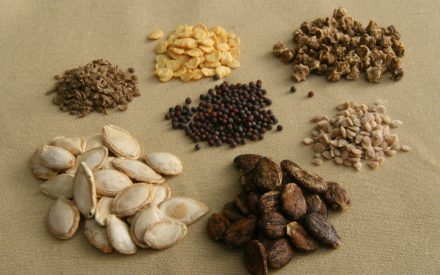
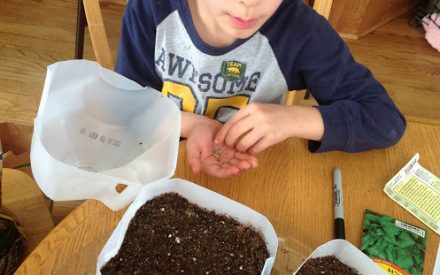
Parsley can be grown from seed or purchased as transplants in the spring. Start seeds indoors 8 to 10 weeks before last spring frost. Like other members of the parsley family, seeds typically have an erratic and low germination rate even under optimum conditions.
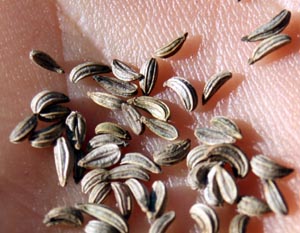
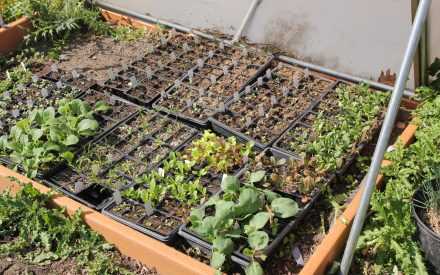
Soaking the seeds overnight helps to enhance germination. Parsley is not easily moved, so try to disturb the taproot as little as possible when transplanting. Place the plants 6 to 12 inches apart in relatively fertile soil (more so than for other herbs which typically are best grown in unfertile soils). Alternatively, seeds can be sown directly outdoors in spring once the soil has warmed. Keep the seeds evenly moist; they make take several weeks to germinate, especially in cool, wet soils.
For continuous harvest throughout the growing season, make a few sequential plantings through mid-summer. A fall sowing may sometimes be successfully overwintered for harvest in early spring, although the leaf flavor is not as good in the second season. Flat-leaved types may overwinter better than curly leaf types.
Parsley can also be grown indoors year round or over the winter for a supply of fresh leaves. Keep the plant in bright light, water well, and fertilize regularly.
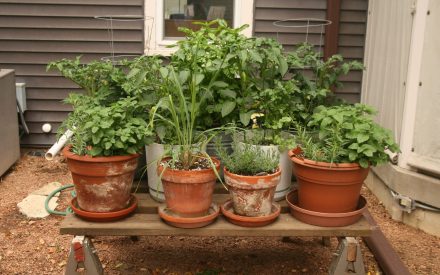
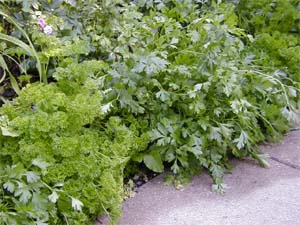
Parsley doesn’t have to be restricted to the vegetable garden. Types with frilly leaves are especially nice foils to broad-leaved plants – either of other vegetables or mixed with flowering plants. Try mixing curly leaf parsley in an ornamental planting of purple-leaved basil, colorful Swiss chard and short marigolds or other annual flowers. Or edge a bed of flowers with the low, fine-leaved parsley plants. Even in the second year when the plants go to seed, the flower stalks can add architectural interest to the garden.
There are a number of insect pests of parsley but few are serious in the home garden. Aphids are the most common and often are controlled by naturally occurring predators or parasites. Hosing off the plants can keep aphid populations at tolerable levels or labelled insecticides can be used. Always read, understand, and follow label directions when using pesticides.
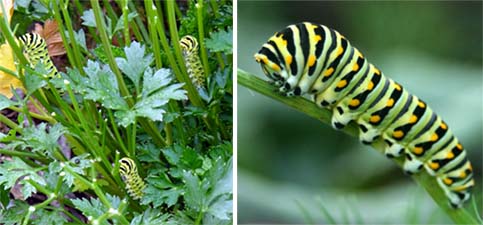
Parsley is a larval host plant for black swallowtail butterfly (Papilio polyxenes) caterpillars. These caterpillars are seldom numerous enough to cause significant damage and can easily be controlled by by hand picking or moving them to other carrot family host plants, like Queen Anne’s lace or fennel. Septoria leaf spot, caused by the fungus Septoria apiicola, is the most common disease of parsley. Because it can be seed borne, it is important to purchase quality seed.
Culinary Use of Parsley
Leaves can be harvested at any time during the season as soon as sufficient growth has been made. Pinch off sprigs as needed, or cut the entire plant if larger quantities are needed or at the end of the season. Leaves are most often used fresh but both the leaves and roots retain their flavor when dried. Dig turnip-rooted varieties in late fall.
There are many culinary uses for parsley beyond just a garnish. The leaves can be used for flavor in soups, vegetables, salads, meats, fish, condiments and other dishes. Parsley is one of the main components of tabbouleh, often regarded as the national dish of Lebanon. The leaves are rich in vitamins A and C and a good source of iron.
Author: Susan Mahr, University of Wisconsin—Madison
Reviewers: Allen R. Pyle, Horticulture Outreach Specialist, Bruce Spangenberg, Horticulture Outreach Specialist, UW—Madison Extension
Revised: August 2026