

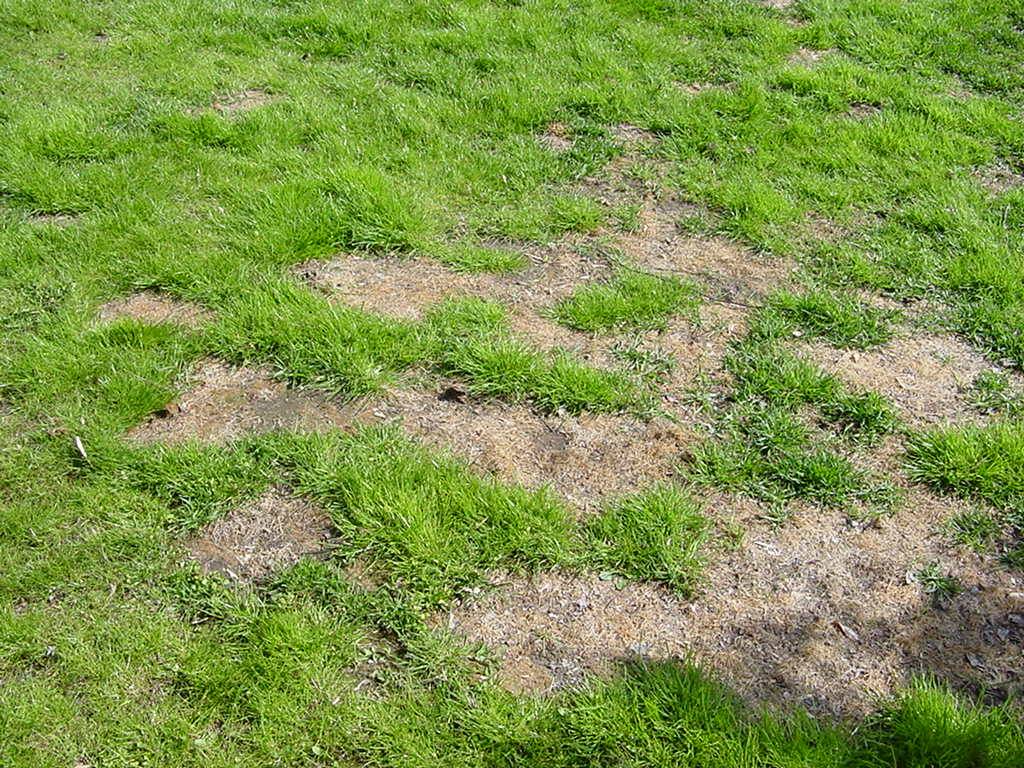
Early fall is just around the corner, and prime time for many lawn care practices comes with it. Two practices that pay big dividends for many Wisconsin lawns are overseeding and core aerating. Each needs to be done correctly for optimum results, and both have limitations on what they do.
Overseeding, as the name implies, is adding seed over an existing lawn with the purpose of filling in thin areas. Two crucial factors influence this practice. First, it is important to assess why the lawn thinned; if certain chronic underlying conditions exist, overseeding alone will not solve them. Underlying conditions requiring additional correction steps prior to overseeding include soil issues such as compaction, heavy clay, poor drainage, and poor soil preparation prior to establishment. Core aerating (discussed below) may help address these soil problems, but more serious issues may require complete renovation.
Other potential reasons for thin lawn areas include excess shade, improper grass for the site, general neglect, and damage from weather, disease, or pests. Assuming soil conditions are acceptable, overseeding with the correct grass for site conditions is a key step in these scenarios, combined with following sound lawn maintenance practices afterwards.
Making sure seed directly contacts soil is the second crucial factor when overseeding. This can be accomplished by removing surface debris, either by hand or with machines such as dethatchers or power rakes, then smoothing over the soil surface. Topdressing with a thin layer of quality topsoil can also be done. Slit-seeding is another method highly recommended for overseeding. Slit-seeders will cut through surface debris and place seed in contact with the soil. If soil conditions are good, slit-seeders work extremely well. Regardless of the overseeding method, choose high-quality blends of grass seed adapted to the site; with full-sun versus shade being the most important parameter in the decision.
Core aerating is an excellent lawn care practice for many Wisconsin lawns. Core aerating helps correct soil issues under existing lawns, including compaction and poor surface drainage, and is a key component in managing thatch. Core aerators that pull up small soil cores and drop them on the lawn surface are suggested. Fall is an excellent time for aerating, with the key factor for success being adequate soil moisture.
For thin lawns with existing soil problems that can be managed via core aerating, aerate first, followed by topdressing, then overseed. Thus slit-seeding would be done after aerating. Lawn machines can be rented or consider hiring lawn and landscape services. Overseeding should be completed by early September to ensure adequate time for new grass plants to get established before hard freezes set in.

About the Author
Bruce Spangenberg is a Horticulture Outreach Specialist with UW-Madison Division of Extension. Get answers to your lawn, landscape and garden questions anytime at “Ask Your Gardening Question.”