Landscape Planning
Too often, homeowners plant before they plan. Careful planning will help you avoid wasting time and money. Planning also prevents errors in your landscape design, such as improper plant selection or placement. Since the initial date of this publication, many landscape design computer programs have been developed. Whether you design on the computer or on paper, the concepts illustrated in this article will help you achieve a successful plan.
This section takes you through the required planning steps. You will find these items helpful:
- Large white paper or 1/10- or 1/8-inch graph paper (graph paper is easier to use)
- Solid table or board to draw on
- Tape to hold paper in place
- Ruler or scale marked in eighths or tenths of an inch
- #2 pencil
- Eraser
- Lightweight, see-through tracing paper
- T-square, triangle, circle template, and compass
Step 1: Draw a Base Map
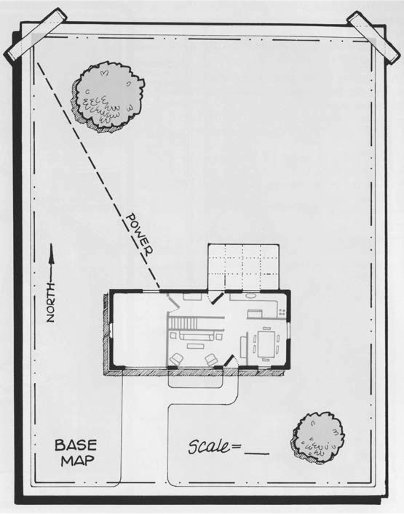
If you own a new home, you probably have a lot or plot plan that shows your home in relation to the property boundaries. If you do not have such a plan to work from, you’ll need a tape measure to accurately determine where the house is located on the lot. In addition, determine:
- Outside house dimensions
- Overhang dimensions
- Window and door locations
- Height from ground to bottom of windows
- Locations of water faucets, dryer vent, air conditioner, window wells, downspouts, electric and gas meters, and fuel fill spout
- Any other important exterior house features
Draw your lot lines on the paper. If you live on a large parcel of land, limit your base map to the area you plan to landscape. It’s usually most convenient to draw at a scale of 1/8 or 1/10 inch per foot—1/8 inch or 1/10 inch on the paper equals one foot on the ground. In one corner of the paper, indicate which direction is north and the scale of your drawing.
Next, draw the location of your house, using the same scale. Indicate windows, doors, overhang, and other exterior features. You’ll need this information later to develop a successful planting design. Also sketch in interior room arrangements; this part of the drawing will help you consider views from inside the house and patterns of movement between the yard and the house.
Still using the same scale, draw in existing lot or yard features that you are not willing to change, including:
- Garage, if unattached
- Other buildings in the area to be landscaped (such as a storage shed or outbuildings)
- Driveways and sidewalks
- Underground and overhead utility lines (e.g., electric, telephone, water, and gas)
- Septic tank (or drywell), drain field and vent, or sanitary sewer lines
- Trees, shrubs, and other plants to be preserved (don’t bother noting those you plan to remove)
- Neighboring trees that have part of their canopy on your property
Tip with drawing: Utilize the most space in your landscape beds by alternating the plants instead of putting them in rows.
Step 2: Analyze Your Site
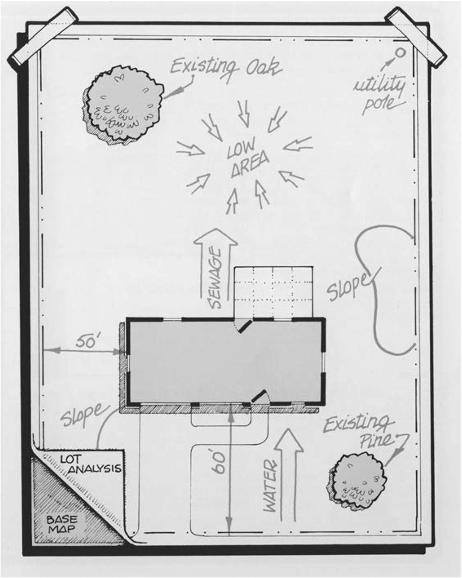
To develop the best design, you need a physical and visual analysis of your property that takes into account both natural and manmade features.
Inventory the following categories of natural features on your lot:
Vegetation. Your home site may already have trees, shrubs, or other plants. Before deciding to include them in your landscape design, you must know what kind of plants they are; some may be considered weeds, while others may be valuable. Consider also the general appearance or quality of the plants, if they interfere with the rest of your landscape design, and the shade and sun patterns they create.
Topography refers to the shape of the land’s surface. Some lots are flat, while others have a variety of ground forms. It’s important to decide whether the existing topography can be preserved or whether it must be modified to meet your outdoor needs.
The drainage patterns on your site may greatly influence your home landscape design. Note the direction of runoff and low spots where water may collect. Monitor drainage carefully to make sure that outdoor use areas will be suitably located, that water will move away from buildings, and that plants are matched to soil moisture conditions.
Your property’s soil is important because it must support both plants and manmade structures. Soil tests, available through your county UW-Extension office, will tell you if your soil has the proper chemical makeup for good plant growth. Information available from your county Soil Conservation Service can determine if the physical properties of your soil are suitable for landscape structures.
Climate will influence your landscaping plans in several ways. Winter temperatures determine which plants are hardy enough to grow in your area. Spring and fall frost dates determine growing season length. Wisconsin receives on average about 30 inches of precipitation per year; try to choose plants that will grow in these conditions and don’t require regular supplemental watering. Humidity is also something to be aware of since it affects the spread and severity of plant diseases. Having your plants spaced adequately will allow air circulation between plants and potentially decrease instances of disease. In Wisconsin, prevailing winter winds are from the northwest, and most summer breezes come from the southwest. You will want to provide winter wind protection and to take advantage of the summer breezes. The National Oceanic and Atmospheric Administration’s National Weather Service, county Soil Conservation Service, and local Extension offices can provide climate information for your specific location.
During your analysis, take into account manmade structures and natural landforms within view of your house and property. You may want to block things like highways, power lines, industrial centers, and junkyards, while keeping or enhancing good views. You may also want to filter noises from cars, trains, and other sources.
In Wisconsin, we spend a lot of time in our homes, especially in winter. Therefore, you should consider the outside views from your home’s interior and the views other people have into your home from the outside. Your inside-out analysis may shift how you see your landscape, and you may see views that you want to privatize or screen.
Here are a few things to consider:
- Are there views of neighboring homes, such as windows or decks, that I want to screen?
- Can I see into my bathroom and/or bedroom windows from the public areas of my yard?
- Could neighbors see into bathroom and/or bedroom windows from their points of view?
It may help to take pictures of your property. Often we see only what the mind wants to see, rather than what really exists. Photographs help you see the site as a visitor would. They also serve as reminders of what the house and site look like while you are working on your design.
Photos should include views of the house from all sides. Photos of off-lot views, from both inside and outside the house, will help you identify those you want to keep or enhance and those that should be screened for beauty or privacy.
Record important features by sketching them on tracing paper placed over your base map. On the tracing paper, indicate with arrows or other symbols:
- Major differences in land surface elevation, including hills, depressions, and rock outcroppings
- Topography and drainage patterns
- Prevailing summer and winter winds
- Good views to be kept or enhanced
- Poor views and annoying sounds to be screened
- Other features that seem significant
Step 3: Analyze How Your Property Relates to the Neighborhood
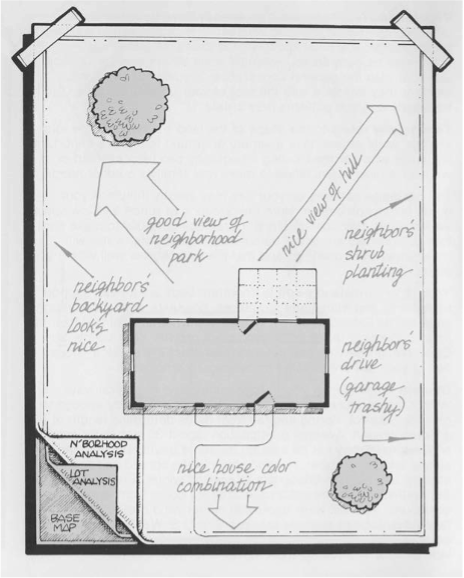
A survey of your neighborhood will suggest landscape possibilities and help you avoid a design that is out of place.
Don’t be limited by neighborhood examples, but if you do decide to use a very different kind of design, do it unobtrusively; for example, you may want to restrict its full impact to the backyard. You may also want to share your plans with neighbors to gain their understanding and to get their suggestions.
What building materials, colors, plants, and types of screening have others used? Which landscapes in the neighborhood do you like or dislike? Earth tone home colors, dark roofing materials, organic mulches, and uniformly green foliage usually create a visually pleasing neighborhood.
Some communities have zoning, building setback, and fencing and planting restrictions you should know about before making landscaping plans. Check with your town, village, or city clerk or zoning administrator. You should also check deed and subdivision restrictions for other possible landscaping constraints.
Step 4: Analyze Your Needs
Now is the time to stop and think about how you want to use the space you plan to landscape. Take time to determine your family’s likes and dislikes.
Here are some factors to consider:
- What are the ages of people using the landscape?
- Do users have specific hobbies or interests?
- Are pets involved? Is a kennel needed?
- Do you want to attract birds and other wildlife? If so, plan to use lots of trees and shrubs, including fruiting ones, in your landscape design.
- Are there plants you really like?
- Favorite colors?
- Sports area?
- Do you want a vegetable garden or a fruit garden?
- Is an outdoor living space needed? How will it be used (i.e., entertaining, eating, cooking, sunbathing)? A patio, deck, or grassy area would be appropriate for these and other uses.
- What mood do you want to create in the landscape?
- Do you want a water feature?
- Is a children’s play area needed?
(Helpful tip: For safety reasons, locate this where it can be seen from multiple views, including the room in your house in which you spend the most time, such as the kitchen.)
After you have completed your needs analysis, make a list of all your activities and space requirements, so that you are sure to provide them as you complete your landscape design.
If you plan any substantial landscape changes in the future (e.g., adding a swimming pool, tennis court, or greenhouse), reserve space now so you won’t have to move plants or structures later.
Step 5: Budget and Time
Landscaping can be a considerable investment and often can increase the overall value of your home. Take time to consider how much you can afford to spend on home landscaping. Once you’ve completed your plan, planting and construction can be spread over many years. To reduce costs, you can buy small plants and get do-it-yourself construction plans for patios, walks, decks, and other structures. Your budget may also include purchase or rental of tools, hardscape materials, or the cost to hire a professional for installation of all or a portion of the landscape. Even though your budget may limit your landscaping activities now, consider everything you eventually want to accomplish in your present landscape planning.
It is best to be honest with yourself regarding the amount of time you have to spend on creating and maintaining your landscape. Keep in mind that your landscape can be installed in small divided sections to fit your budget and your time. If you will be installing your own landscape, the time commitment will be much higher than if you hire a professional; however, it may be more budget friendly.
Step 6: Plan Outdoor Use Areas
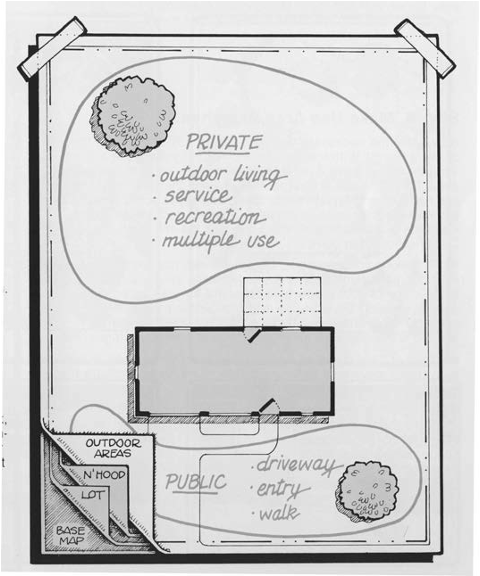
The location and design of outdoor use areas depends on family needs and preferences. The particular uses planned and amount of space available will determine use area size. Consider relationships between indoor and outdoor activities. You’ll want to keep areas near bedrooms quiet, while locating noisy outside areas near the kitchen or perhaps away from the house if space permits.
Two general areas should be part of any home landscape design—public and private areas. The public area usually includes the front yard, driveway, sidewalks, and entrance to the house. On a corner lot, the public area may also extend into the side or backyard areas.
The entrance and front yard are the most public parts of most peoples’ yards. You can design the entire front yard for public viewing or—because of small lot size or a need for privacy— enclose parts of it with plants, fencing, or both. Remember that your entrance and front yard contribute to overall neighborhood appearance. Trees, shrubs, flowers, lawns, fences, and other landscape structures should fit in with the neighborhood’s character.
Driveways and sidewalks link your home to neighborhood streets. Consider safety, topography, and lot character when locating them. Keep grades as gentle as possible and make as few road cuts as possible. Remember the need for snow removal and landscape maintenance. Keep in mind how you want visitors to move from your parking area to the main entrance.
The private area of your yard or lot consists of living, service, recreation, and multiple-use areas, depending on the needs you identified earlier.
An outdoor living area may include such features as terraces, decks, patios, screened porches, and grassed areas for outdoor cooking, entertaining, and just relaxing. Try to estimate the number of people who might use the area at one time, so you can design it accordingly.
Many homeowners like to have a service area for such things as gardens, wood storage, and garbage storage. Choose these areas carefully.
Vegetable gardens and many flowers need full sunlight, suitable soil, and should be accessible to a water source. Wood and garbage storage areas should be accessible, but out of view.
You may want outdoor recreation areas for lawn games, a swimming pool, a tennis court, a greenhouse, or other purposes. Lot size, family needs, and finances will determine how much space you can devote to outdoor recreation.
In many yards, space is limited. You may need to use the same area for several activities. Multiple-use areas may serve as living, recreation, and service areas at appropriate times.
Step 7: Make Use Area Sketches
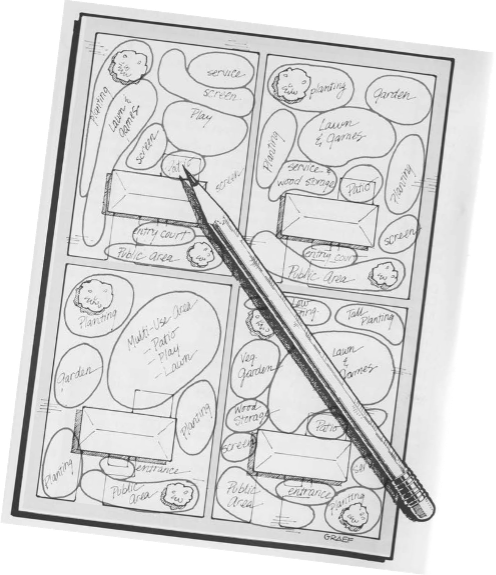
Now, after the necessary analyses (steps 1–4), it’s back to the drawing board! With tracing paper on top of your base and lot analysis maps, make a number of alternative general use sketches, fitting the use areas together in ways that take into account site features and family needs. Use circles, ovals, and rectangles to locate specific spaces within your public and private areas. Keep the sketches that seem to suit your lot and family needs. Discard those that do not.
While making your sketches, consider these questions: Does the existing vegetation that you wanted to keep still fit into your plans? Is the slope of your property appropriate for your proposed outdoor use areas? Do your use areas make the most effective use of sunlight? After answering these questions, you may want to discard some use area arrangements and consider alternatives.
Grassed or hard-surfaced travel routes must be planned to provide convenient movement between different use areas. Indicate these routes with arrows on your plans.
So far, you have been collecting and combining information about your home site and your needs. To give specific shape to the general use areas and to complete your landscape design, you will need some understanding of design and composition principles. The next two sections give an overview of these principles.
← Previous: Landscape Style Options
Next: Design Principles →
Authors: Dan Wilson, Professors Emeritus, University of Wisconsin-Extension, Thomas Wilson, Professors Emeritus, University of Wisconsin-Extension, and Wayne Tlusty, Professor Emeritus, University of Wisconsin-Madison. Illustrations by Renee Graef.
Reviewed by: Christine Wen, UW-Extension Walworth County Horticulture Educator
Last revised: 5/10/2010
Item number: G1923
References and Additional Resources
Plant Selection
- A Guide to Selecting Landscape Plants for Wisconsin (A2865)
- Choosing the Right Landscape Plants: Factors to Consider (A3864)
- Container Gardening (A3382)
- Landscape Plants That Attract Birds (G1609)
- Lawn Establishment and Renovation (A3434)
- Lilacs for Cold Climates (A3825)
- Prairie Primer (G2736)
- Selecting Woody Landscape Plants for Fall Color: An Illustrated Guide (A3837)
Plant Care
- Caring for Deciduous Shrubs (A1771)
- Caring for Your Established Shade Trees (A1817)
- Do-It-Yourself Alternative Lawn Care (A3964)
- Growing Grass in Shade (A3700)
- Lawn Weed Prevention and Control (A1990)
- Mulches for Home Gardens and Plantings (A3383)
- Organic and Reduced-Risk Lawn Care (A3958)
- Organic Soil Conditioners (A2305)
- Sampling Garden Soils and Turf Areas for Testing (A2166)
- Selecting, Planting, and Caring for Your Shade Trees (A3067)
- Tree and Shrub Fertilization (A2308)
- Watering Your Lawn (A3950)
Yard Care and the Environment series
- Lawn and Garden Fertilizers (GWQ002)
- Lawn and Garden Pesticides (GWQ011)
- Lawn Watering (GWQ012)
- Lawn Weed Control (GWQ013)
- Managing Leaves and Yard Trimmings (GWQ022)
- Rethinking Yard Care (GWQ009)
- Shoreline Plants and Landscaping (GWQ014)
Other Publications
- Landscaping for Wildlife, available from the Minnesota Department of Natural Resources.
- Livable Landscape Design (141IB-211), available from Cornell University.