Finding the Right Certified Arborist for You
If you are concerned about the health or safety of trees located on your property, you may consider reaching out to an arborist to help with management or removal. This article includes three sections:
When to Reach Out to a Certified Arborist
Scenarios when hiring an arborist may be worthwhile:
If the tree is large and requires a ladder or harness system to reach impacted branches.
If there are large, broken branches from storm damage.
If in need of assistance with tree pruning.
If the tree in question is near a structure or electrical lines.
If the tree is becoming a safety risk, e.g., leaning, branches overhanging buildings.
If tree roots are causing damage or upheaving pavement or property, e.g., sidewalk, driveway, retaining wall, foundation.
If there is significant tree decline potentially from disease, insect, or environmental damage.
How do I know if my tree is impacted by insects/diseases?
Disease and insect impacts can be hard to identify. If you notice anything out of the ordinary, take photos and identify if symptoms improve or worsen over time. Generally speaking, mature, well-established trees can handle ~30% defoliation before impacting the overall health of the tree. Common visual symptoms that trees may exhibit when impacted by diseases or insects include:
Tree Insect and Disease Symptoms
- Single branches that wilt and die
- Leaf bronzing or yellowing (necrosis)
- Orange, brown or black growths on leaves
- Tan or dull green coloring at the tips or outer margins of leaves
- Leaf drooping, curling, or falling from the tree
- Dark or orange-colored wounds or cankers on branches or trunks
- Oozing from wounds or cankers
- Canopy thinning starting in the upper portion of the tree
- Sprouting along the trunk
- Bark splitting
- Woodpecker damage
- Holes in leaves across much of the canopy
- Leaf skeletonization, leaves that resemble woven lace
- Large congregations of insects
Certified Arborist Services
If you have decided an arborist is necessary or if you’d like an assessment for a tree on your property, below is a list of services that certified arborists may provide. Certified arborists are trained in best practices related to tree health and are required to follow a code of ethics. The two most common types of arborist certifications are: the International Society of Arboriculture (ISA) and the American Society of Consulting Arborists (ASCA). Wisconsin also has a Wisconsin Arborist Association (WAA), that includes a list of certified arborists located in Wisconsin.
Certification is completely voluntary and requires arborists to pass a knowledge exam based on tree biology, diagnostics, maintenance practices and safety. To maintain certification, arborists must take continuing education to stay up to date on best practices.
Services that certified arborists may assist with include:
- Pruning: Certified arborists utilize pruning to enhance a tree’s form and structure, address insect or disease issues, remove dead or dying branches, and prevent branches from interfering with utilities, structures, streets, or sidewalks.
- Tree Removal: Assessing whether tree removal is necessary due to risk factors or if a tree is situated in an area that requires its removal they can carry out the removal if needed.
- Emergency Tree Care: After a storm, certified arborists can be called to assist in clearing properties affected by fallen limbs or trees. They evaluate the situation to determine which trees need pruning and which should be removed.
- Planting: Choosing the right tree for a specific site is crucial for the tree’s long-term health and longevity. A certified arborist can guide you in selecting trees that are best suited for the location.
- Insect and Disease Management: Fungicides and insecticides should only be applied if a serious outbreak occurs. This requires “scouting”—monitoring the tree for specific pests—with proper diagnosis that may require taking and submitting samples to a lab; rather than applying chemicals on a pre-planned schedule or preventative basis.
- Additional Services: Many certified arborists also offer other services, such as plant health care, fertilization, cabling/bracing, and soil aeration.
Considerations When Hiring a Certified Arborist
To find an arborist in your area, head over to treesaregood.org (ISA), asca-consultants.org (ASCA) or waa-isa.org (WAA), where you can enter your zip code, and a list of nearby certified arborists will be provided. If you have any questions regarding diagnostics or hiring an arborist, you may consider submitting your question to the Ask Your Gardening Question page of the UW-Madison Extension Horticulture website.
There are a few considerations and questions to keep in mind when searching for and selecting the right arborist for you:
Look for Customization: Avoid companies that only offer “predetermined” plans. A reputable arborist will address the specific needs of your tree and will not pressure you into unnecessary treatments.
Evaluate Total Value: You are paying for professional expertise and labor, not just the products applied. Rather than looking only at the price, evaluate the full scope of the contract: the quality of product(s) used, the number of visits, and the company’s procedures for troubleshooting and resolving issues.
Establish Clear Communication: Confirm in writing exactly what the service includes and which tasks remain your responsibility. Be aware that during peak seasons, arborists have full schedules and may not be able to respond immediately. Ensure you understand the policy for addressing unsatisfactory results.
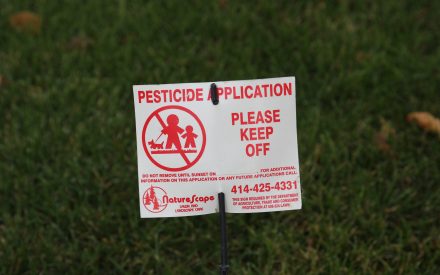
Check Credentials: Beyond customer reviews, ensure the company or arborist is properly licensed. In Wisconsin, any company applying pesticides (herbicides, insecticides, or fungicides) for hire must have a Pesticide Business Location License. Credentials can also be checked through the ISA, ASCA and/or WAA.
Verify Individual Licensing: Each employee who applies pesticides on your property must be certified and licensed annually as a Commercial Applicator.
Organic Services: Note that organic products registered as pesticides are subject to the same licensing and regulatory requirements as conventional synthetic pesticides.
Tree and Branch Removal: Determine if the arborist will dispose of the tree or removed limbs? If so, is there an additional cost? Get this information in writing or ask for it to be added to the contract.
Author: Josie Dillon, Statewide Fruit Outreach Specialist, UW-Madison Extension Horticulture Program
Reviewers: Julie Hill, Horticulture Educator for UW-Madison Extension Rock, Jefferson, and Walworth Counties; Margaret Murphy, Horticulture Educator for Chippewa County; Kimberly Miller, Wisconsin Extension Master Gardener Program Coordinator
Published: April 1, 2026
References and Resources
- Finding the Right Certified Arborist for You (UW-Madison Extension, Horticulture)
- UW Plant Disease Diagnostic Clinic (UW-Madison)
- UW Insect Diagnostic Lab (UW-Madison)
- Tree-Owner Resources (Trees Are Good)
- Deciduous Trees and Shrubs (UW-Madison Extension, Horticulture)
- Evergreen Trees and Shrubs (UW-Madison Extension, Horticulture)
- Tree Fruits (UW-Madison Extension, Horticulture)