Overview
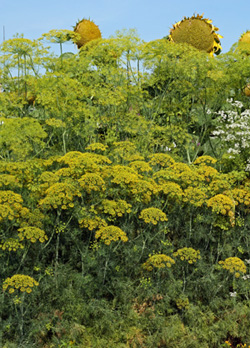
Anethum graveolens, an annual plant with aromatic foliage and seeds, is the sole species in that genus of the parsley family (Apiaceae or Umbelliferae). It is thought to have originated in Eastern Europe, southern Russia, central and southern Asia. It has naturalized in many other parts of the world, and can be seen as a roadside weed in July and August in many parts of the United States. Although we know it primarily as a culinary herb, it was used historically for medicinal and folk magical purposes.
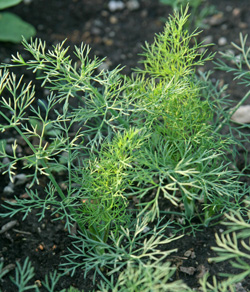
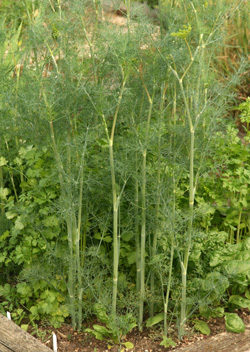
Dill plants grow 18 inches to 4 feet tall and resemble fennel. The soft, alternate, blue-green leaves are finely divided, giving a fern-like appearance. The leaves can be cut anytime after the plant is a few inches high until the seed stalk begins to form. Continually cutting the foliage back will help delay flowering. The plant has a tap root like a carrot.
When the weather gets hot or dry, one long flower stalk will be produced. The small yellow flowers are borne in open umbels, followed by light brown “seeds.” (Technically a type of dry fruit called a schizocarp that looks like a seed and is commonly referred to as seeds.)
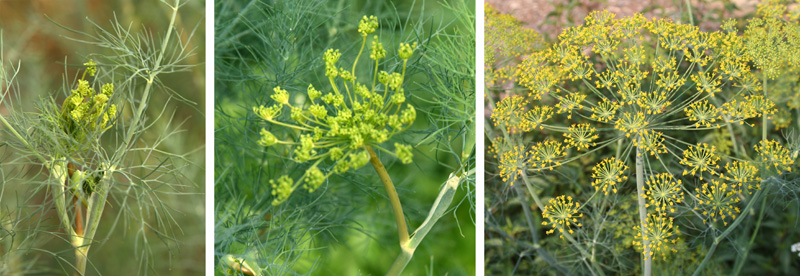
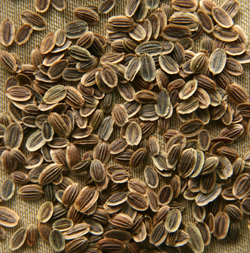
Deadhead spent flowers to prevent prolific self-seeding. The flat, winged, oval seeds are about ¼ inch long, with lengthwise ridges in the surface. The seeds will shatter when ripe, so if harvesting seeds, cut flower heads from the stalks when the seeds are fully developed, but before they have turned brown. The seed heads can be dried on screens or placed in paper bags and left in a warm, dry place for a week before separating the seeds from the stems. Store the seed in an airtight container in a cool location. Seed is viable for several years if kept dry and cool.
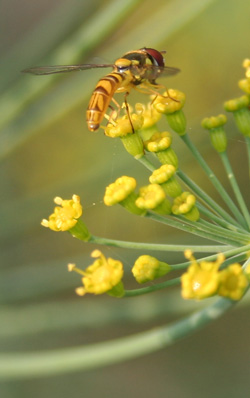
The flowers are attractive to small wasps, flies and other insects, including beneficial hover flies (family Syrphidae), the larvae of which eat aphids.
Growing Dill
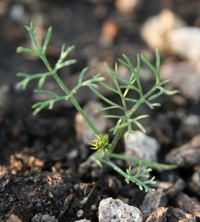
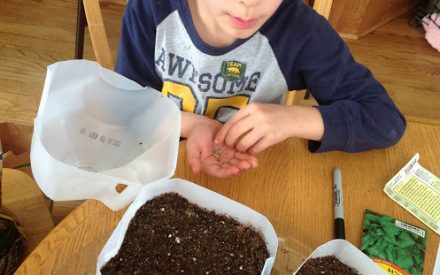
Dill is very easy to grow. As with most herbs, it does best in full sun. The plant prefers average to fertile, well-drained soil. Plant seeds in early spring, a week or two before the last hard frost, about 1/8 to 1/4 inch deep. Successive plantings can be made every 10 to 14 days while the weather is cool for a continuous harvest of leaves. Late summer plantings can be made for fall harvest, as dill is tolerant of light frost, and late fall plantings can also be made for germination the following spring. If the seed heads are not harvested, dill will readily self-seed, too.
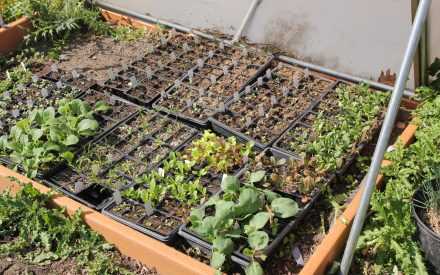
Transplants can also be used but because the plants grow very quickly this is not usually necessary to produce a good crop. Seeds will germinate in 10 to 14 days. Seedlings should be thinned to 3 to 6 inches apart when they are 3 to 4 weeks old.
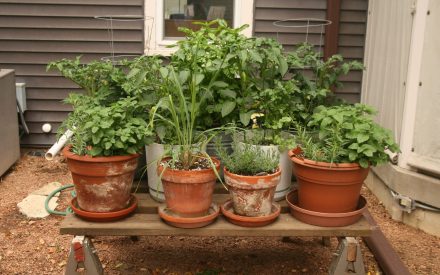
When grown in containers, use a deep pot to accommodate the long roots, and the plants may need to be staked, particularly if taller varieties are planted. Even in the garden, tall types can benefit from staking as the hollow stems can be easily damaged by wind, rain, and hail. Dill is not very competitive with other plants, so they should be kept well weeded.
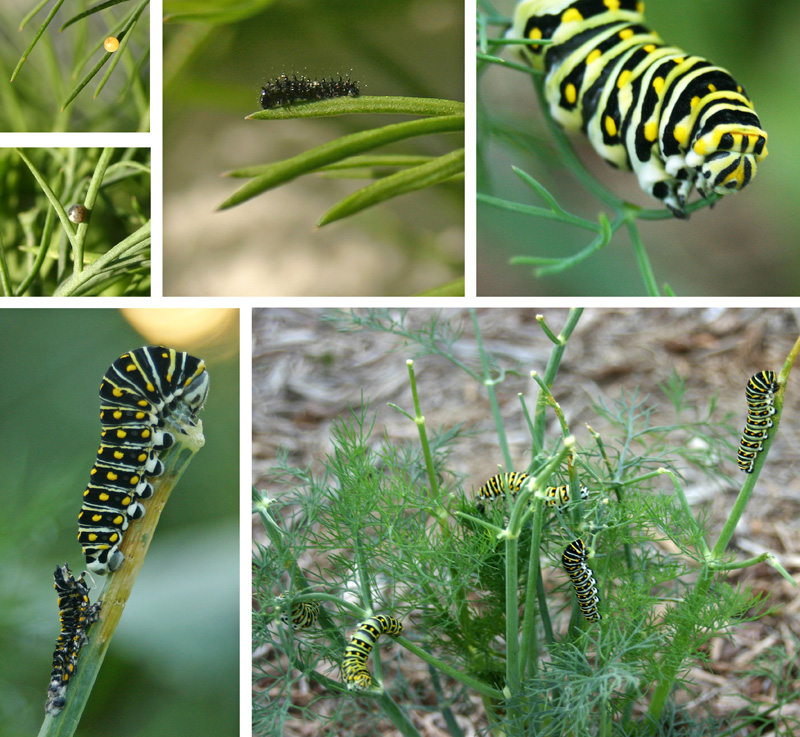
Dill has few pest problems other than the occasional aphid infestation or powdery mildew, and is not attractive to deer. However, it is a larval host of the black swallowtail butterfly (Papilio polyxenes). The distinctive black and green-yellow caterpillars can eat a tremendous amount of foliage and often occur in groups. If there are too many, they can be picked off the plants but most people prefer to let them grow to become butterflies.
In addition to its use in the herb garden, dill can be an attractive ornamental addition to an annual or mixed border. The finely cut foliage is decorative, while when in flower the plants offer vertical interest. It looks at home in the cottage garden or other informal plantings.
Cultivars of Dill
A range of cultivars are available in two broad classes, those intended mainly for seed production and “slow-bolt” types intended mainly for leaf production. There are also short varieties that are excellent for growing in containers. Some common cultivars include:
- ‘Bouquet’ is a commonly available variety that is productive for both foliage and seed. It grows 2 to 3 feet tall and 1½ to 2 feet wide, with blue-green foliage and large seed heads.
- ‘Compatto’ is a compact variety that grows 18 inches tall. Its seeds are strongly flavored due to their high aromatic oil content.
- ‘Dukat’ is a vigorous Danish variety with strong flavor, high aromatic oil content, and large flower umbels. Grows up to 4 feet tall.
- ‘Ella’ is a compact, slow-bolting variety with dark green foliage. Good for containers, microgreens, baby leaf production, and hydroponics. Grows 10 to 16 inches tall.
- ‘Fernleaf’ is a compact, slow bolting variety that grows just 18 inches tall with extra feathery foliage. This 1992 All-America Selections Winner is a good choice for growing in containers.
- ‘Green Leaves’ is vigorous and uniform and good for harvest as microgreens to full size foliage. Grows 3 to 4 feet tall.
- ‘Hedger’ is a sterile variety, so its flowers are very long lasting and can be used as cut flowers. It is a good foliage variety and also performs well in containers. Grows 2 feet tall.
- ‘Hercules’ is a slow-bolting, tetraploid variety bred for foliage production.
- ‘Teddy’ is a vigorous, productive, slow-bolting variety with a dense growth habit. Good for baby to full size leaf harvest, in containers, and for hydroponic production.
- ‘Long Island Mammoth’ is a widely available, popular variety with large flower umbels. It grows 2 to 3 feet tall.
- ‘Szmaragd’ (sometimes listed as ‘Emerald’, its name in English) is a popular Polish variety with good foliage and seed production and flavor. Slow-bolting.
- ‘Vierling’ is a tetraploid variety with blue-green foliage and strong stems, and the flower/seed heads are used commercially as a cut flower.
Culinary Uses of Dill
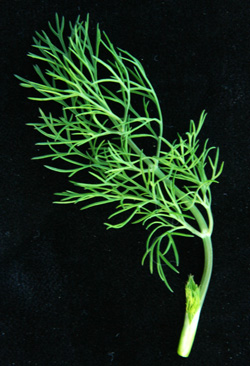
Dill foliage and seeds are both used for flavoring foods. The leaves are often referred to as dill weed to distinguish this from dill seed. The aromatic leaves can be used fresh or dried, although flavor rapidly declines when dried. Leaves wilt quickly once picked but will keep in a plastic bag in the refrigerator for about a week. Leaves can also be frozen (preferably in water), but will darken and lose some flavor, though less than when dried. Seeds can also be used fresh or dried. Dill oil can be extracted from all above-ground parts of the plant.
Dill is the quintessential herb for flavoring pickles, but it can be used in many other ways. It is a common seasoning in eastern European, Russian, and Scandinavian cuisine, as well as certain dishes from the Middle East and India, particularly Punjab.
Author: Susan Mahr, University of Wisconsin-Madison
Reviewers: Allen R. Pyle, Horticulture Outreach Specialist, UW-Madison Extension, Bruce Spangenberg, Horticulture Outreach Specialist, UW-Madison Extension
Revised: September 2026