

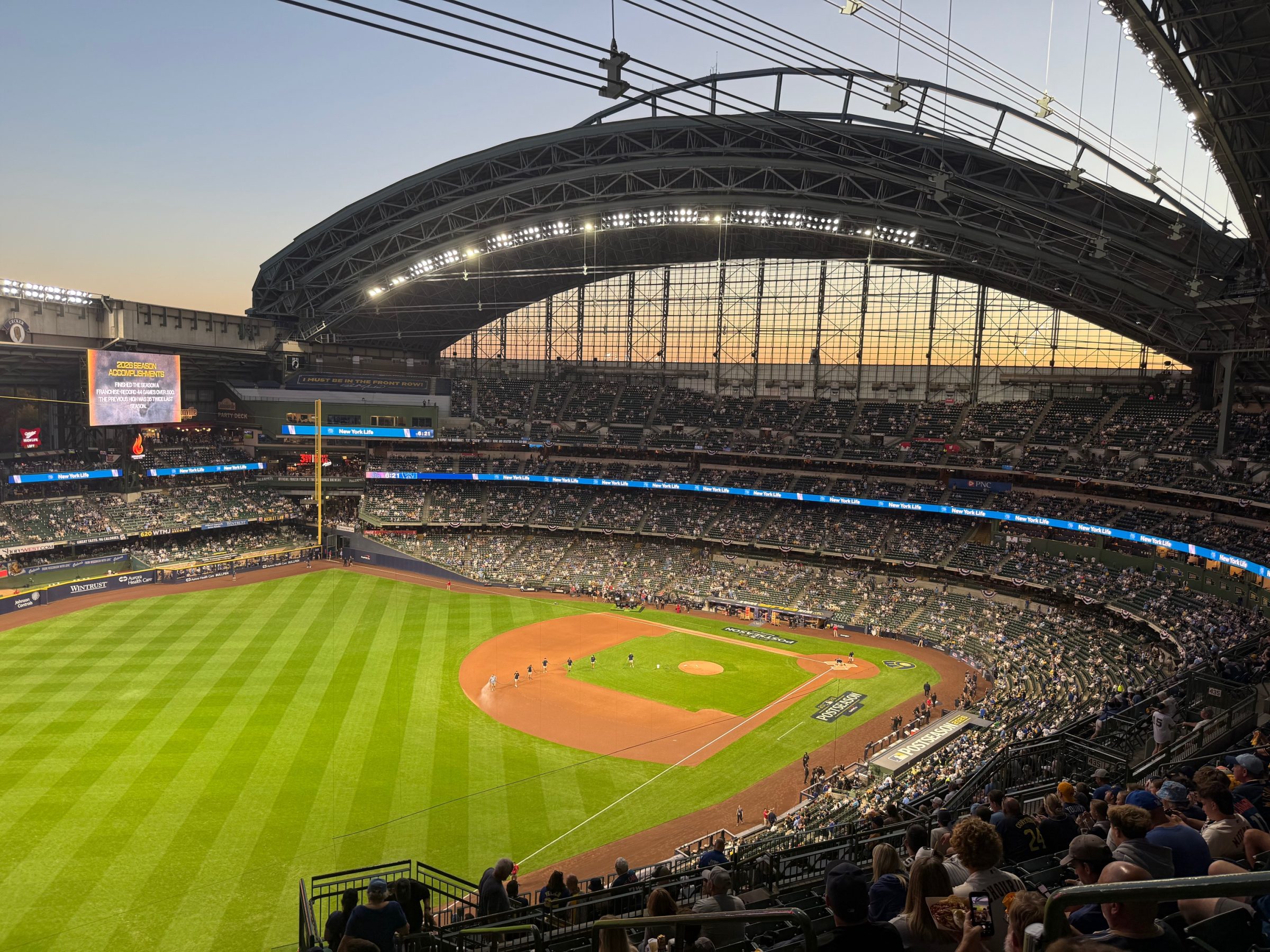
We witnessed a historic Brewers playoff run to become World Series Champions. Wisconsin sports fans are fortunate having exceptional natural grass playing fields in American Family Field and iconic Lambeau Field. Just like home lawns, keys to success with athletic fields include proper site preparation, grass selection, and ongoing care. But the two are different, with extensive attention to details involved in achieving high-quality turfgrass playing fields.
Groundskeepers of professional sports fields must overcome two major ongoing problems while maintaining an attractive, uniform, and safe playing surface. First, the wear and tear placed on the grass surface as players stop and start, run, dive, and slide on it multiple times each game. The second problem, related to traffic issues just mentioned, is the compaction of the soil. As soil gets compacted from extensive traffic, grasses are stressed and easily decline.
So how do sports turf managers combat these problems and produce quality fields for sporting events? It all starts with the soil. Unlike home lawns, underlying soil for professional sports fields is precisely constructed, using various mediums including sand, sand mixes, and complex drainage systems. Key objectives are to allow for good drainage of water, maintain a uniform level playing surface, and resist compaction as much as possible.
Grass selection is the second key factor to success. Kentucky bluegrass is the top choice for cool weather regions and is found at both American Family Field and Lambeau Field. Desirable traits include hardiness, an attractive dark color, and a good soft playing surface. Kentucky bluegrass has creeping underground stems called rhizomes, which increase stability and allow good recovery from damage. Road game stadiums the Brewers played in San Diego and Los Angeles both use specific hybrids of bermudagrass, a warm-season grass with similar traits adapted to southern region climate conditions.
Once grasses are established, ongoing maintenance is key to keeping them attractive, both for home lawns and sports fields. However, on the baseball field things are much more exact and complicated than on lawns. Mowing is frequent and extremely precise. Watering involves different zones on the field irrigated to match varying conditions. Routine topdressing with sand or special soil mixes helps maintain uniform playing surfaces. Every detail requires ongoing supervision of professional groundkeepers.
Finally, other unique features are involved in maintaining professional fields in Wisconsin. Both consist of natural grass, but a small amount of synthetic fibers are sewn into the fields to increase stability and help maintain high visual quality all year. Supplemental lighting is used to enhance grass growth under low light conditions. Special blankets are even used to help turf survive adverse weather.

About the Author
Bruce Spangenberg is a Horticulture Outreach Specialist with UW-Madison Division of Extension. Get answers to your lawn, landscape and garden questions anytime at “Ask Your Gardening Question.”