Overview
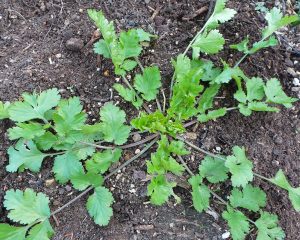
Coriandrum sativum is a fast-growing annual with two common names, based on how it is used. The leaves are the herb cilantro or Chinese parsley, and the seeds are the spice coriander.
The leaves resemble European parsley leaves in shape, but this plant has a pungent, sweet-musky odor and taste that some people dislike. Descriptions of the flavor of the leaves vary from citrusy with a biting tang, to soapy. There appears to be a genetic factor involved in whether the a person likes or dislikes the flavor of this species.
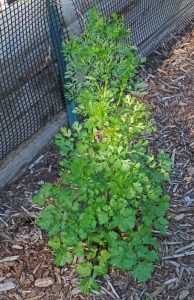
This member of the carrot or parsley family (Apiaceae) is native to southern Europe and Asia but has spread to many other parts of the world. One of the oldest know herbs, it was grown in ancient Egyptian gardens and its seeds have been found in Egyptian tombs. It has been cultivated for thousands of years in India and China. It was introduced into Mexico and Peru by the Spanish conquistadors.
The seeds were used medicinally, for making teas as a digestive aid and its reputed sedative effect on some people. The oil from the seeds was used to disguise the flavors of other medicines, used in ointments for painful rheumatic joints and muscles, and is reputed to have cholesterol lowering properties.
Growing Cilantro / Coriander
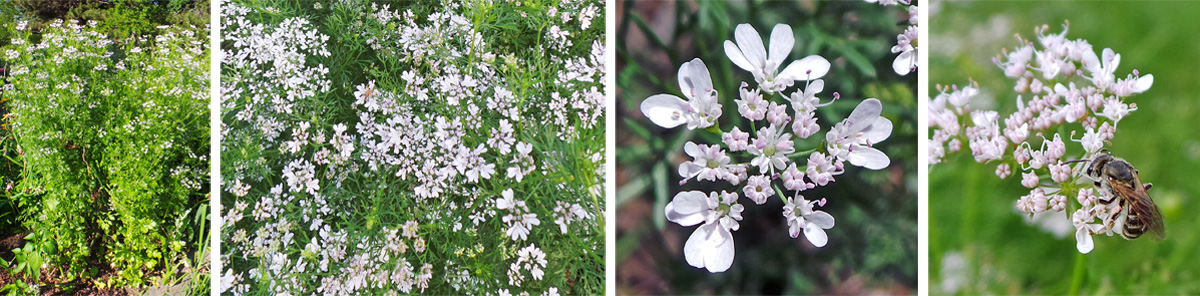
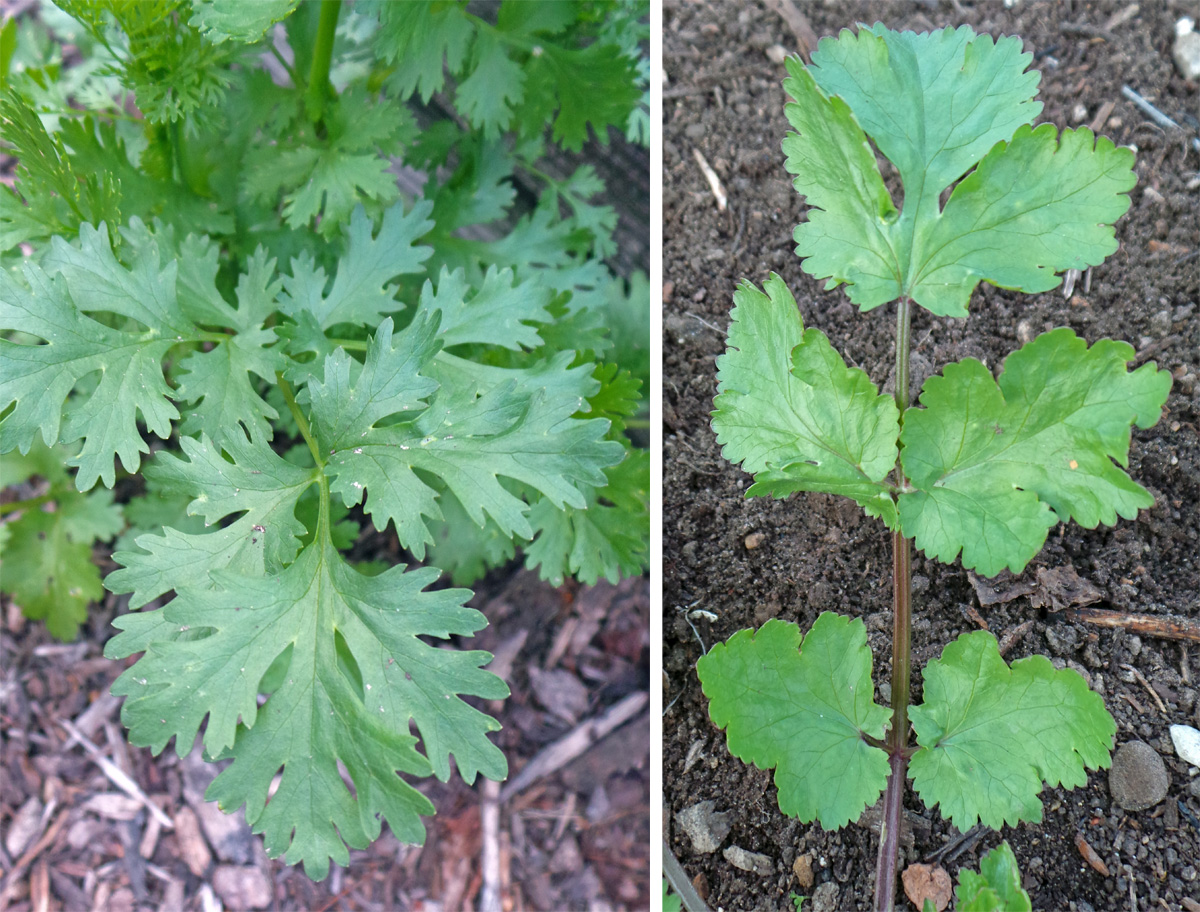
Cilantro is a cool season crop that tends to bolt (go to seed) in hot weather but will not survive a hard freeze. The young plants produce wide, flat leaves but when the plant begins to bolt, it produces lacy and fern-like leaves along the flower stalk. The foliage grows 1 to 1½ feet high, and the flower stems reach 2 to 3 feet.
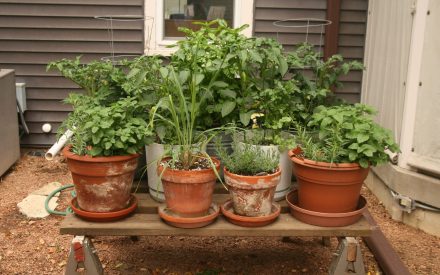
A growing season of at least 100 days in necessary for a seed crop, but the leaves can be harvested in 45 to 80 days. Cilantro grows best in well-drained soil in full sun, but it will tolerate very light shade. It can also be grown successfully in containers.
The clusters of little white or pale pink flowers are borne in umbels, and are very attractive to beneficial insects such as adult syrphid flies and parasitic wasps that consume the nectar.
Cultivars of Cilantro / Coriander
There are a few cultivars available, but many suppliers may only offer one or two choices. Though some cultivars are less susceptible to early bolting, and are listed as “slow bolting”, none hold well under high temperatures and long days. Cultivars include:
- ‘Calypso’ produces large rosettes of leaves and is slower to flower than ‘Santo.’
- ‘Confetti’ has ferny, highly lobed leaves and has best flavor and texture when plants are small. It is a good choice for microgreens, baby greens, and use as a garnish.
- ‘Cruiser’ has an upright habit and is a good choice for use as a bunching variety. It is slow to bolt.
- ‘Leisure’ is a uniform, slow bolting variety.
- ‘Marino’ is vigorous, flavorful, and slow bolting.
- ‘Santo’ is a widely available, slow-bolting type grown for its leaves.
- ‘Slo Bolt’ is harvestable in about 45 days from sowing and is, as the name implies, slower to flower than many varieties.
- ‘Marino’ is a slow bolting variety similar to ‘Santo.’
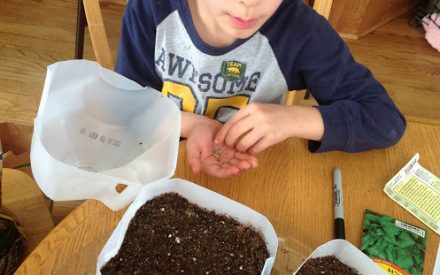
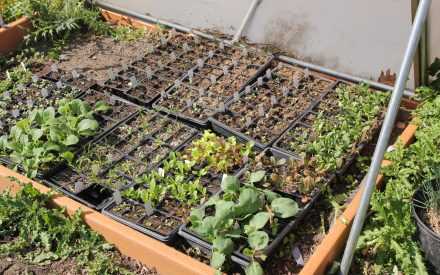
Sow seeds in early spring, at the same time lettuce is typically planted. Plant seed ¼ to ½ inch deep in rows about a foot apart. Cilantro does not transplant well because of its long taproot. Once established, thin seedlings to 3 to 6 inches apart. For seed production, thin plants to 12 inches apart.
Make successive sowings at 2 to 3 week intervals for an extended harvest when growing the plants for their leaves. Summer plantings are not recommended because the plants generally bolt before producing much, but the flowers will benefit beneficial insects and pollinators.
For a fall leaf crop, seed in mid-August. Cilantro reseeds readily if the plants are allowed to go to seed.
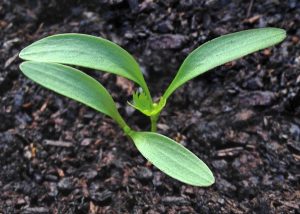
Keep plants evenly moist throughout the growing season. Reduce irrigation when the seeds are nearing maturity.
Cilantro does not have any serious pest problems, although some commercial growers have reported problems with a bacterial leaf spot. Seed suppliers are increasingly testing seed for bacterial contamination, to reduce problems for growers.
Using Cilantro / Coriander
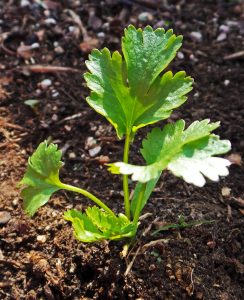
Pick fresh leaves any time after the plants are about 6 inches tall but before they bolt (the leaves may develop a disagreeable flavor at this stage). Removing the older, outside leaves will encourage the plant to produce new leaves, but the younger leaves have more intense flavor.
Whole plants can be cut off as a bunch at an inch above the ground, and the plant can regrow for a second cutting. Cilantro leaves are best used fresh, but can be frozen or dried (although the dried leaves lose much of their flavor). Cut leaves can be stored in the refrigerator for about a week or place a “bouquet” of leaves in water to maintain freshness in the refrigerator.
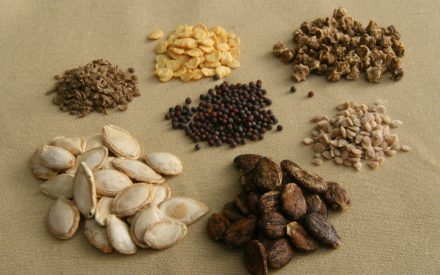
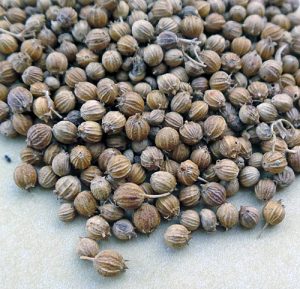
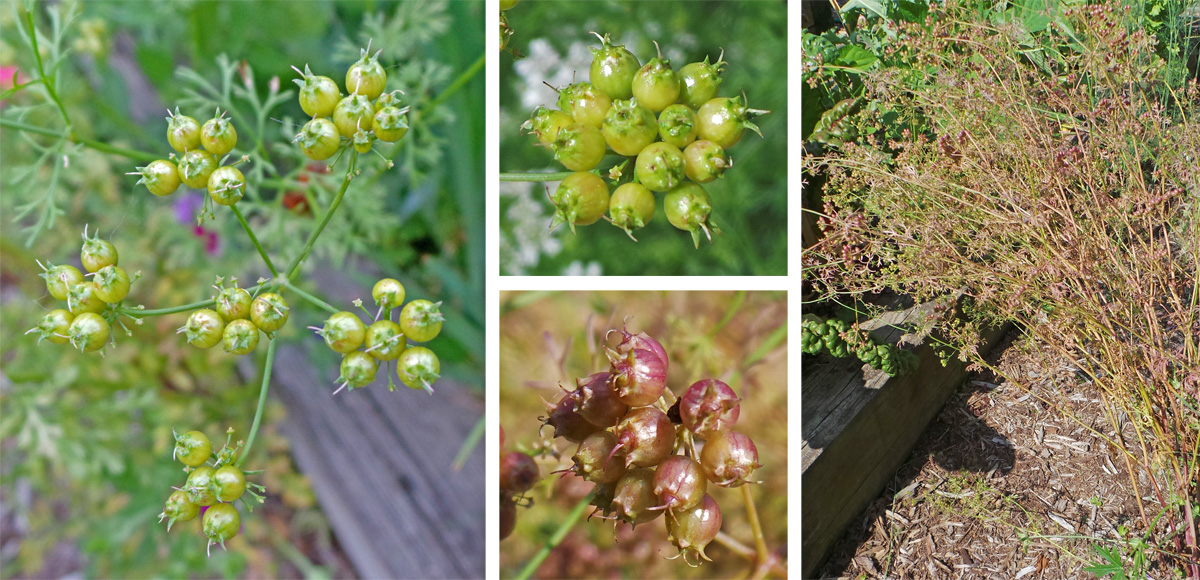
Harvest seeds when they turn a light brown and the entire plant is dried, usually 2 to 3 weeks after flowering. Cut the stems before much shattering has occurred and hang the plants in a warm, airy place to dry. Because many of the seeds will fall out, place the cut stems over a cloth to catch any that fall or put the stalks inside a paper bag. Make sure the fruit is thoroughly dried, which develops the flavor of the seeds. To save seed for your next crop, just store the whole pods in a cool, dry location. For culinary use, rub the pods to release the seed from the seed coat. The dried seeds can be stored for months in an airtight container in a cool, dark place.
Cilantro roots are used in Thai and Vietnamese cooking. Dig the roots of plants that have not gone to seed in the fall to harvest them.
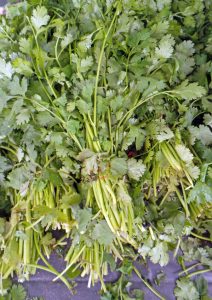
Fresh or dried cilantro leaves are an essential ingredient in many Latin American, Caribbean, and Asian (especially Thai and Vietnamese) dishes. Cilantro is often added to Mexican salsas and meat dishes, and is used in some Chinese soups. Arabic cooking uses both leaves and seeds, in pickles, curries, and chutneys. When cooking with cilantro, add it at the very end to prevent overcooking.
Coriander seeds can be used whole or ground in cookies, baked goods, soups, casseroles, or sausages. In northern European countries the seeds are sometimes baked in bread; in England they are used to flavor liqueurs. Coriander is an essential ingredient of the various curry powders and masala mixtures of India.
Author: Susan Mahr, University of Wisconsin—Madison
Reviewers: Allen Pyle, Horticulture Outreach Specialist, UW—Madison Extension, Bruce Spangenberg, Horticulture Outreach Specialist, UW—Madison Extension
Revised: September 2026