
Overview
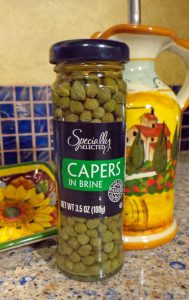
Most people know capers as salty, slightly astringent and pungent, pea-sized, dark green garnish or seasoning in Mediterranean dishes — especially in Sicilian and southern Italian cooking — or served with lox. These are salted and pickled unopened flower buds of Capparis spinosa, the caper bush, a tender perennial plant in the caper family (Capparidaceae, closely related to the cabbage family) found wild throughout the Mediterranean and other areas (but whether it is native to the area or just naturalized is not clear). The much larger fruits are also pickled as caper berries to be eaten like pickles or olives, frequently as part of an antipasti platter. The buds or fruits of other species of Capparis are also sometimes used (but the taxonomy of this group is confused, species are highly variable, and hybrids occur regularly, so it’s hard to know exactly what the plants are).
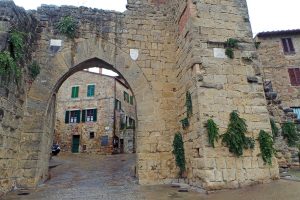
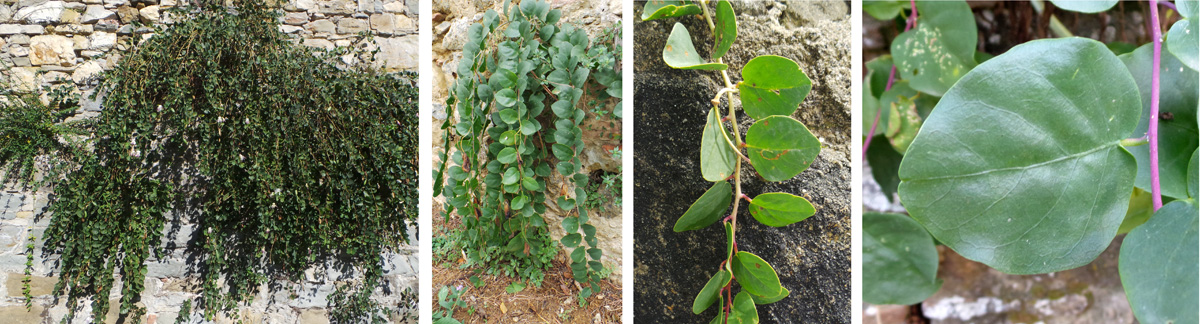
The scrambling, sprawling, shrubby evergreen plant is many-branched, with thick, fleshy and shiny, round to ovate alternate leaves. Leaf stipules develop a pair of sharp hooked spines at the base of each leaf petiole (the spines have been bred out in some of the cultivated types and are often referred to as var. inermis meaning “unarmed”). Plants typically grow to three feet tall, but the branches are semi-prostrate, spreading as much as 6 to 10 feet wide. It does well in dry, sandy or gravelly soils similar to those where olives are grown and is often seen growing in stone walls and rock crevices. Although technically evergreen, the plants will lose all their leaves in the winter where marginally hardy, to about zone 8a.
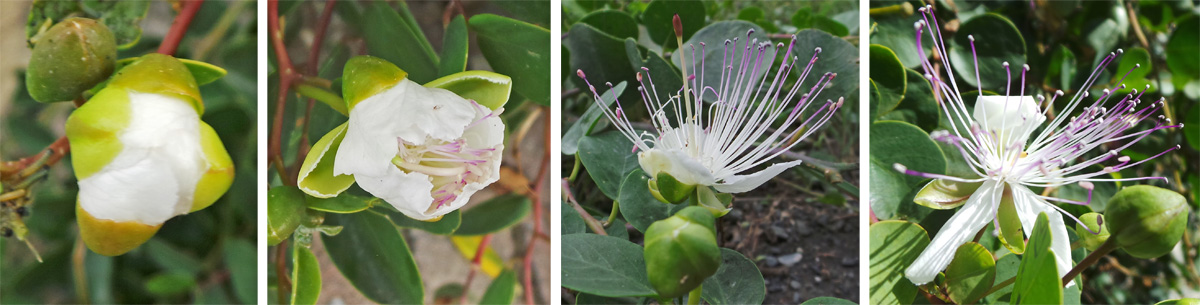
The showy, 2 to 3 inch wide, sweetly fragrant flowers bloom on long pedicils rising from the leaf axils. Each flower only lasts one day and has four sepals and four white to pinkish-white petals, many long pale purple stamens, and a single stigma usually rising well above the stamens. Plants bloom profusely from May to early autumn if the buds are left unpicked.
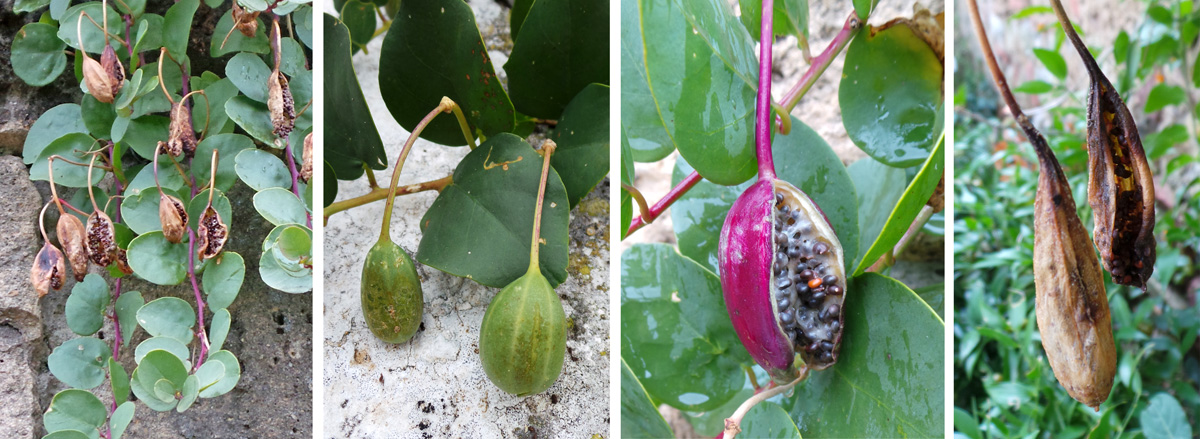
Flowers are followed by oblong, multi-seeded, edible fruits, called caper berries.
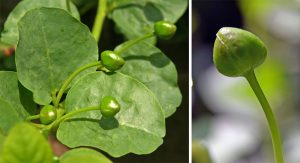
When ready to pick, the immature flower buds are a dark, olive green and about the size of a fresh kernel of corn. Because they’re small and delicate, they have to be harvested individually by hand, instead of by machine, each morning just as they reach the proper size; harvesting labor is what makes capers expensive. The buds are dried in the sun, then brined, packed in salt, or pickled in a salt and vinegar solution. Intense flavor is developed as mustard oil (glucocapparin) is released from each bud. This enzymatic reaction leads to the formation of rutin, often seen as crystallized white spots on the surfaces of individual caper buds. Capers are categorized and sold by their size, with the smallest sizes being the most desirable. Dried caper leaves are used as a substitute for rennet in the cheese making.
Growing Capers
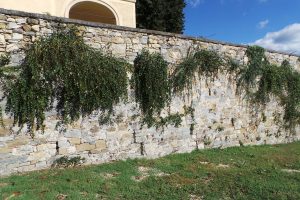
Capers is not commonly grown in the US (even where environmental conditions are appropriately hot and dry) but could be grown as a novelty in a container if warm conditions, very sharp drainage with limited water, and high light intensity can be provided. If grown in the Midwest, plants can be moved outside for the summer but must be brought indoors before temperatures drop below freezing.
It is propagated from seed and from softwood or hardwood cuttings, although cuttings can be challenging to root.
The small seeds should be sown when fresh, as seeds that have been stored require scarification and/or cold stratification to germinate, and germination can be sporadic even with these treatments, frequently taking up to three months. Plants can also be purchased online, usually from nurseries or specialty suppliers in mild climate locations.
Author: Susan Mahr, University of Wisconsin—Madison
Reviewers: Allen R. Pyle, Horticulture Outreach Specialist, Bruce Spangenberg, Horticulture Outreach Specialist, UW—Madison Extension
Revised: September 2026