Overview
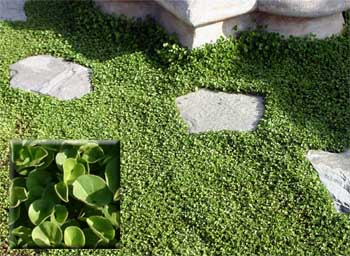
Dichondra micrantha is a low growing, groundcover plant that was once touted for use as a lawn alternative in mild (zone 7a or warmer) climates, but flea beetle problems quickly drove it out of favor. A related species, D. argentea, is growing in popularity nationwide as a unique, trailing accent plant for containers and hanging baskets. Dichondra has small, rounded leaves that resemble miniature water lily pads and spreads by rooting surface runners. Native to Texas and Mexico, D. argentea is a tender perennial hardy to zone 8a, but it makes an excellent annual foliage plant in cold climates.
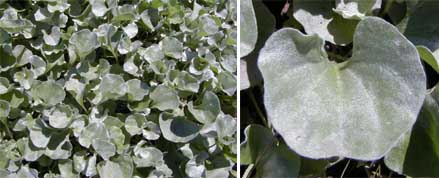
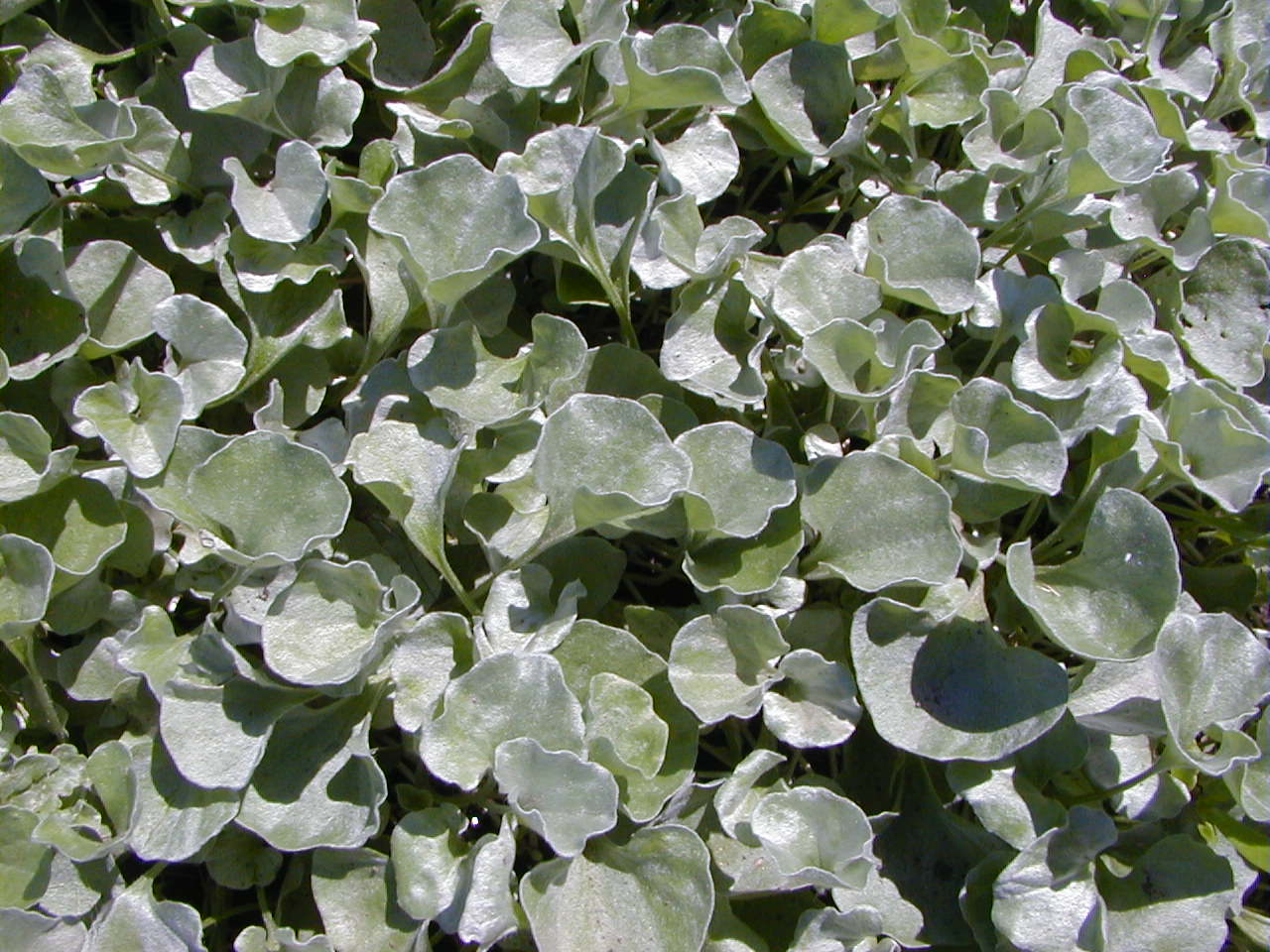
‘Silver Falls’ dichondra is a vigorous plant that forms a mass of soft pewter leaves on silver stems in full sun to part shade. The fan-shaped, shimmering silvery leaves are held on plants just 2 inches tall. The trailing stems branch well without pinching. It is heat and drought tolerant and will recover quickly if watered after wilting. In the Midwest, dichondra has no serious insect or disease problems.
How to Use Dichondra ‘Silver Falls’ in the Landscape
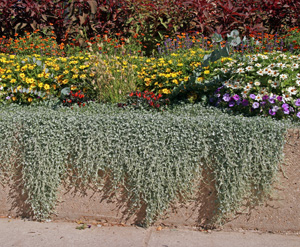
‘Silver Falls’ dichondra is great alone or in mixed containers, providing a cool contrast to green foliage and brightly colored flowers. Try it in hanging baskets, tall containers, or window boxes as an alternative to licorice plant (Helichrysum petiolare minus ‘Silver Mist’). It combines well with petunia, angelonia, and bronze leaf begonia varieties. Like other silver plants, it combines well with purple, pink or blue flowers and foliage. For a sophisticated look, plant it with white, pale pink, and pale lavender flowers.
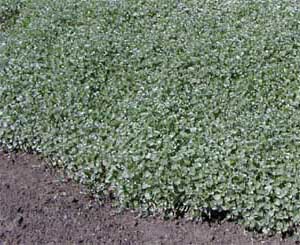
Other suggested plant combinations include Persian Shield (Strobilanthes dyerianus), alternanthera, and coleus; petunias, ivy geranium and lobelia; or an all-foliage mix with chartreuse and dark purple sweet potato vines. Planted near the edge of a raised bed or rock wall, it will cascade over the edge, growing 2 to 4 feet long. It can also be used as a ground cover on well-drained soils where it will form dense mats that choke out weeds. ‘Silver Falls’ can even be used as a trailing filler in cut flower arrangements.
How to Propagate Dichondra ‘Silver Falls’
Dichondra can be purchased as bedding plants or started from seed. Start the seed indoors 12 weeks before last frost. Cover the seed lightly and keep the soil evenly moist until the seedlings have completely emerged. Warm temperatures (75 °F) and high humidity is necessary for germination in 1 to 2 weeks.
Dichondra prefers warm, dry growing conditions, so let the plants dry out well between waterings once they are larger. Transplant to larger containers at 7 to 8 weeks or when plants have several true leaves. Provide as much light as possible to produce a more compact plant and better silver color.
Other Recommended Varieties of Dichondra
The variety ‘Emerald Falls’ (sometimes listed as D. repens, a synonym for D. micrantha) also works well in hanging baskets and mixed containers and can be used as a groundcover. Its green leaves are more rounded than ‘Silver Falls’ and it produces a wider but shorter plant. These heat tolerant plants branch heavily early, then the runners tangle to form a dense, tight mass with a less spreading habit.
Author: Susan Mahr, University of Wisconsin—Madison
Reviewers: Allen R. Pyle, Horticulture Outreach Specialist, Bruce Spangenberg, Horticulture Outreach Specialist, UW—Madison Extension
Revised: May 5, 2026