Overview of Perennial Grass Weeds
Perennial grasses are considered very difficult weed problems to deal with in lawns. Control options are limited because the weed species are very similar to the lawn species, so selective herbicides are rarely an option. In fact, many perennial grass weeds are considered desirable turfgrasses when growing by themselves under a different set of conditions but become weeds because they are not compatible when growing among lawn species.
For example, several common perennial turfgrasses, when growing in Kentucky bluegrass lawns, are considered weeds because they differ greatly in leaf width, color, or growth habit. Tall fescue is coarser and grows in distinctive clumps (bunch type growth habit) when it occurs with Kentucky bluegrass. Creeping bentgrass, a very desirable turf species for golf courses, becomes a weed in bluegrass lawns because it appears as patches of finer grass, usually lighter in color. Zoysiagrass, a warm season turf species, appears as patches of thick grass, dormant (straw-colored) for much of spring and fall in Kentucky bluegrass or other cool-season grass lawns in Wisconsin.
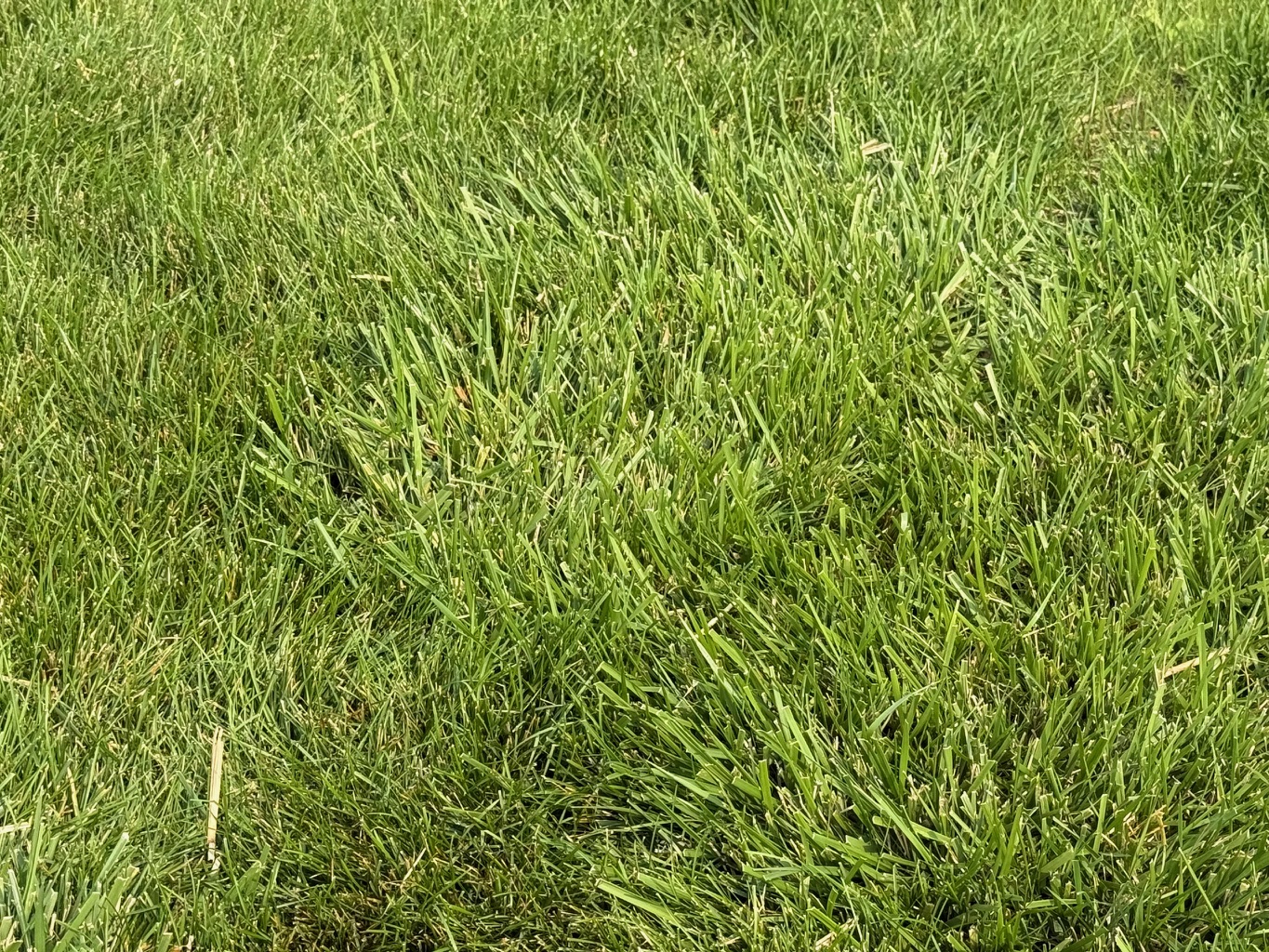
There are additional perennial grasses that are frequent weed problems. Quackgrass, a species with coarse (wide) leaves and aggressive creeping underground stems (rhizomes) can be a major problem in lawns, in addition to in gardens and agricultural crops. Nimblewill, a creeping warm season species, often appears as light-colored patches in lawns, in particular when dormant in spring and fall.
One way to distinguish perennial grasses from annuals is the time of the year established weeds are present in your lawn. Perennials are present in lawns as established green grasses early in spring as desirable lawn grasses green up (nimblewill and zoysiagrass will be dormant brown), whereas most annual grasses like crabgrass don’t appear until very late spring or early summer. Likewise, most annual grasses die off quickly in fall, but perennial grasses do not.
Guidelines for Reducing Perennial Grass Weeds in Lawns
There are some overall lawn management strategies that can help reduce the potential for weeds, including perennial grasses discussed here, from getting started in your lawn.
- Prior to establishing lawns, remove existing perennial weeds on the site. Many perennial species not only reproduce by seed but can also grow back from plant parts left behind when tilling weeds under. These plant parts include horizontal stems spreading underground called rhizomes and those creeping along the soil surface called stolons. Rhizomes or stolons broken off or chopped up in tillage will develop into new plants and re-invade the lawn. Therefore it is critical to remove all existing weeds by hand (which is often very difficult), or through the use a nonselective herbicide , such as those containing the active ingredient glyphosate (see discussion below), or by insolation, which involves covering the area with clear plastic and allowing the sun to heat the area under to temperatures high enough to kill the stolons and rhizomes.
- Nonselective herbicides (kills all grasses) are suggested for controlling perennial grass species discussed in this article. Since they are nonselective, desirable adjacent lawn grasses will also be killed. These herbicides will also control all existing weeds on the site prior to establishing lawns. After the weed species (and adjacent lawn grasses) are killed, the area can be reseeded. For grasses such as quackgrass and zoysiagrass, it sometimes takes multiple applications because regrowth occurs from rhizomes.
Herbicides with the active ingredient glyphosate are suggested. This herbicide is sold as Roundup and other trade names; check active ingredient section of label to make sure it contains glyphosate. Not all products sold as Roundup in garden centers contain glyphosate. Spray directly onto leaves of actively growing target weed grass species to get effective control, as this systemic (translocated within plant) herbicide will move from the leaves into the root system, thus killing the plant. Weeds sprayed when dormant will not be controlled. Plant roots will not take up glyphosate applied to the soil. Always read, understand, and follow all label directions before purchasing, mixing, applying, and storing herbicides (weed killers) or any other pesticides. - Insolation is a non-chemical approach to killing lawn vegetation. Use sod staples to tightly pin a clear plastic sheeting over the area you wish to kill in mid summer when the soil is moist. Keep the plastic on for four to six weeks. Tears in the plastic, or poorly sealed edges will reduce the efficacy of the insolation.
- Choose quality lawn seed. Inexpensive, lower quality grass seed products often contain high percentages of weed and other crop seeds, which may be unwanted perennial grasses. These unwanted plants are then seeded with the desired lawn grasses and become a chronic problem. Read grass seed product labels carefully as percentages of both weed seed and other crop seed contained in the package with the desirable lawn grasses must be disclosed by law.
- Maintain a thick, dense stand of grass that can resist potential weed development by following sound lawn care practices, done at optimum times, including proper lawn establishment, mowing, and fertilizing, among others. Refer to Wisconsin Lawn Care Calendar and other lawn care information on our website.
Tall Fescue as a Weed in Lawns
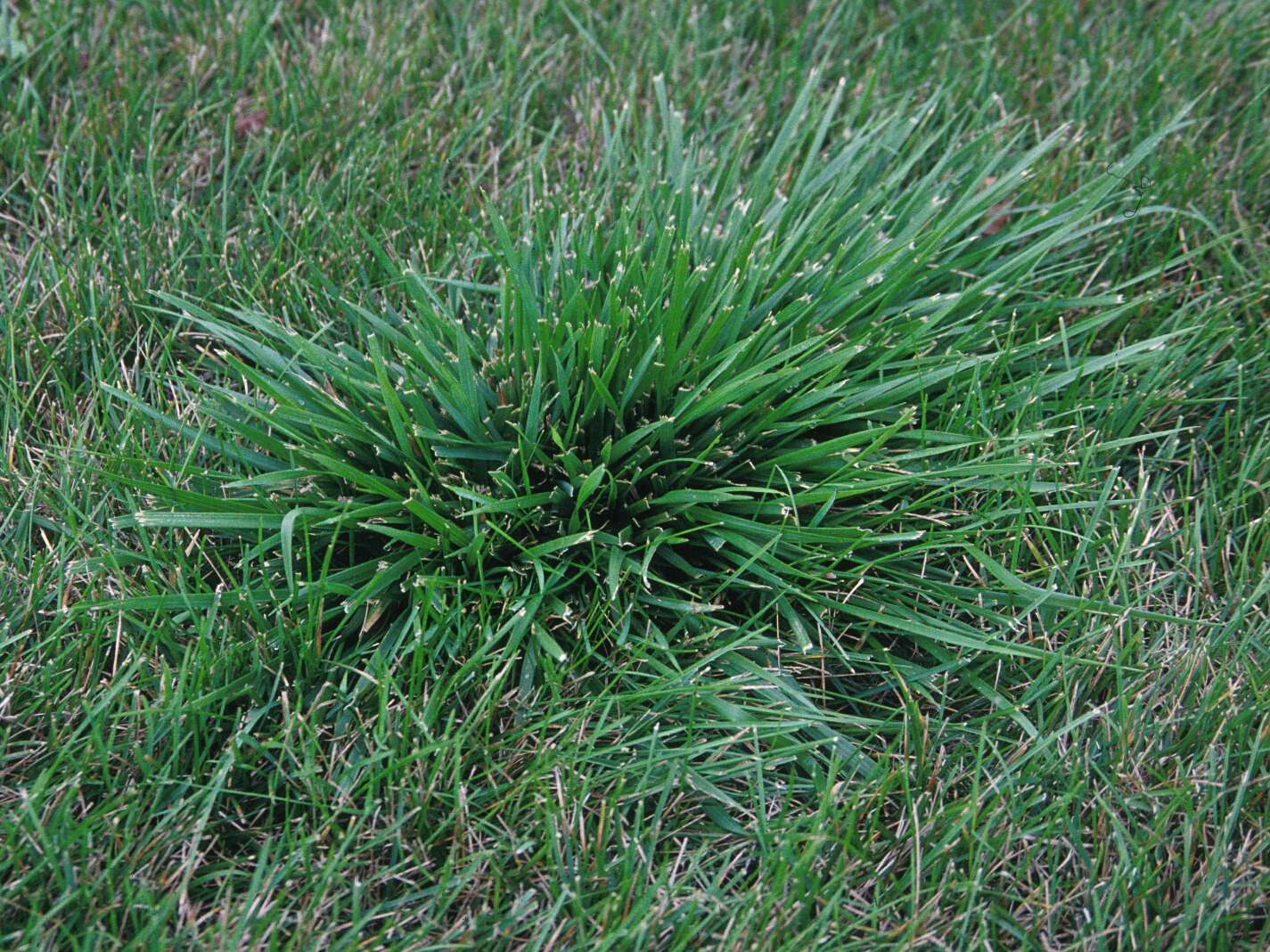
Tall fescue (Festuca arundinacea), in particular the older pasture types, commonly appears as a weed in lawns composed of Kentucky bluegrass, fine fescue, and perennial ryegrass. ‘Kentucky 31’ is an old cultivar often planted in pastures and used as a utility turf. Tall fescue has a coarser textured, wider, more rigid leaf blade compared to those lawn grasses. The upper surface of the leaves are dull and have distinct prominent veins. In addition, tall fescue may grow slightly taller and appear as distinct clumps in lawns, especially under drier conditions as it has good heat and drought tolerance. Although it has a bunch type growth habit, tall fescue may form very short rhizomes, but they do not readily spread like other grasses with rhizomes. Leaves of tall fescue may often shred when mowed, giving a ragged appearance at the tips.
Tall fescue is often mistaken for crabgrass or quackgrass, in particular when detected in lawns in spring. Unlike tall fescue, crabgrass will not appear as mature plants during April or May in Wisconsin lawns, so can quickly be ruled out as the identity of weedy grass patches early in the growing season. Crabgrass will not appear as visible plants until warm weather well into June or July, as it is a warm-season annual species. Quackgrass does not form bunches or clumps as shown in the picture above. Instead, quackgrass appears as individual plants distributed across the lawn typically intertwined with desirable lawn grasses.
Tall fescue is also available as turf-type cultivars, which are used as lawn grasses, in particular in lawns in southern Wisconsin; and more widely used as a lawn grass in states south of Wisconsin. Turf-type cultivars are more refined as compared to pasture types, but are still coarser than Kentucky bluegrass, perennial ryegrass, and fine fescues. However, research trials looking at possible mixture combinations of turf-type tall fescue and fine fescue as low maintenance grasses are currently being conducted at UW-Madison. Overall appearance of these stands will not be as uniform as compared to traditional lawn grasses used in Wisconsin, due to the coarser texture of turf-type tall fescue. However, the objective is a low maintenance turfgrass, such as for roadside or park settings.
Tall Fescue Management Options
- Assess site factors and overall management practices. Sunny, hot, and dry locations will stress Kentucky bluegrass, but tall fescue shows better tolerance to these types of conditions. Tall fescue will also tolerate neglect better than Kentucky bluegrass, so lawn management practices (in particular nitrogen fertilization) may need some adjustments to improve the quality of existing desirable lawn grasses. Tall fescue can also tolerate soil compaction better than Kentucky bluegrass. Core aerating as part of a lawn maintenance program helps alleviate soil compaction.
- Consider the option of changing to turf-type tall fescue as the primary lawn grass if the site is unusually warm and dry, especially in southern Wisconsin. However, if pasture type tall fescue currently exists on the site, it would be suggested to be removed prior to seeding turf-type tall fescue, otherwise the resulting lawn will look patchy and weedy.
- Hand pull or dig out the clumps of tall fescue. Dig out the entire plant and then reseed with desirable lawn grasses. Since tall fescue has a bunch type growth habit, it can usually be easily dug up; dig about 3 to 4 inches into the soil and remove entire plants. Late August would be optimum timing for reseeding afterwards. Spring is a second choice due to greater risk of weeds, most notably annuals like crabgrass, in newly seeded turf when advancing into warm summer weather.
- Spot treat the tall fescue clumps, and a small amount of adjacent desirable lawn grasses, with a nonselective herbicide such as glyphosate (see guidelines above). After the tall fescue is killed, the area can be reseeded. Spray directly onto leaves of actively growing tall fescue clumps to get effective control. This systemic herbicide will move into the tall fescue root system. Having a bunch type growth habit, tall fescue can usually be controlled with one application. Apply in August so the area can then be reseeded in late August or early September.
Creeping Bentgrass as a Weed in Lawns
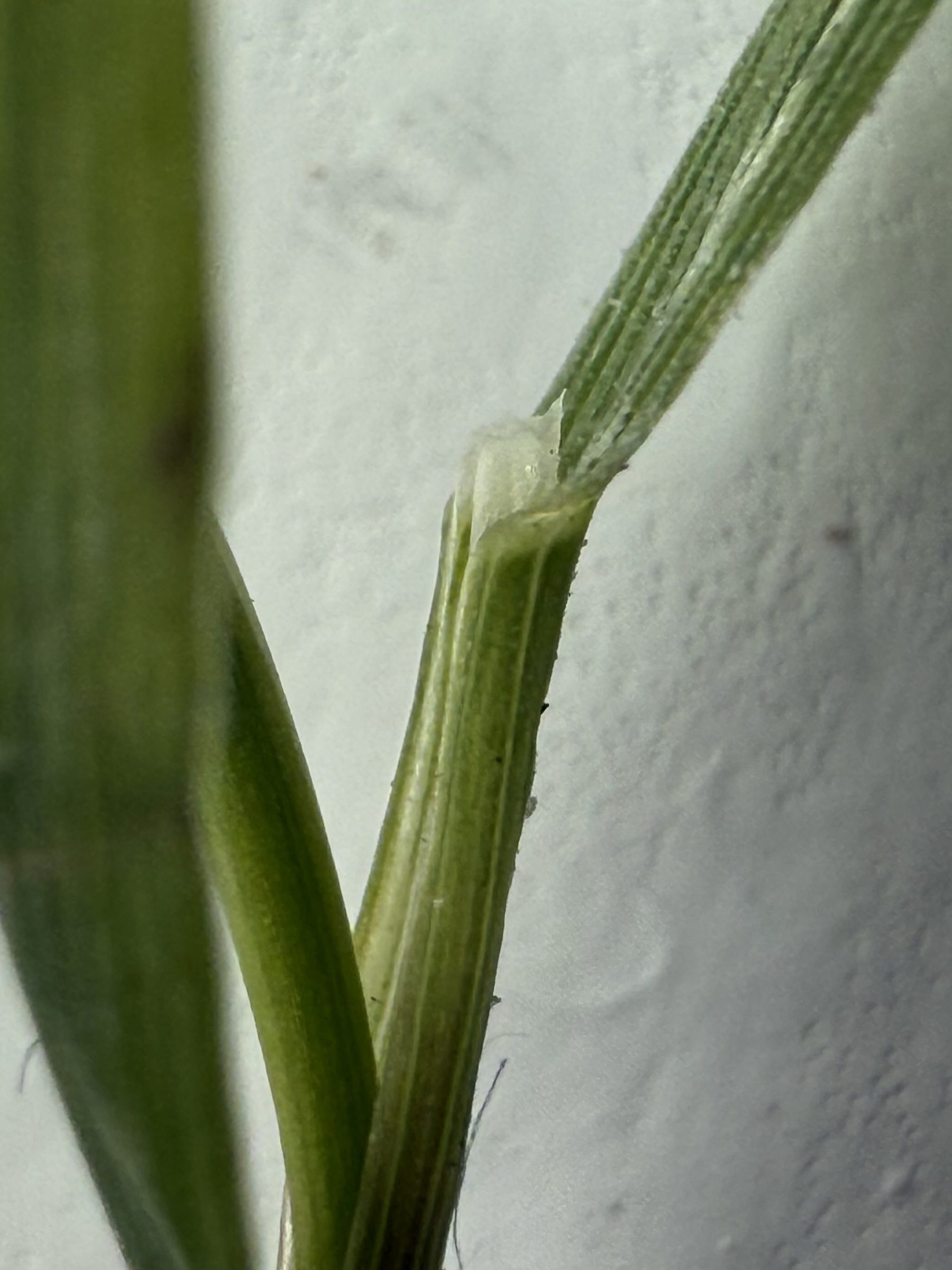
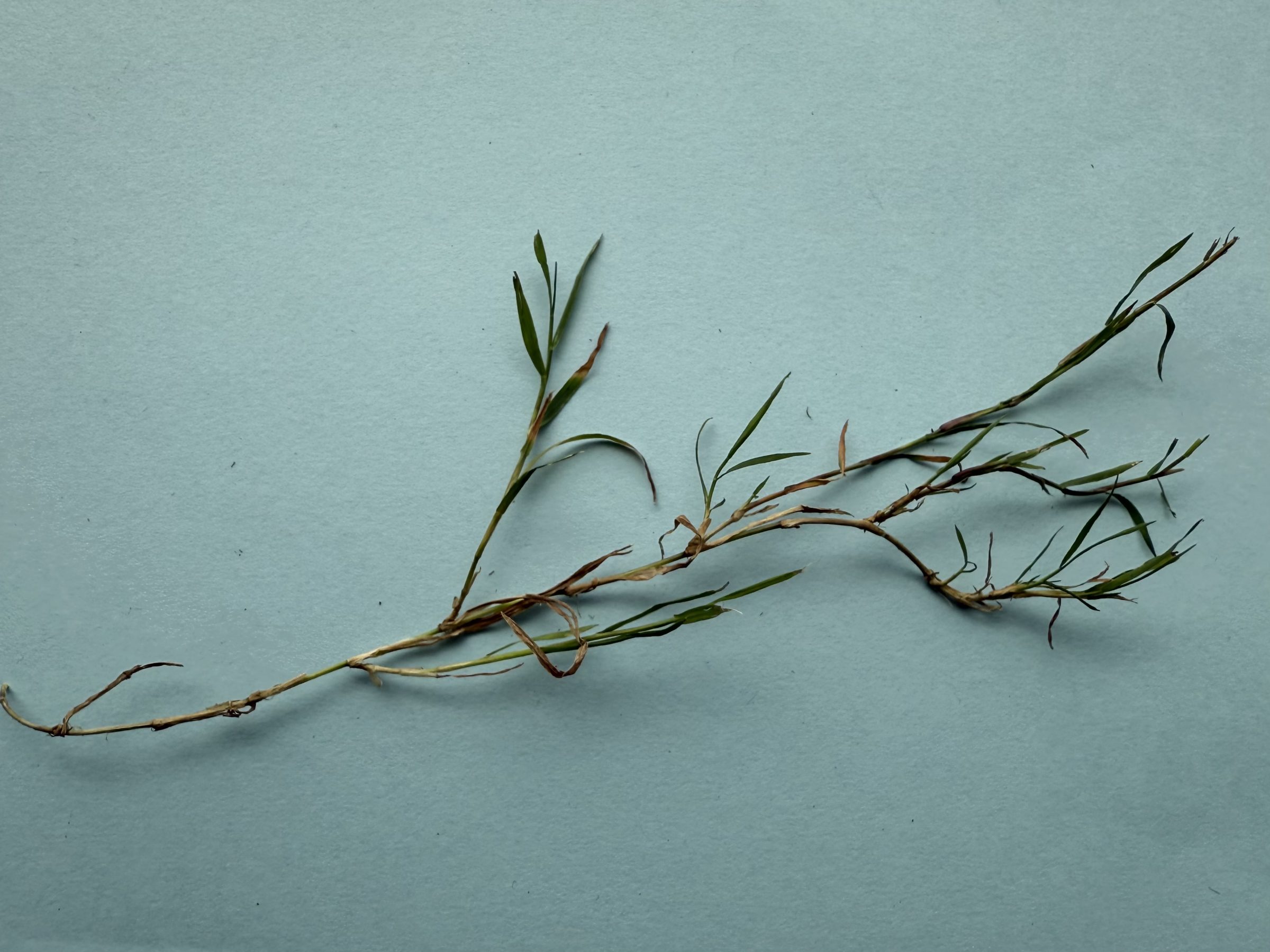
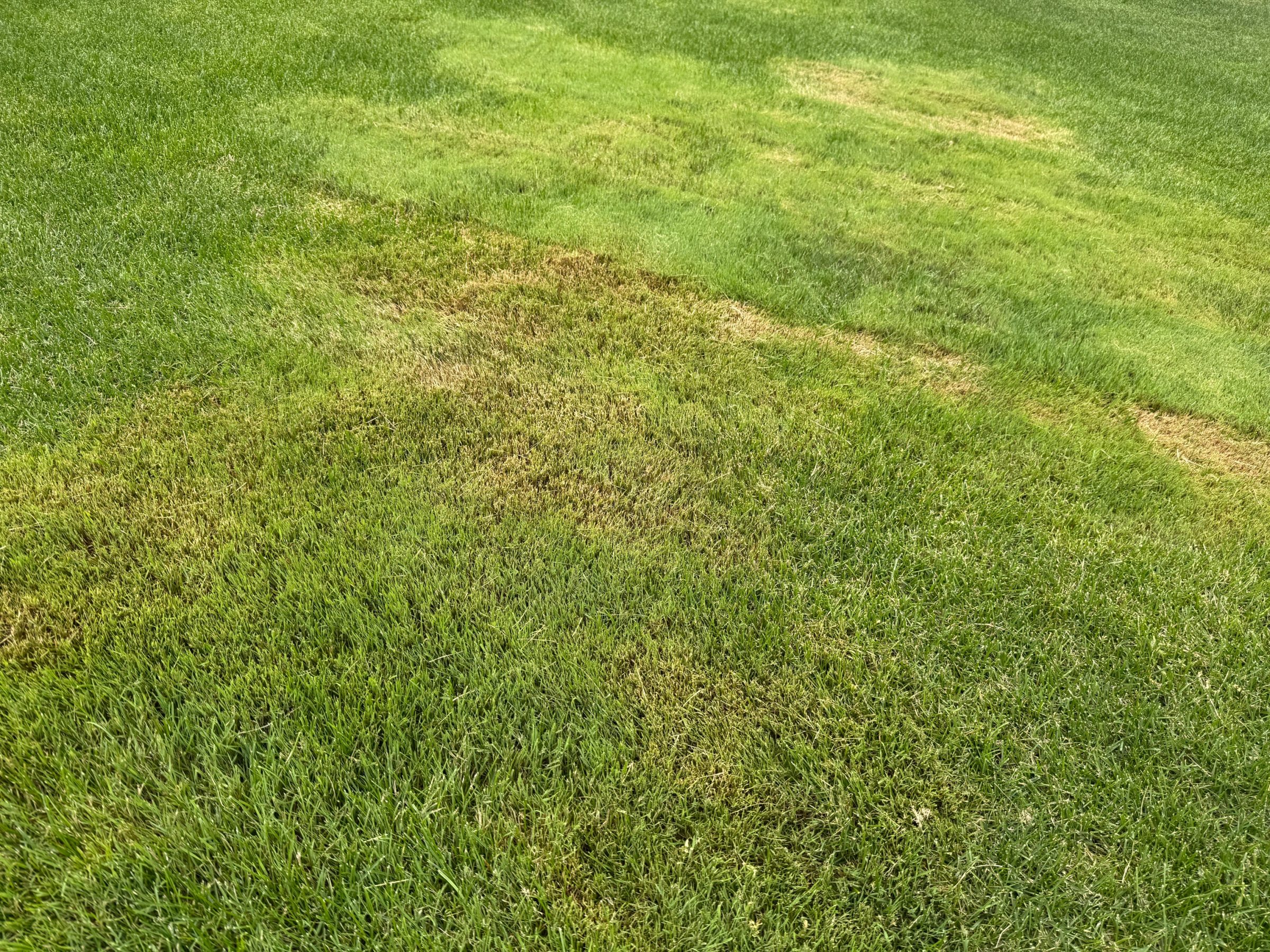
Creeping bentgrass (Agrostis stolonifera) is a common weed problem in Kentucky bluegrass lawns because it stands out as distinct dense patches of soft, fine-textured grass of a different shade of green compared to the lawn species. Creeping bentgrass has fine, horizontal creeping stems called stolons, which easily spread through lawns. This can lead to development of dense patches in a relatively short period of time. When mowed with rotary mowers, creeping bentgrass tends to be uprooted and scalped, due to a shallow root system. This often leads to browning out of portions of the patches, further adding their visibility in Wisconsin lawns.
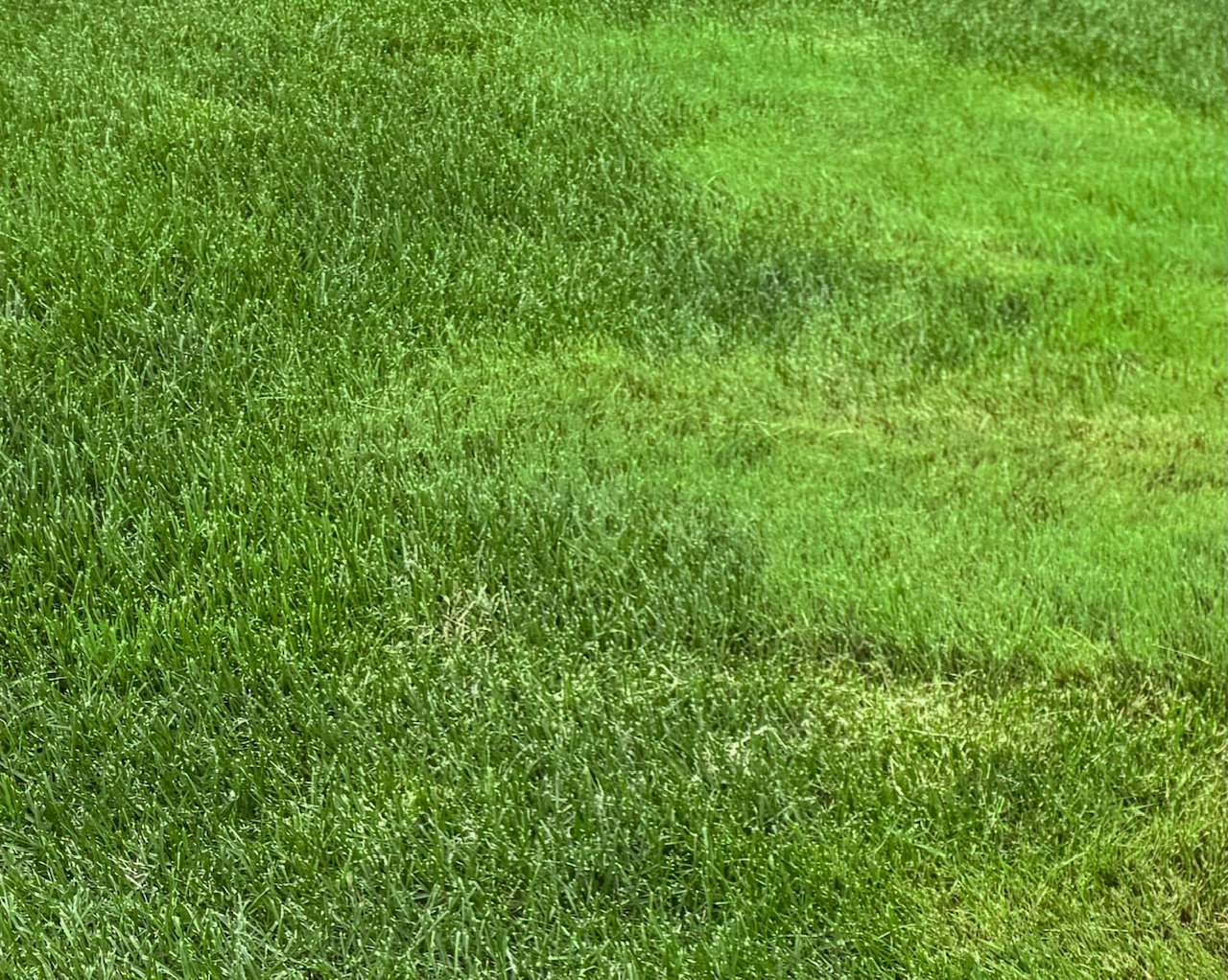
Colonial bentgrass (Agrostis capillaris) is similar but has weak stolons or rhizomes and tends to be more yellow-green than creeping bentgrass, which is blue-green with long, aggressive stolons.
Creeping bentgrass prefers higher levels of nitrogen and moisture, so is most often a weed problem in higher maintained lawns, often receiving regular irrigation. It may also be more prevalent in lower lying areas that have higher soil moisture levels.
Creeping Bentgrass Management Options
- Review current nitrogen fertilizer rates and irrigation practices. Creeping bentgrass prefers higher amounts of nitrogen and water, so if application rates can be reduced without compromising lawn quality, fewer bentgrass problems are likely to occur.
- Hand pull or dig out patches of creeping bentgrass. Due to the stoloniferous growth habit, any stolons breaking off and remaining in the soil are likely to propagate more bentgrass. Reseed afterwards with desirable lawn grasses. Late August is optimum timing; spring is less desirable due to risk of summer weed invasions in newly seeded areas.
- Spot treat the bentgrass patches, and a small amount of the desirable lawn grasses adjacent to the patches, with a nonselective herbicide such as glyphosate (see guidelines above). After the creeping bentgrass is killed, the area can be reseeded. Spray directly onto leaves of actively growing creeping bentgrass to get effective control as the herbicide needs to move into the root system and stolons. Apply in August so the area can then be reseeded in late August or early September. Dense patches of bentgrass may require multiple applications.
- Spot treat the bentgrass patches and adjoining lawn grass with an herbicide containing the active ingredient mesotrione (Tenacity), which can selectively control creeping bentgrass in Kentucky bluegrass and tall fescue lawns. Multiple applications (3 or 4) at 7-to-10-day intervals are required to get control (refer to product label to confirm specific time intervals). Best results have been obtained when these applications are made beginning in September. A minimum of three consecutive applications is necessary; anything less will lead to poor results. Read and follow label directions, including the maximum annual rate on turfgrass. Fall is the optimum time for bentgrass control using mesotrione. Read and follow all label directions when using herbicides.
Zoysiagrass as a Weed in Lawns
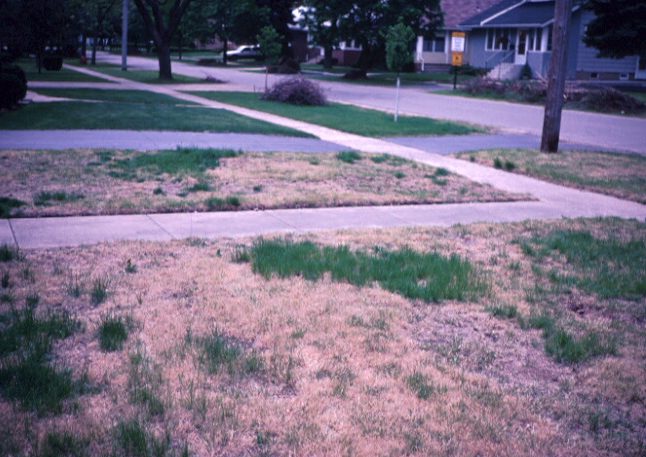
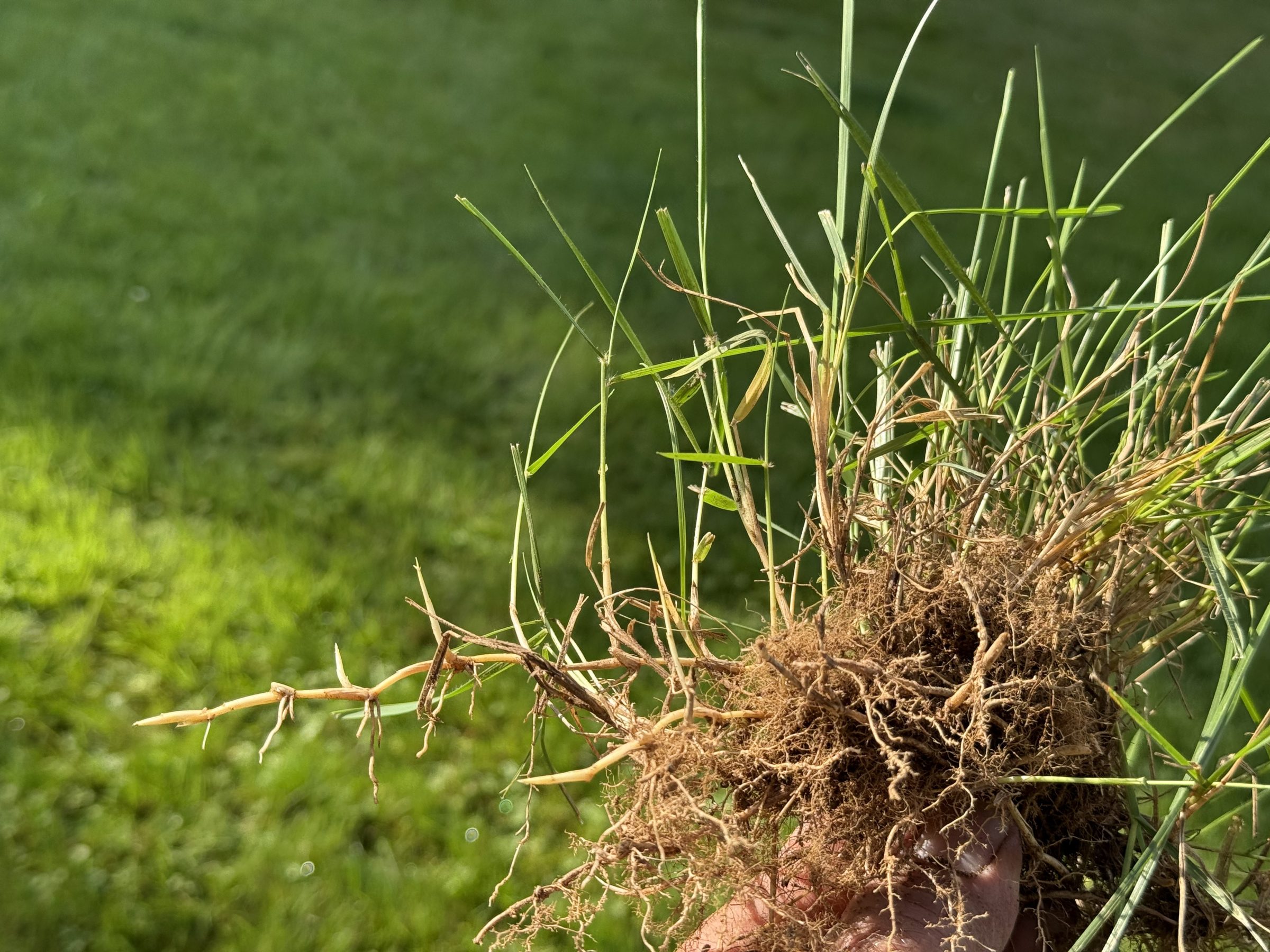
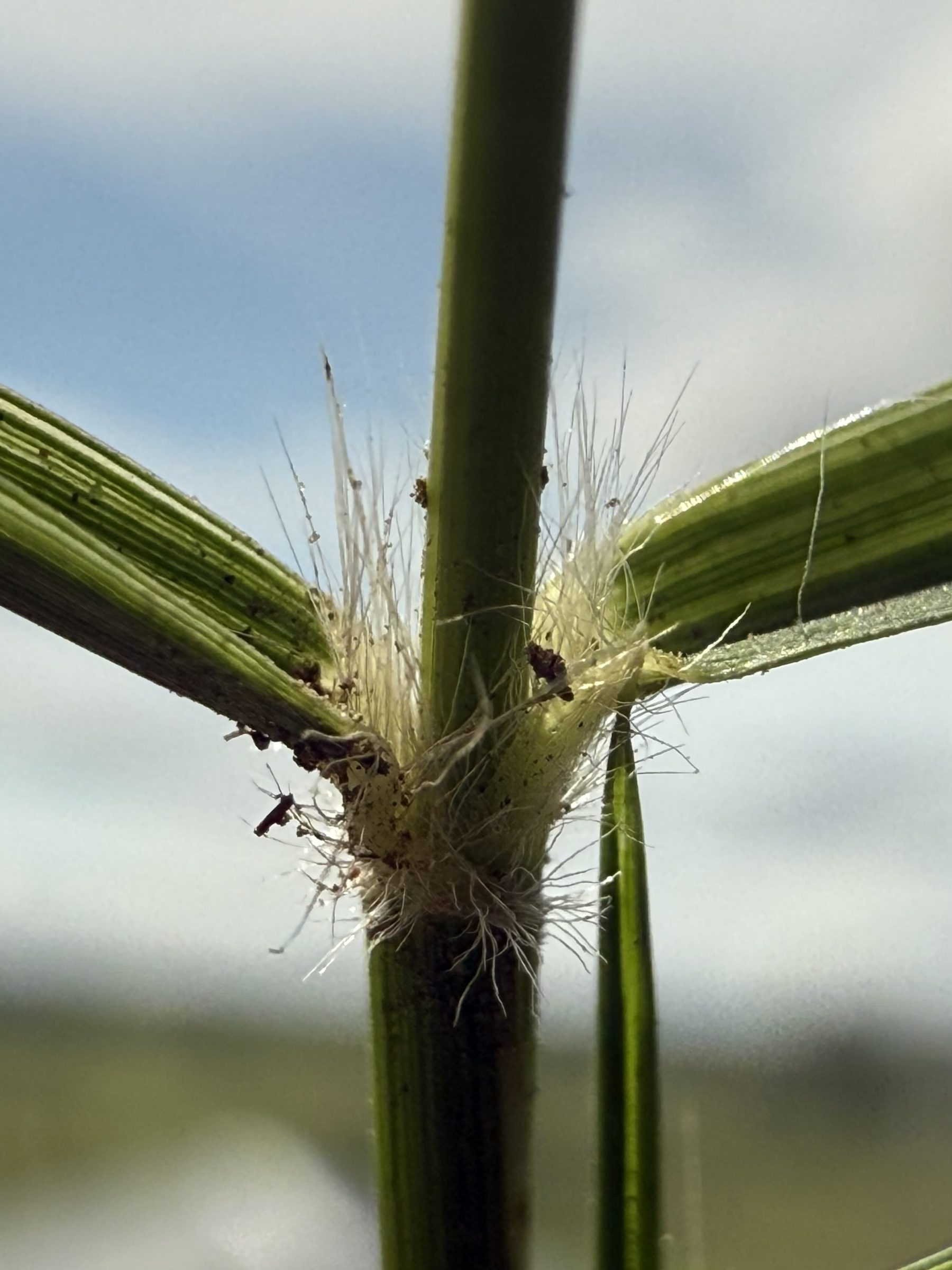
Zoysiagrass (Zoysia japonica) is a warm-season perennial grass that often develops into a thick stand of turf. Although warm season, zoysiagrass is very hardy and survives Wisconsin winters, but will not green up until late spring and will go dormant before cool-season lawns grasses in fall. As a result, zoysiagrass will be brown or straw-colored, often golden in appearance, for much of the spring and fall, standing out among cool season grasses that will be green and actively growing.
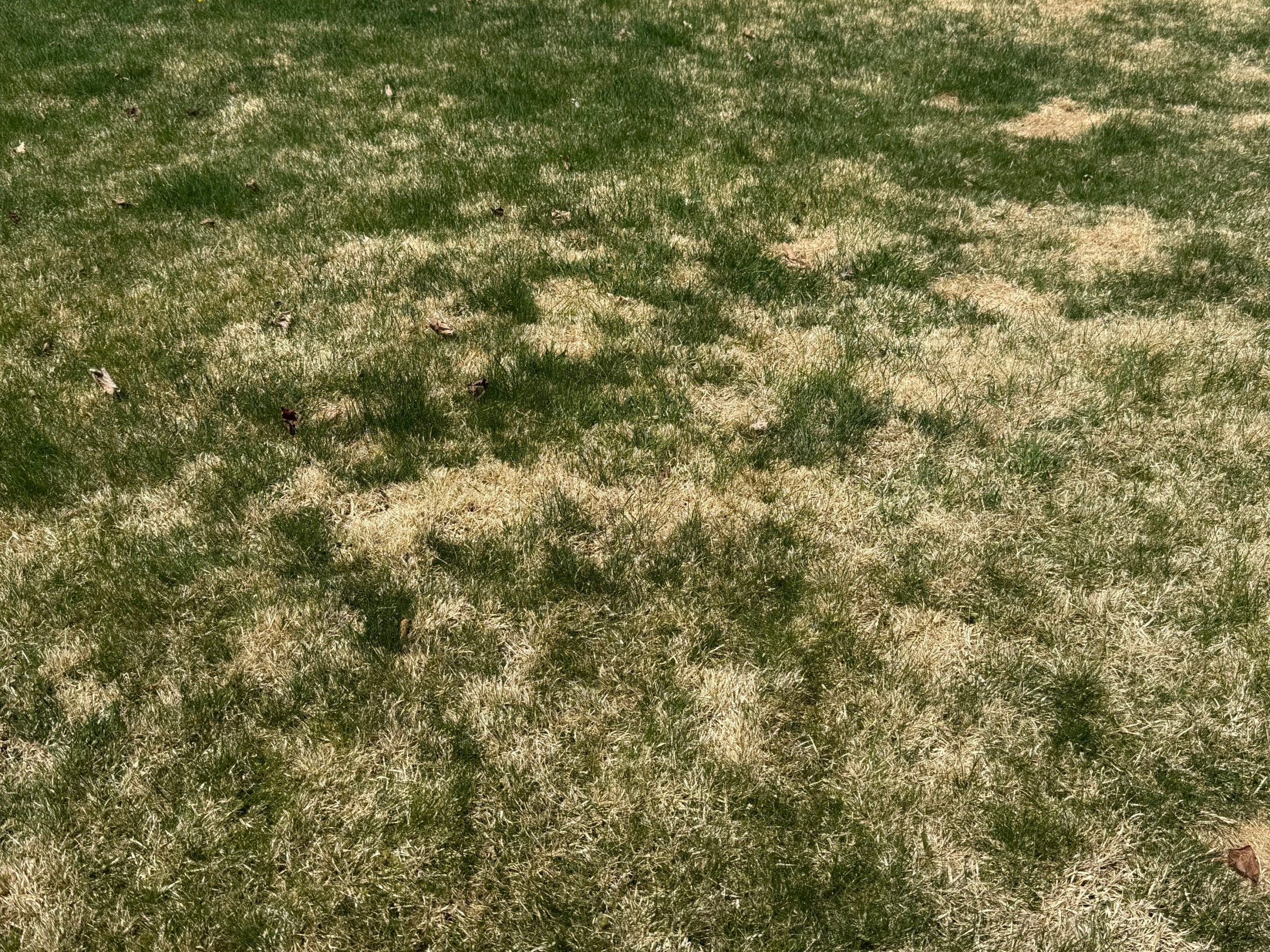
In the heat of summer, however, zoysiagrass will thrive and—having both rhizomes and stolons—spread through cool season lawn grasses. Leaves are medium to fine in texture with an upright growing habit. Zoysiagrass may also appear as a lighter shade of green compared to the other grasses in the lawn.
Zoysiagrass Management Options
- Hand pull or dig out patches of zoysiagrass. Due to having both stolons and rhizomes, complete removal is essential as any vegetative pieces breaking off and remaining in the soil are likely to propagate more zoysiagrass. This grass is very difficult to completely remove mechanically. Reseed afterwards with desirable lawn grasses. Late August is optimum timing; removing dormant plants in spring is a second choice.
- Spot treat the zoysiagrass patches, and a small amount of the desirable lawn grasses adjacent to the patches, with a nonselective herbicide such as glyphosate (see guidelines above). After the zoysiagrass is killed, the area can be reseeded. Spray directly onto leaves of actively growing, not dormant, zoysiagrass to get effective control. Since the herbicide needs to move into roots, stolons, and rhizomes of zoysiagrass, complete control is difficult. Apply after zoysiagrass has greened up, starting by July or early August so the area can then be reseeded in late August or early September. Dense patches of zoysiagrass will require multiple applications so time herbicide applications prior to optimum seeding timing accordingly.
- In some situations, consider keeping the zoysiagrass in the lawn. As a lawn grass it creates a dense stand that thrives in heat. Recognize it will be off color when dormant in spring and fall. However, also recognize it can continue to spread, perhaps into adjoining lawns where it currently does not exist, creating more potential weed issues.
Quackgrass in Lawns
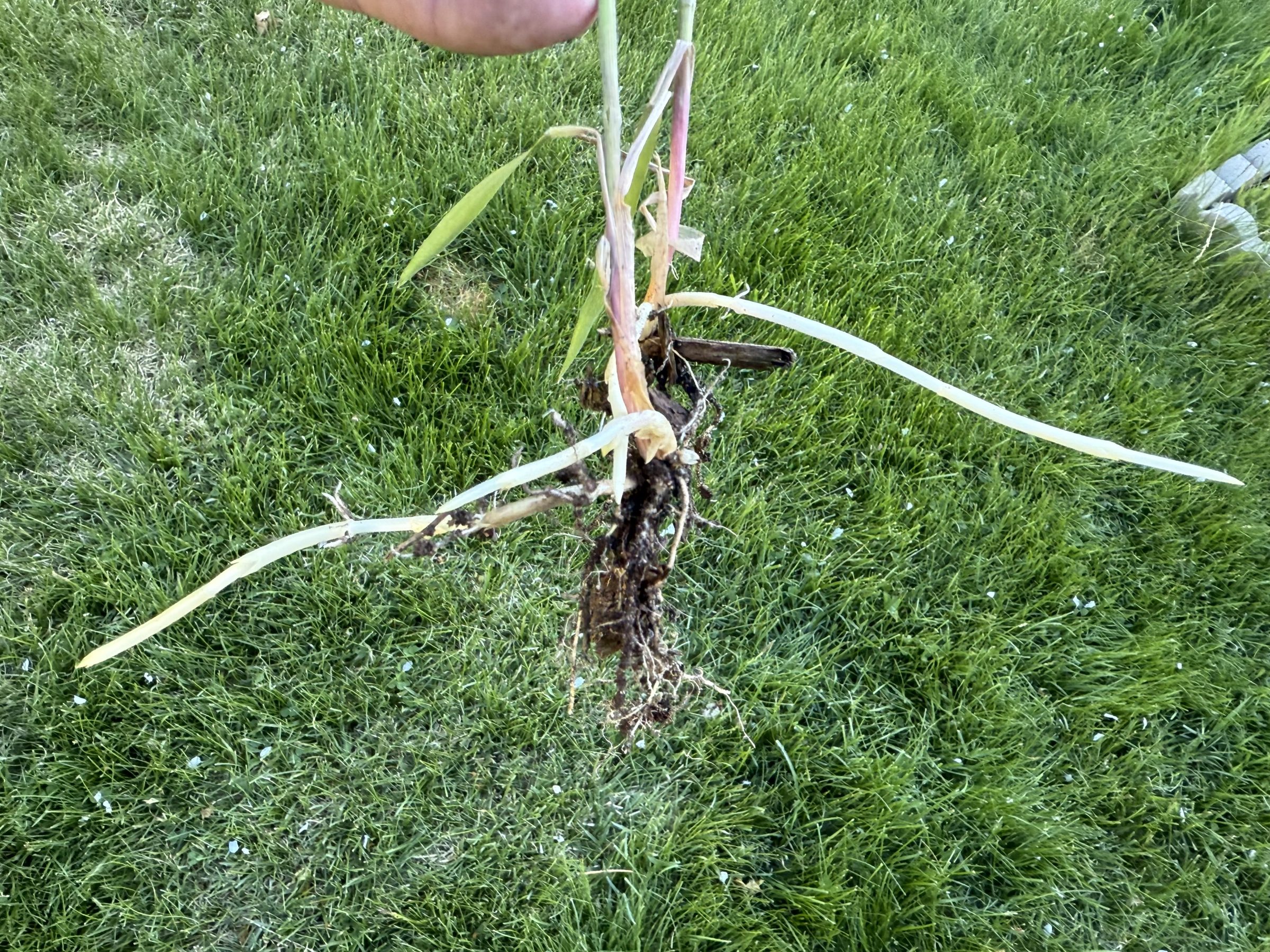
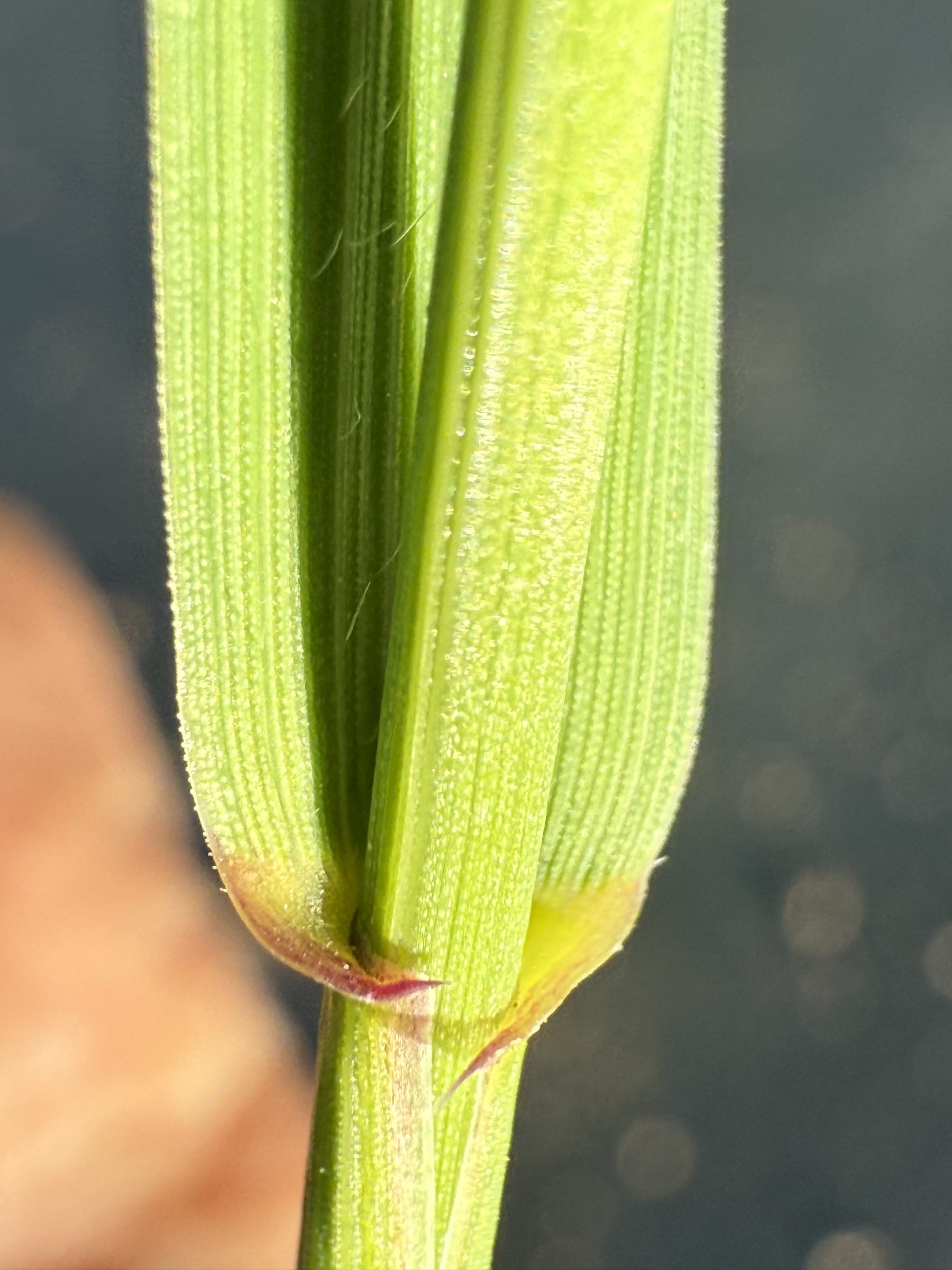
Quackgrass (Agropyron repens) is a common weed in lawns, gardens, and landscape beds throughout Wisconsin. The most notable feature consists of very prominent, vigorous underground creeping stems called rhizomes. As a result, quackgrass often mixes into other lawn grasses with the wider, blue-green leaf blades standing out and looking weedy. When pulling up the plant, these whitish rhizomes with sharp tips are very visible. In addition to rhizomes, quackgrass can be identified via long, slender, clawlike auricles, which wrap around stems near the base of the leaf blades.
Quackgrass Management Options
- Hand pull or dig out quackgrass plants. Due to having aggressive rhizomes and intertwining with lawn grasses, quackgrass is difficult to remove. Rhizomes breaking off and remaining in the soil are likely to propagate more quackgrass. Reseed afterwards with desirable lawn grasses. Late August is optimum timing.
- Spot treat the area containing quackgrass, including the adjacent desirable lawn grasses, with a nonselective herbicide such as glyphosate (see guidelines above). Since quackgrass often sprawls among lawn grasses, rather than staying in dense patches, significant amounts of desirable lawn grasses may also be killed. After the quackgrass dies, the area can be reseeded. Spray directly onto leaves of actively growing quackgrass to get effective control, as the herbicide needs to move into the quackgrass rhizomes and roots. Due to the extensive rhizomes, more than one application may be necessary. Apply in August so the area can then be reseeded in late August or early September.
Nimblewill in Lawns
Nimblewill (Muhlenbergia schreberi) is a warm-season grass that occasionally appears as dense patches in Wisconsin lawns, mostly in the southern part of the state. It is similar to creeping bentgrass in texture, with a fairly fine leaf blade and a bluish-green appearance. Leaf blades are short and tapered, Stems will root into soil at the nodes. Additionally, nimblewill is similar to zoysiagrass in being dormant for much of spring and fall in Wisconsin, thus appearing as dull brown, whitish brown, or even grayish-brown patches in the lawn. Moist soils in shade areas tend to see more nimblewill than full sun areas.
Nimblewill Management Options
- Hand pull or dig out patches of nimblewill. Since plants root from the nodes of the creeping stems, be sure to remove all the plants. Patches may be removed when actively growing or dormant, but optimum time for reseeding is late August into early September.
- Spot treat the nimblewill patches, and a small amount of the desirable lawn grasses adjacent to the patches, with a nonselective herbicide such as glyphosate (see guidelines above). After the nimblewill is killed, the area can be reseeded. Spray directly onto leaves of actively growing nimblewill get effective control. Apply in August so the area can then be reseeded in late August or early September.
- Spot treat the nimblewill patches and adjoining lawn grass with an herbicide containing the active ingredient herbicide mesotrione (Tenacity), which can selectively control nimblewill in Kentucky bluegrass and tall fescue lawns. Three applications at 7-to-10-day intervals are recommended (refer to product label to confirm specific time intervals). Read and follow label directions, including the maximum annual rate on turfgrass. Optimum timing with mesotrione is considered spring after the nimblewill starts to turn green. However, by the time the weed patches die, warm summer weather is not ideal for reseeding.
Author: Bruce Spangenberg, UW-Madison Extension
Rev: 03/2026
Reviewed by: Doug Soldat, Turfgrass and Urban Soil Extension Specialist