Tips for Hiring a Lawn Care Service
Deciding whether to care for your lawn yourself or hire a professional service is a significant decision for any homeowner. To make the right decision, you must first determine what level of maintenance you desire for your lawn, what your lawn needs, and understand the division of labor between you and a potential service provider. It requires an assessment of your lawn’s health, your available time, and your budget.
Deciding on a Lawn Service
A healthy lawn is a partnership. To determine if this partnership is necessary, first evaluate your lawn’s current condition. You may not need a professional service if your lawn is already thick and healthy; chronic weeds often signal underlying issues—like poor soil or improper mowing—that chemicals cannot fix long-term. If you determine that professional help is needed, consider which tasks you are willing to perform, and which require professional assistance. If either partner fails to fulfill their role, the health and appearance of the lawn will suffer.
Homeowner Responsibilities: Regardless of who you hire, homeowners are typically responsible for mowing, watering, and seeding bare areas. If these cultural practices are not done correctly, even the most expensive professional treatments may fail.
Professional Services: Most companies focus on fertilization and the control of weeds, insects, and diseases. Some specialized services may focus only on lawn establishment (seeding and sodding) or strictly on mowing and seasonal clean-up.
Determining Your Lawn’s Needs
Before hiring a service, it is important to understand what your lawn requires. Not every lawn needs a standard, multi-step chemical program. Homeowners should also decide on their desired maintenance level—low, medium, or high. A higher-maintenance lawn requires significantly more inputs, such as fertilizer and water, to maintain a specific appearance. Evidence-based lawn care focuses on your maintenance goals and applying only what is necessary for the specific site conditions.
Fertilization Basics
Proper nitrogen fertilization helps maintain healthy turfgrass, but it must be done in moderation to protect both the lawn and the environment.
- Nitrogen and why it matters: Nitrogen promotes green-up and growth. “Slow-release” or “controlled-release” nitrogen provides steady growth over time. “Fast-release” nitrogen provides a quick green-up but can lead to excessive growth, fertilizer burn, and other issues. Although more expensive, slow-release provides a steady nutrient supply and is better for the lawn than “fast-release” materials.
- Site Specifics: Lawns in full sun require more nitrogen than those in the shade. A professional should adjust their rates based on your specific lawn conditions.
- Environmental Impact: Over-fertilizing is a potential threat to lawn health and local water quality. Fertilizers should never land on “impervious surfaces” like driveways or sidewalks, as they can wash into lakes and streams.
Weed, Insect, and Disease Control
Chemical controls should be viewed as tools to manage specific issues, not as routine requirements.
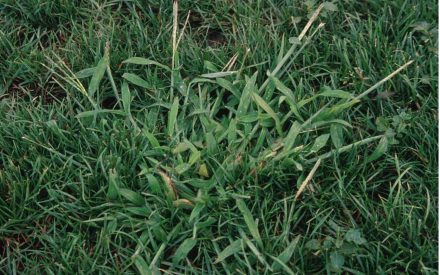
- Herbicides: Preemergence herbicides must be applied in the spring before weeds like crabgrass are visible. Postemergence herbicides target visible weeds like dandelions or ground ivy. If your lawn is thick and healthy, it may naturally resist weeds, making these applications unnecessary.
- Insecticides and Fungicides: These should only be applied if a serious outbreak occurs. This requires “scouting”—monitoring the lawn for specific pests like white grubs or disease patches—with proper diagnosis; rather than applying chemicals on a pre-planned schedule or preventative basis.
Selecting a Qualified Professional
If you decide to hire a professional, look for a reputable company that addresses your specific needs rather than offering a one-size-fits-all plan.
Look for Customization: Avoid companies that only offer “predetermined” plans. A reputable service will address the specific needs of your lawn and will not pressure you into unnecessary treatments.
Evaluate Total Value: You are paying for professional expertise and labor, not just the products applied. Rather than looking only at the price, evaluate the full scope of the contract: the quality of fertilizers, the number of visits, and the company’s procedures for troubleshooting and resolving issues.
Establish Clear Communication: Confirm in writing exactly what the service includes and which tasks remain your responsibility. Be aware that during peak seasons, firms have full schedules and may not be able to respond immediately. Ensure you understand the policy for addressing unsatisfactory results.
Check Credentials: Beyond customer reviews, ensure the company is properly licensed. In Wisconsin, any company applying pesticides (herbicides, insecticides, or fungicides) for hire must have a Pesticide Business Location License.
Verify Individual Licensing: Each employee who applies pesticides on your property must be certified and licensed annually as a Commercial Applicator.
Organic Services: Note that organic products registered as pesticides are subject to the same licensing and regulatory requirements as conventional synthetic pesticides.
Questions to Ask Potential Providers
Use the following questions to ensure the service provider aligns with best management practices and your specific goals.
Service and Communication
- How often will you be visiting my lawn during the season?
- Can you put all the applications and specific treatments you are planning in writing?
- What services are included in the contract price, and which are extra?
- Do you guarantee your work, and what is your policy regarding unsatisfactory jobs?
Fertilization and Product Details
- How many fertilizer applications are planned for my lawn?
- What kinds of nitrogen fertilizer products will be used (slow-release or fast-release)?
- Are adjustments made in the amount of fertilizer applied when fertilizing full-sun versus shade lawn areas?
Need-Based Pest Control
- What weed, insect, or disease control applications are automatically included in your program?
- Can these applications be limited to being made only if specific problems are confirmed on my lawn?
- Can you please explain crabgrass and why my lawn might need (or not need) a preemergence herbicide?
- Can you show me the specific broadleaf weeds in my lawn you intend to spray?
- Will my lawn be monitored for white grubs and only treated if you can show me they are a confirmed problem?
- If fungicides are being used, can you tell me specifically why?
Licensing and Your Rights in Wisconsin
Lawn care services in Wisconsin are regulated by the Department of Agriculture, Trade and Consumer Protection (DATCP). These regulations are designed to protect both the homeowner and the environment. Understanding these rules helps you verify if a company is qualified.
- Pesticide Licensing: Any company applying pesticides (including weed killers and “organic” pesticides) must have a Pesticide Business Location License. Each individual employee applying these products must be certified and licensed annually as a Commercial Applicator.
- Fertilizer: Licensing is generally not required for fertilizer application, and notifying neighbors is not legally required for fertilizer-only treatments.
By law, any service providing pesticide applications must:
- Provide a written offer each year outlining which pesticides will be applied.
- Post placards (warning signs) on the lawn immediately after application.
- Leave post-application information on the property for the resident.
- Notify neighbors in advance if they are listed on the Landscape Pesticide Registry.
- Record all applications the same day they are made and keep these records available for state inspection.
Successful lawn care depends on a partnership between the homeowner and the professional. When making your choice, prioritize total value over the lowest price. An informed decision—focused on your lawn’s specific needs and professional expertise—is the most effective way to ensure a healthy, sustainable Wisconsin landscape. For more information on lawn care in Wisconsin, visit our lawn maintenance page.
Author: Bruce Spangenberg, Statewide Horticulture Outreach Specialist, UW-Madison Extension
Reviewers: Julie Hill, Horticulture Educator for UW-Madison Extension Rock, Jefferson, and Walworth Counties; Margaret Murphy, Horticulture Educator for Chippewa County; Kimberly Miller, Wisconsin Extension Master Gardener Program Coordinator
Published: April 1, 2026