Overview
Extreme temperatures over 90 °F and lack of precipitation cause major problems for many growing plants. With more extreme heat and drought happening in Wisconsin, it’s important to understand how these conditions affect your plants and what you can do to help them.
Practices to use before extreme heat and drought
- Plant a diversity of heat and drought tolerant crops (see table). Plants with deeper root systems often fare better than shallow-rooted species. Some heat tolerant vegetable crop cultivars exist.
- Lawn grass species like perennial ryegrass and Kentucky bluegrass can be converted to more drought-tolerant species such as fine fescues and tall fescue. If even more drought tolerance is desired, consider converting to non-turfgrass plants like sedges.
- Maintain general health of trees, shrubs, perennials and annuals so when they experience drought or heat, they are not already stressed.
- Apply mulch to conserve water in the soil.
- Add organic matter to soil over time to improve its water holding capacity.
- Mow turf higher (3.5 – 4 inches) to promote a deeper root system able to access water from more of the soil.
Practices to use during extreme heat and drought
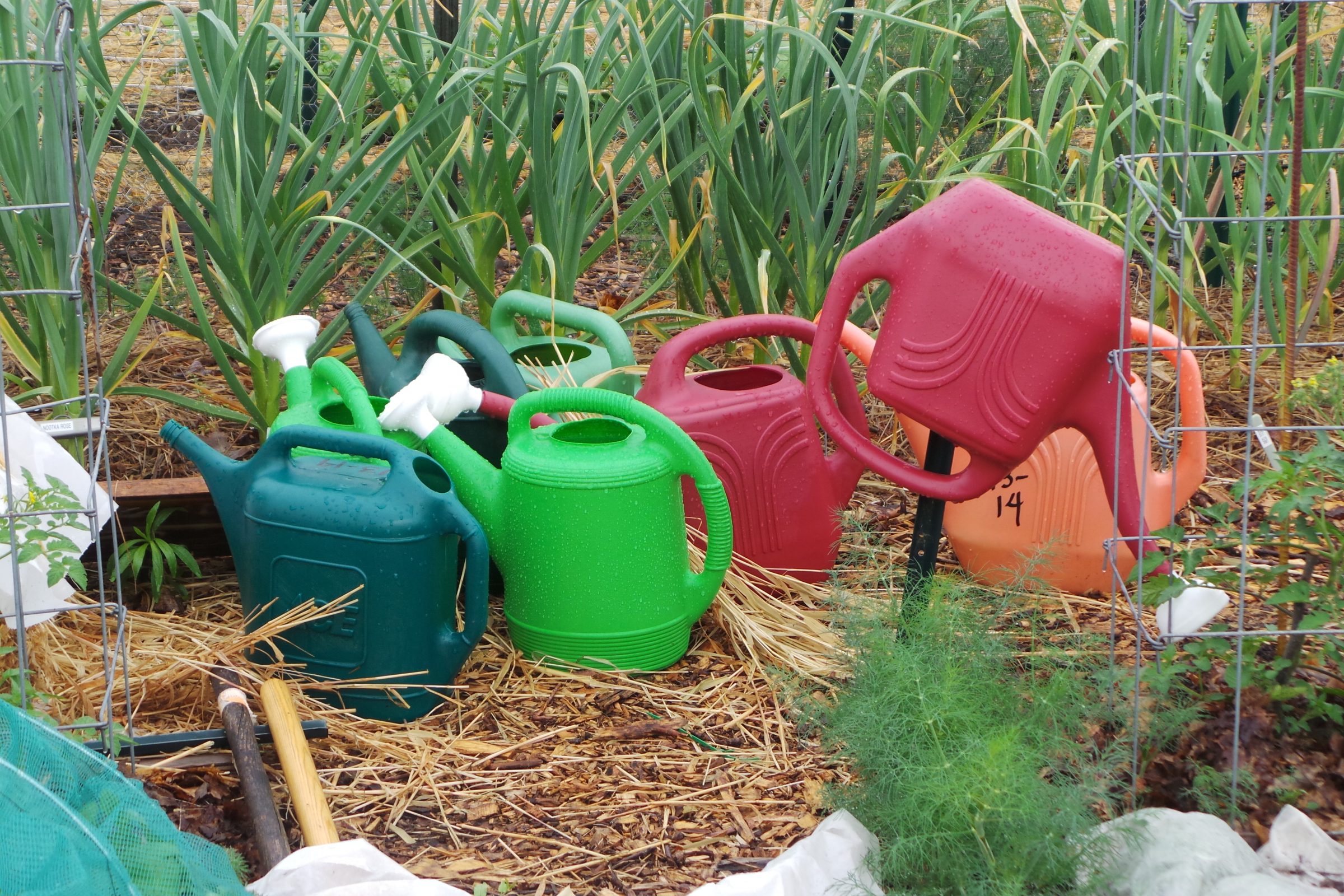
- Watering is the best way to support plants experiencing heat or drought. Use smart watering practices to make efficient use of water and avoid water waste:
- Water in the morning when temperatures are coolest to reduce water loss due to evaporation.
- Water deeply at a slow rate to allow water to absorb into the ground rather than run off. Use soaker hoses or drip irrigation when possible.
- Water at the base of the plant to reduce water loss due to evaporation and disease risk due to wet foliage.
- Pay close attention to recent transplants, containers, and drought-sensitive plants. Water when soil is dry or you notice wilting—even if it’s not at an ideal time of day. Containers may require more than one watering per day because they dry out so quickly.
- Don’t overwater, which can cause root damage. Standard watering recommendations apply.
- Know your soil type. Sandy soils tend to dry out quicker than clay soils.
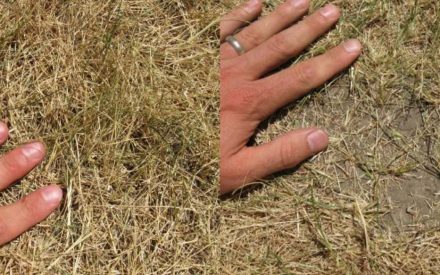
- Consider allowing Kentucky bluegrass lawns to go dormant during drought. Kentucky bluegrass can go dormant and survive without water for up to 6 weeks. Most other grass species can survive for a shorter period of time after they have turned brown from drought, approximately 1 to 2 weeks, but will need rainfall or irrigation following that to keep them alive.
- Provide shade to sensitive plants, crops, or containers by using a shade cloth or old bedsheet.
- Scout for insect or disease problems that are more likely to happen when conditions are dry and warm, such as spider mites.
Avoid these practices during extreme heat or drought:
- Don’t fertilize.
- Don’t transplant or propagate.
- Don’t use chemicals during extreme heat or drought. Always follow the label instructions.
- Don’t prune if you can help it, including tomato suckering. Exceptions include if a tree or shrub has a broken, dead, or diseased branch.
- Don’t mow. If you must mow, don’t raise the mowing height during drought. Keep it where it’s been for the season so far.
What to do during extended periods of heat and drought
It can be difficult when our gardens and landscapes experience extended periods of heat or drought. Here is what to do for your plants:
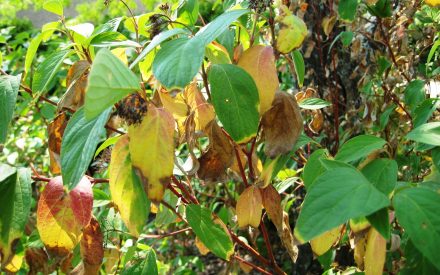
- Flowers, vegetables, perennials, herbs (herbaceous plants) can become so severely wilted that leaves burn, curl, or brown. When you notice symptoms, immediately water the plant slowly and deeply. If it begins to bounce back, continue to support it with water as it recovers. Resist the urge to cut off dead or burned leaf tissue or prune to reduce additional stress on the plant as it recovers. It is ok to deadhead flowers. If the plant does not respond to supplemental watering, it is likely dead and can be removed.
- Dormant turf exposed to more than six weeks of drought should be watered to avoid crown death. Water enough to hydrate crowns but not enough to make grass turn green again, generally ~1/4 inch per week.
- Trees and shrubs exposed to extreme drought or long periods of extreme heat should be supplementally watered to support recovery. Be aware that stressed woody plants are more vulnerable to insect and disease attack and may show stress symptoms years into the future. Monitor woody plants in years to come and support with proper watering through the fall. If your tree or shrub continues to decline, consult with a certified arborist to discuss viability.
What are extreme heat and drought?
Wisconsin often has hot, humid summers. On the hottest days, the temperature can rise above 90 °F, and it feels even hotter when it’s humid. Wisconsin has recorded different temperature records, even occasionally exceeding 100 °F. From a plant’s point of view, sustained temperatures over 90 °F can result in reduced growth and increased stress.
Extreme heat and drought together can make things worse for plants. Drought happens when there is little or no precipitation for a long time. When soil dries out, plant roots can’t get enough water and the plants become stressed. Drought can happen any time of year; you can see current conditions on the U.S. Drought Monitor. In summer, warm temperatures cause the air to pull more water from the soil, and plants grow quickly and need more water. Together, these factors contribute to drought issues that can develop quickly in summer and stress plants.
Climate trends in Wisconsin
While summer daytime high temperatures haven’t yet increased, summer overnight temperatures have. Looking ahead, climate projections from the Wisconsin Initiative on Climate Change Impacts (WICCI) show that by 2041–2060 the state will experience increases in both: more daytime temps above 90°F or 100°F and significantly more nights that remain at or above 70 °F.
With projections of summer rainfall appearing to remain stable through mid-century, drought impacts may be more severe due to anticipated higher maximum temperatures.
Plant response to extreme heat and drought
Extreme Heat
Symptoms
- Leaf curling or cupping
- Dry leaf edges
- Wilting
- Increased risk of insect or disease attack due to general stress
- Flower or fruit drop
- Reduced growth
- Reduced crop yield or quality
- Lawns may go dormant
- Bolting in some plants due to stress
- Sunscald on fruits
- Plant death
What’s Happening Inside the Plant
- Photosynthesis becomes inefficient due to extreme heat, resulting in less energy produced for plant use.
Here is why: at a cellular level, photosynthesis involves proteins, and these proteins are negatively affected in extreme heat; additionally, the chemical reactions of photosynthesis are negatively affected. Plants are still using any available energy without producing enough to keep up, so they end up running out. Plants cannot operate with an energy deficit. - Reduced germination.
- Reduced transpiration. Under mild heat stress, plants may increase transpiration to cool the plant, but when it’s hot enough, they slow this down by shutting their pores (stomata) to conserve water and avoid wilting.
Drought
Symptoms
- Trees and shrubs may show branch dieback, lack of vigor, leaf wilting, or curling during the year of drought and in the future. Previous drought can show effects in future years.
- Wilting
- Lack of growth
- Reduced crop yield or quality
- Plant death
- Lawns may go dormant, and eventual death of crown if drought is long enough.
What’s Happening Inside the Plant
- Water is essential for photosynthesis, so the process is reduced under drought conditions.
- Cells lose their internal water pressure, so plant structures droop and wilt.
- Yields are reduced because water is a major component of fruit or vegetable formation.
- Nutrient deficiencies may develop because plants are unable to take up nutrients normally dissolved in soil water.
Plant lists adapted to extreme heat and drought
Authors: A. Freidig, A. Pyle, et al. with contributions from the Wisconsin State Climatology Office
Reviewers and contributors: Josh Bendorf and Bridgette Mason, Wisconsin State Climatology Office; Julie Hill, Bruce Spangenberg, Jacob Kluza, Josie Dillon, UW-Madison Extension Horticulture Program; Dr Paul Koch, Department of Plant Pathology ; Dr. Yi Wang, UW Department of Plant and Agroecosystem Sciences
Published: January 2025
References
- Wisconsin State Climatology Office – https://climatology.nelson.wisc.edu/
- WICCI – https://wicci.wisc.edu/wisconsin-climate-trends-and-projections/
- NOAA State Climate Summaries – https://statesummaries.ncics.org/chapter/wi/
- County Climate Profiles, Wisconsin State Climatology Office – https://climatology.nelson.wisc.edu/county-climate-profiles/