Overview of Bulb Forcing
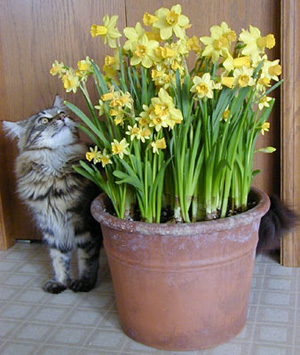
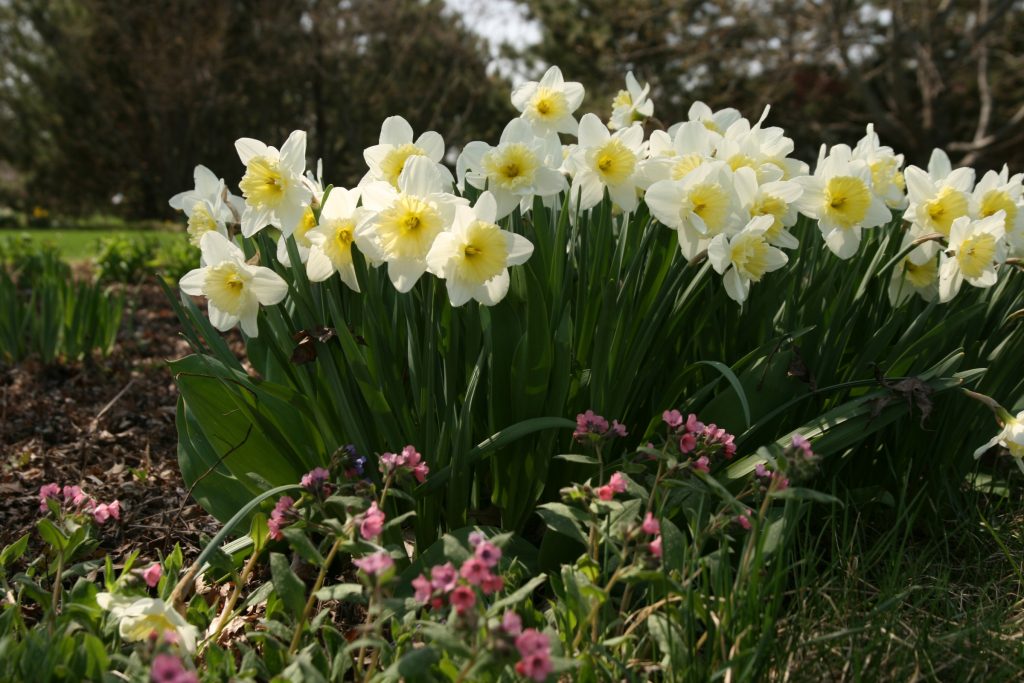
Wisconsin gardeners do not have to give up growing flowers during the long, cold winter months. Many plants grown from bulbs (also those grown from corms or rhizomes) can be forced to bloom indoors during the winter by giving them the combination of cold and dark conditions that they need to break dormancy, develop roots, and flower. If you can spare a corner of your refrigerator, you can enjoy flowering hyacinths, narcissus, tulips, crocus, or other spring-flowering plants during the winter.
“Forcing” provides the proper temperature conditions to allow bulbs to flower indoors, usually much earlier than would happen naturally outdoors. Paperwhite narcissus and amaryllis are the easiest bulbs to force and don’t require a long time for rooting. Paperwhites bloom in just 3 to 5 weeks, while amaryllis can bloom in 6 to 8 weeks. Other spring-flowering bulbs require a longer conditioning period to induce flowering. Plant batches in succession can provide fresh flowers throughout the winter season.
Selecting Plants for Forcing
It is best to choose varieties specifically recommended for forcing. Select top quality bulbs with no soft spots. Do not purchase bulbs that are damaged. When selecting bulbs to force, keep in mind that late-blooming varieties generally need longer cold treatments than early blooming varieties. Also remember that taller varieties may need to be staked and thus may not be appropriate in all settings.
How To Plant Bulbs for Forcing
Plant bulbs from September through November for indoor bloom. Use plastic or preferably clay containers with drainage holes. Proper drainage is crucial for forcing bulbs. Use a high-quality soilless potting mix. Partially fill containers with potting mix, arrange bulbs so that the bulb “neck” (top of the bulb) is at or just below the media surface, and gently add more potting mix around the bulbs. Amaryllis bulbs can be planted with the top 1/3 of the bulb above the level of the potting mix. Smaller bulbs like grape hyacinth and crocus may be covered by one half to one inch of the potting mix.
Fertilizing bulbs when forcing is not necessary, but be sure to water your bulbs if the potting mix is very dry and add potting mix as needed if settling occurs. Bulbs require some moisture during their cold treatment, but too much moisture can promote growth of rot fungi. If the potting mix in your pots is overly wet, allow it to dry a bit before beginning the cold treatment.
Hyacinths and paperwhite narcissus can be grown without potting mix. Hyacinths are often grown in special glass containers shaped to hold a single bulb, but any container with a neck narrow enough to suspend a bulb over water will work. Paperwhite narcissus bulbs can be grown on sand, gravel, pebbles or marbles. Place whatever material you select around the bulbs high enough to support them and keep them upright. Space bulbs as described above. For both hyacinths and paperwhite narcissus grown without potting mix, add water to the container, keeping the water level just below the bottom of the bulbs. If water touches the bulbs, they will rot.
How To Force Bulbs to Flower
Most bulbs require cold, dark conditions that simulate winter in order to bloom. However, amaryllis and paperwhite narcissus bulbs do not require a cold treatment. Cold treatment guidelines for several bulb species are given in Table 1.
Ideally, temperatures should decrease gradually. Bulbs should spend the first three to five weeks developing roots at 45 to 50 °F, followed by about three weeks at 38 to 42 °F, and the remainder of their cold period at about 35 °F. However, the constant temperature of a home refrigerator (typically between 35 and 45 °F) also works. Avoid storing fruit (particularly apples) in the refrigerator while forcing bulbs as ethylene gas released from ripening fruit impairs flower development. Also be sure to shield the bulbs from light.
Table 1. Recommended cold period for forcing bulbs
| Flower (Latin Name) | Required cold period |
|---|---|
| Amaryllis (Hippeastrum) | None |
| Crocus (Crocus) | 15 to 17 weeks |
| Daffodil (Narcissus) | 15 to 17 weeks |
| Dwarf Iris (Iris reticulata/Iris danfordiae) | 15 to 16 weeks |
| Glory of the Snow (Chionadoxa) | 15 weeks |
| Grape Hyacinth (Muscari) | 15 to 17 weeks |
| Hyacinth (Hyacinthus) | 12 to 15 weeks |
| Lily-of-the-Valley (Convallaria) | 14 to 15 weeks |
| Paperwhite narcissus (Narcissus) | None |
| Tulip (Tulipa) | 15 to 17 weeks |
Forcing Paperwhites
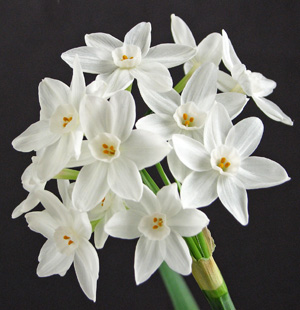
Paperwhites are often forced in a shallow pot or bowl (sometimes without drainage holes). A clear container shows the roots developing and makes it easier to gauge the water level. After filling the pot about two-thirds with pebbles, gravel or soil, place as many bulbs (flat end down) in the container as will fit without touching each other. Then fill in around the bulbs. Add water to the pot until it just reaches the bottoms of the bulbs. Place the container in a cool, dark spot (45 to 50 °F) to encourage root growth.
In about three weeks, after roots have developed, move the pot to a cool, sunny spot. Sprouts will quickly develop and soon thereafter blooms. Keep the water level just at the base of the bulbs. The fragrant flowers will last 10 days to several weeks in cool conditions (less when conditions are warm). You can adjust the bloom time a little by adjusting temperature and watering. If the plants are developing too quickly, move them to a cooler spot and reduce watering. To speed flowering, put plants in a warmer place. Stems can be staked if they start to flop over.
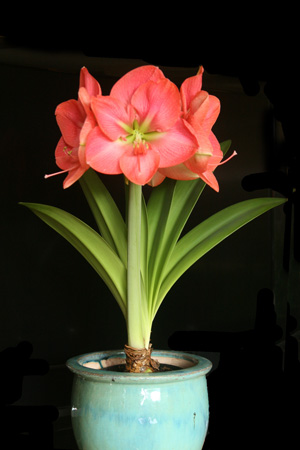
Forcing Amaryllis
Plant amaryllis (Hippeastrum hybrids) bulbs in containers with a drainage hole (and saucer to catch water run-off). These large bulbs are often potted individually in a pot an inch or two larger in diameter than the bulb, but several bulbs can be planted together in a sufficiently large container.
Add a few inches of soilless potting mix to the pot and place the bulb on top of the potting mix so that the top of the bulb is barely above the rim of the pot. Then fill with more potting mix around the bulb, leaving the neck exposed. Water well and place in a cool, sunny spot. Water sparingly until a sprout forms, then water more frequently to keep the soil moist. It generally takes six to eight weeks for amaryllis to bloom.
Forcing Other Spring-Flowering Bulbs
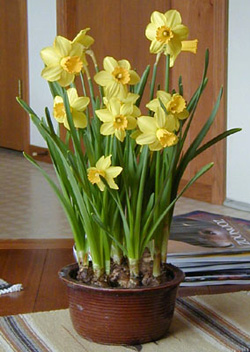
All other spring-flowering bulbs need a longer period of chilling to bloom. Crocus, daffodils and tulips are all suitable for forcing but some varieties work better than others (and are often listed as suitable for forcing in catalogs). Shorter varieties tend to make a better indoor display and won’t flop over as easily. Regardless of the type or variety, use the largest bulbs you can get since the flowers will be larger. Tulips tend to be more difficult to consistently force with daffodils less so. ‘Tete-a-Tete’ is a very good variety of small daffodil for forcing. Hyacinths, crocus and grape hyacinths are easier to force.
Place as many bulbs as you can in the pots without them touching each other or the sides of the pot, as crowding provides a better show of flowers. Add enough potting mix over the bulbs so they are sticking out of the soil about halfway. Water the pots well.
The amount of time planted pots then need to be chilled is species dependent. Check Table 1 for recommended cold periods for a variety of species. You can place them in a refrigerator, an unheated garage, a cold frame, or other area where the temperature doesn’t drop below 20 °F.
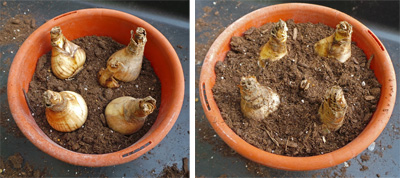
Too much freezing and thawing will cause the bulbs to rot, so the consistent temperature in a refrigerator helps to ensures success. Check the pots periodically and water as necessary to keep the soil moist but not wet. If the potting mix is very dry, add a small amount of water. When using a refrigerator, the pots can be covered with an open plastic bag, which reduces the need for frequent watering. Labelling pots with the date cooling started helps ensure they can be taken out at the right time.
When the cold period is complete, the bulbs will have shoots that are one to two inches tall. Take the pots out of the cooling environment and place them in a warm spot in indirect light where the temperature is between 55 and 60 °F for a few days. Shoots initially will be white, but will turn green when the bulbs are brought into the light. When the sprouts have greened up, transfer the pots to the sunniest window you have and continue watering as needed. Most bulbs will bloom about three to four weeks after they are removed from the cold. At warmer temperatures, bulbs may grow faster, but flowers will not last as long. Keep bulbs moist, but not overly wet. Bulbs will require more water as leaves begin to grow rapidly.
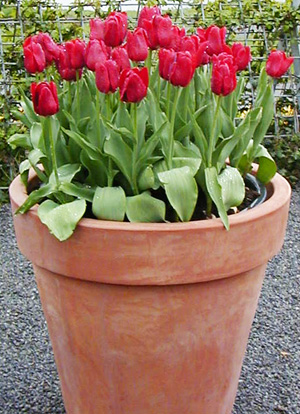
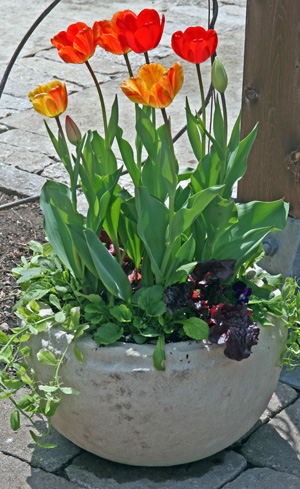
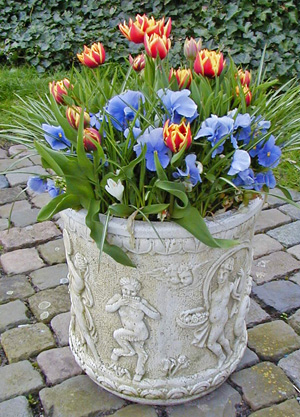
In early spring, containers can be moved outdoors as long as the weather is not too cold, but the plants need to be acclimated to the change of conditions if they are near to or are already blooming. Forced bulbs can be combined with other cold tolerant plants such as lettuce or pansies.
To plant forced bulbs outside when they’re done blooming, cut off the flower stalks but leave the foliage until it’s completely dead. Then plant the bulbs outside at the appropriate time in the fall. It will probably take a year or two for the bulbs to bloom again.
Hyacinth bulbs require less space during cooling, as unplanted bulbs can be cooled in a paper bag in the refrigerator for 4 to 6 weeks. Bring them out and put them in specially designed forcing vases filled with water just up to the base of the bulb. Place them in a bright window and in about four weeks beautiful, scented hyacinth flowers will be produced!
What to do With Bulbs After Blooming
Hyacinths, narcissus, tulips, and crocus cannot be forced two years in a row. However, bulbs that have been forced indoors in potting mix can be planted in the garden. Keep the bulbs in pots through the spring and summer, watering and fertilizing them regularly until they naturally die back. In the autumn, plant the bulbs in at the recommended depth. The bulbs may bloom the following spring, but most likely will need a year of leaf growth before they rebloom. Bulbs grown without potting mix are more difficult to transplant and often won’t bloom again, even in the garden.
To get an amaryllis to bloom again, it is important to allow the bulb to store food during its growing season and then give it a dry dormant period. After bloom, remove the flowers, give the plant plenty of sunlight, and fertilize. Stop watering in early September and allow the plant to dry out completely. The foliage will die back. If taken outside during the summer, bring the plant inside before frost. Starting in November or December, begin to water the bulb again to repeat the blooming cycle. Consider repotting amaryllis every few years into a pot no more than one to two inches wider than the diameter of the bulb.
Keep a log. Keep records of the varieties that you force, the length and temperature of cold treatment, and weeks until bloom after cold treatment. This information can provide a valuable reference for future winter horticulture endeavors.
Author: Susan Mahr, Ann Joy, and Brian Hudelson, University of Wisconsin-Madison
Reviewers: Allen R. Pyle, Horticulture Outreach Specialist, UW-Madison Extension, Bruce Spangenberg, Horticulture Outreach Specialist, UW-Madison Extension
Revised: June 2026