Overview
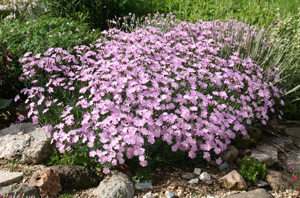
There are over 300 species in the genus Dianthus and thousands of cultivars, including numerous hybrid varieties. Native from Europe to western Asia and down to southern Africa, Dianthus is in the carnation family (Caryophyllaceae), and species may be annual, biennial, or perennial. Commonly referred to as “pinks” in reference to the finely divided edges of the flower petals, which somewhat resemble the zigzag pattern created by pinking shears. One of the best of the pink flowering cultivars of D. gratianopolitanus (cheddar pinks) is the variety ‘Bath’s Pink’. Its name honors the person who discovered it, Jane Bath of Stone Mountain, Georgia. This species and this variety are hardy in zones 3a to 8b.
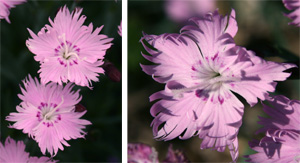
In mid to late spring, single flowers are produced on wiry stems up to 10 inches tall above the foliage. Each 1 inch star-like flower is a bright but soft pink with fringed edges and a red band surrounding the white throat. The plant is generally completely covered with flowers, remaining in bloom for several weeks. The flowers are fragrant, especially in the evening, and are attractive to butterflies and other insects. Shearing after this main bloom will encourage sporadic repeat bloom in summer but typically ‘Bath’s Pink’ blooms heavily in the spring and very little for the rest of the season.
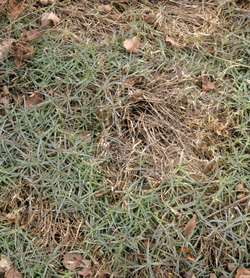
The fine, blue-green leaves are linear and almost grasslike. The plants form a mounded mat 6 to 8 inches high and spreading 24 to 30 inches wide. The foliage remains attractive throughout the year and is evergreen in mild winter climates. It tolerates heat, cold, humidity and drought better than many other Dianthus species. Clumps can be kept to a smaller size by pruning in very early spring or after blooming.
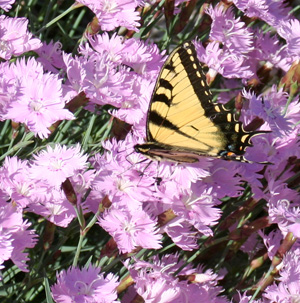
Landscape Use of ‘Bath’s Pink’
‘Bath’s Pink’ is an excellent choice for the front of a garden border and in larger rock gardens. Plant it near walkways, paths, patios, or other places where the spicy fragrance of the flowers can be enjoyed. Its vigorous and spreading nature makes it useful as a ground cover when massed together. It can also be useful as an edging and is right at home in cottage gardens. This cultivar can be grown in containers.
Like most Dianthus, ‘Bath’s Pink’ does best with full sun and well-drained, slightly alkaline soil. Root rot can be a problem if they remain too wet, especially in winter/early spring. Fortunately, it is not favored by deer or rabbits.
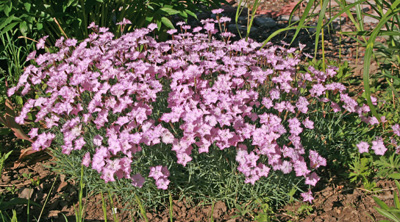
Propagating ‘Bath’s Pink’
Divide plants every few years or when the centers begin to die out. Division is best done in early spring. As this plant tends to root along the stems that remain in contact with moist ground (more easily than most Dianthus), the edges of a clump can often be transplanted to form a new clump. Plants can also be propagated from cuttings taken and rooted in early summer. Because ‘Bath’s Pink’ is a vegetative cultivar, it does not come true from seed.
– Susan Mahr, University of Wisconsin
Last Update: Allen R. Pyle, UW-Madison Extension, 2026