Overview of German Chamomile
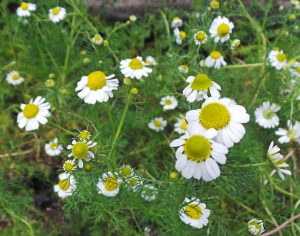
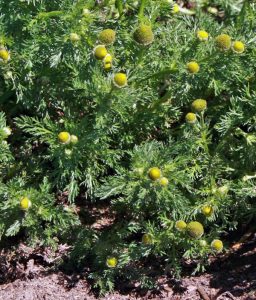
Matricaria chamomilla is one of several different species in the daisy family (Asteraceae) that have the common name chamomile. Also known as sweet false chamomile or annual chamomile, it is one of two species commonly used for making chamomile tea. M. chamomilla (sometimes listed as Matricaria recutita or Chamomilla recutita) is an annual native to southern and eastern Europe and western Asia that has been widely introduced in temperate areas elsewhere where it thrives in disturbed areas, meadows and fields. It is closely related to pineapple weed, M. discoidea (sometimes called wild chamomile), a common weed of roadsides and gardens with edible flowers that exudes a pineapple aroma when crushed. It is easy to distinguish from M. chamomilla when in flower because the inflorescences lack ray flowers (the daisy “petals” of the flowers).
The shorter Roman, English, or garden chamomile, Chamaemelum nobile, is a perennial native to western Europe hardy in zones 4a to 9b. This evergreen species spreads by creeping, rooting stems and can be somewhat aggressive in suitable conditions. It is used less frequently in tea, as it has a more bitter taste than M. chamomilla. These plants are often confused with plants of the genus Anthemis, some of which are poisonous and have either a revolting smell or are nearly odorless. These genera can be distinguished botanically by the receptacle which is hollow in Matricaria and filled in Anthemis.
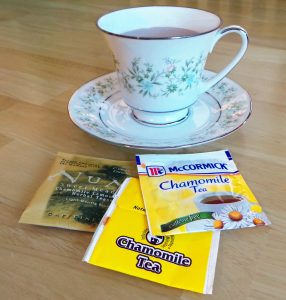
Chamomile tea, one of the world’s most popular herbal teas, is made from dried flowers of either species of chamomile steeped in hot water. Commercial tea bags of chamomile contain either pure chamomile flower powder or may be blended with other medicinal herbs. Chamomile flowers can also be used to make a yellow-brown fabric dye.
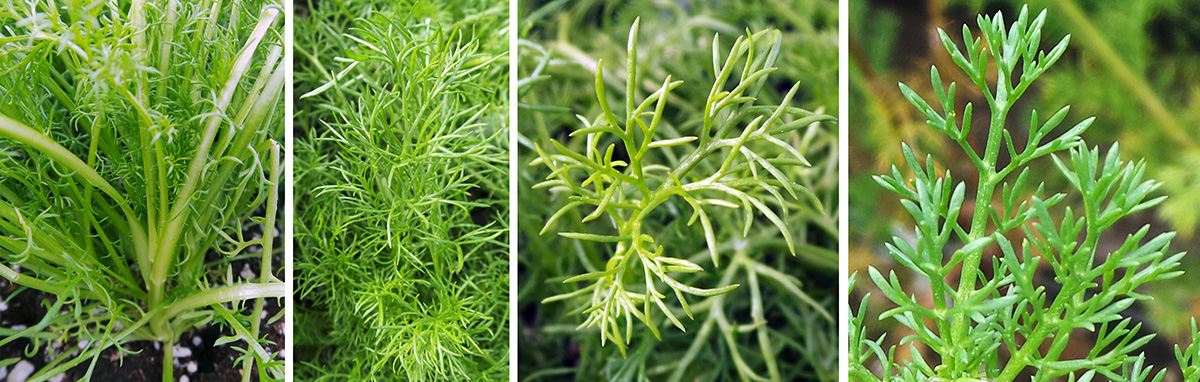
Annual chamomile grows quickly from seed to produce erect, branched stems up to 2 feet tall. The thin roots are shallow and spreading. The alternate, sparse, finely divided (double pinnate) leaves are long and narrow (to 3 inches long). The foliage is aromatic but somewhat bitter tasting.
The plants begin blooming in early to midsummer, producing a prolific number of solitary terminal flowers until the seeds begin to ripen in late summer or until frost if deadheaded. As with other plants in the daisy family, the inflorescences of this plant are paniculate flower heads (capitula), each composed of a domed central cone of bright golden yellow tubular florets surrounded by 10 to 25 white ray flowers. The flowers have a strong, aromatic apple-like fragrance and are attractive to bees and butterflies. After the flowers are spent they are followed by yellowish brown seeds (achenes). Plants readily self-seed, unless all flower heads are removed.
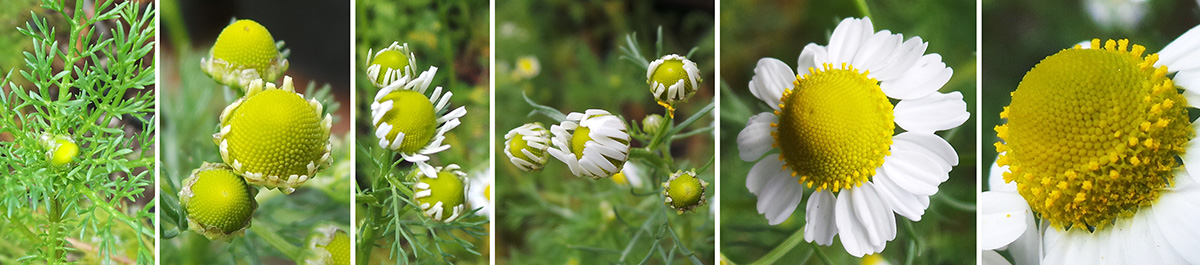
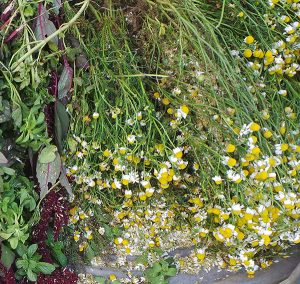
Harvest the flowers when they are near full bloom for best quality, snipping just the inflorescence from the stem. Flowers may be used fresh or dried.
Landscape use of German Chamomile
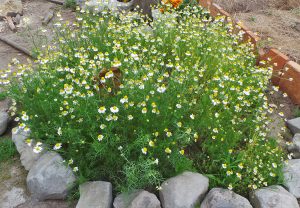
Chamomile can be grown as an annual herb in herb or vegetable gardens, or it can be integrated into ornamental beds and borders. Grow chamomile in full sun and in well-drained soil. It will grow well in poor soils, so does not need much fertilizer and has few pest problems other than aphids. It is not preferred by deer. Since the plants are shallow-rooted, irrigate as needed to keep upper levels of the soil moist but not wet.
Propagating German Chamomile
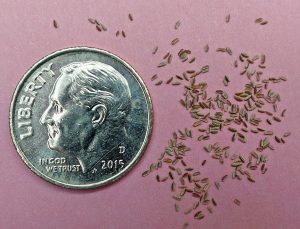
Chamomile is propagated from seed, either planted directly in the garden in fall or shortly before the average last date of frost or started indoors 6 to 8 weeks before the average last date of frost to be transplanted outdoors after the last frost date.
The seeds need light to germinate, so surface sow and press into the soil. Under warm conditions, germination generally occurs within a week.
Larger plants do not transplant well, so grow individually in containers or transplant when small. There are some improved cultivars which have been selected for high levels of essential oils in commercial production, but these selections are not commonly available to gardeners.
Author: Susan Mahr, University of Wisconsin-Madison
Reviewers: Allen R. Pyle, Horticulture Outreach Specialist, UW-Madison Extension, Bruce Spangenberg, Horticulture Outreach Specialist, UW-Madison Extension
Revised: May 2026