Overview
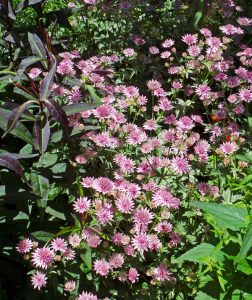
Astrantia is a genus of 8 or 9 species in the carrot family (Apiaceae). One of the most commonly available as a garden ornamental is A. major, native to mountain meadows, grasslands, woodland clearings and along streams in Europe and western Asia. With a common name of masterwort (also the common name for Peucedanum ostruthium) or great masterwort, or just astrantia, this herbaceous perennial is hardy in zones 4a to 7b. The less commonly available A. maxima is a bit taller than A. major, with flowers held not as far above the basal clump
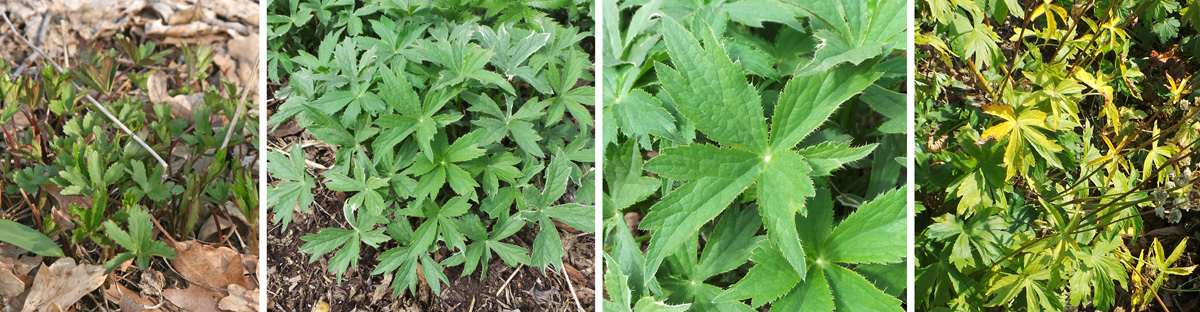
Plants grow in mounded clumps up to 1½ feet high and spread by stolons. The 3 to 6 inches long basal leaves are palmate with 3 to 7 deeply divided lobes and toothed edges but the sparse leaves on the branched flower stems are narrow with three shallow divisions. The medium green foliage remains attractive throughout the season but does not develop interesting fall color.
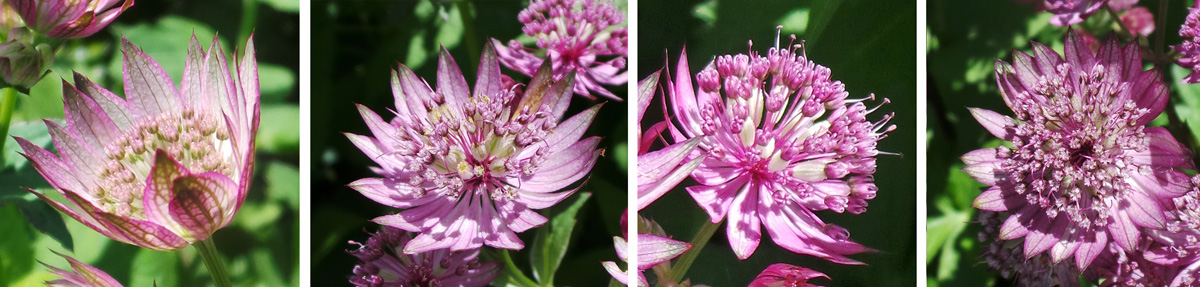
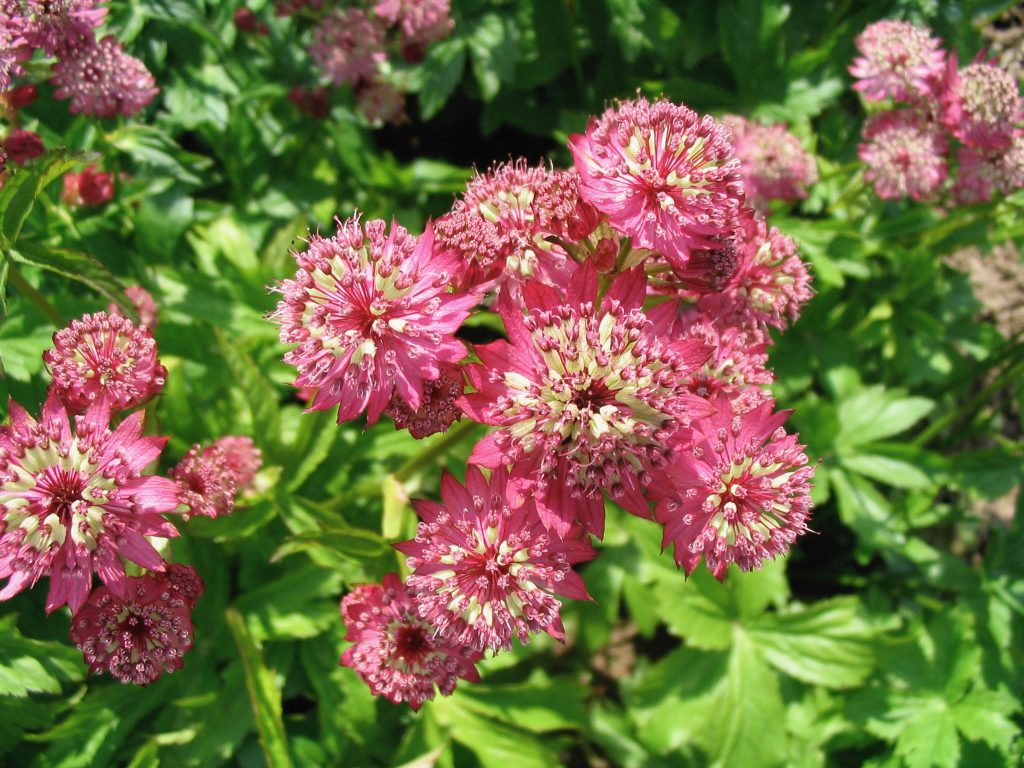
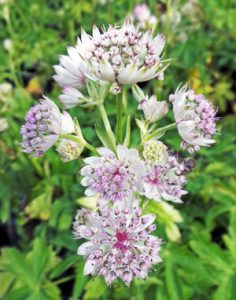
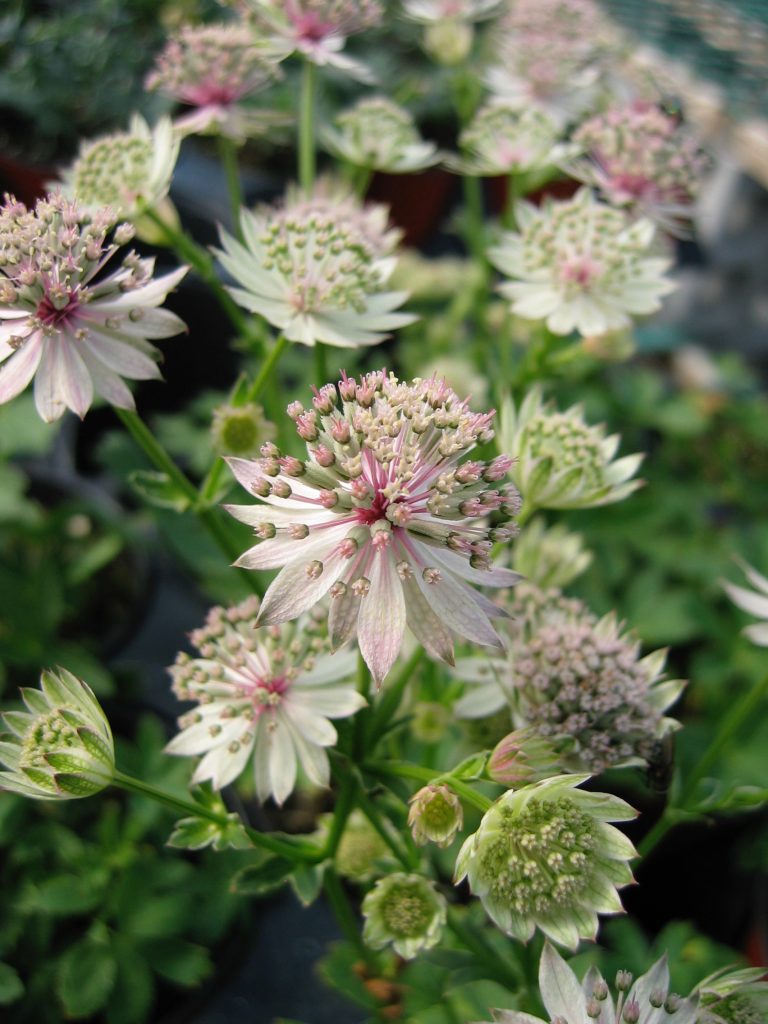
The plants bloom all summer in dense, compact, domed compound umbels about an inch across on the ends of wiry stems held well above the basal foliage. Numerous (19 to 20) showy, papery, petal-like involucral bracts surround a group of many tiny, tightly packed flowers for a pincushion-like effect in shades of red, pink and white.
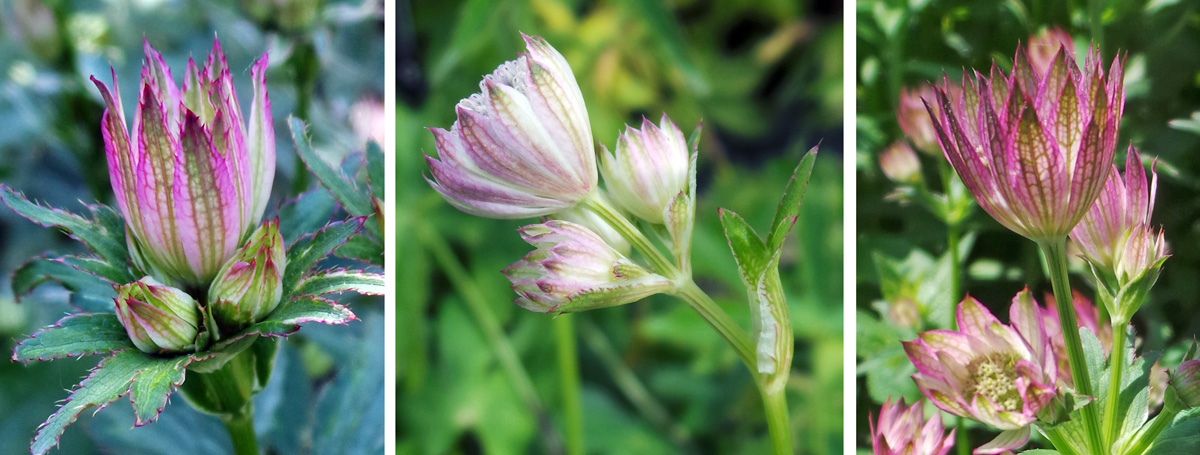
The faintly fragrant, 5-petaled flowers with long stamens are pollinated by many types of insects, including bees, flies and beetles.

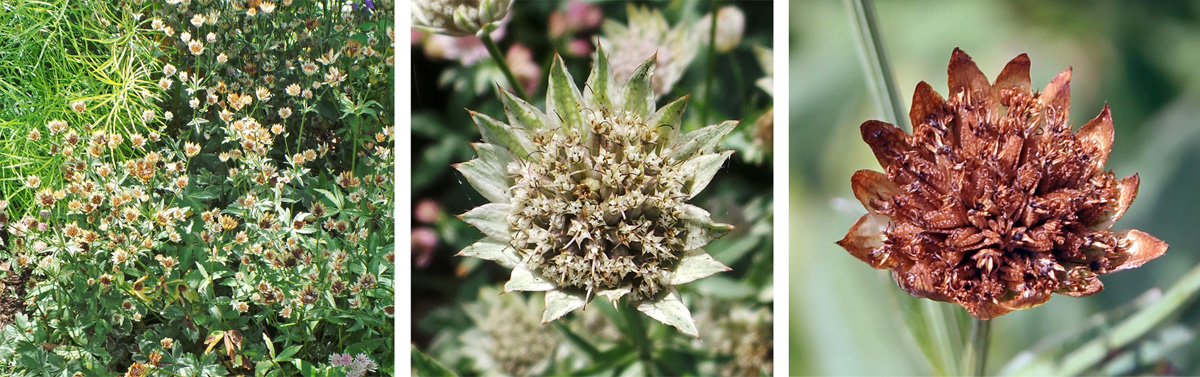
The bracts remain attractive well after the flowers finish blooming and are excellent in dried arrangements. The umbels can be used as fresh cut flowers as well. Deadheading may encourage continued bloom. The spent foliage and flower stems can be cut back in fall or left for interest through the winter.
Landscape Use of Astrantia
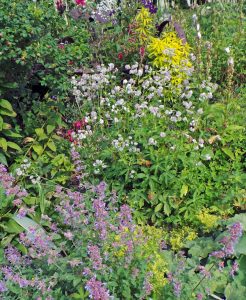
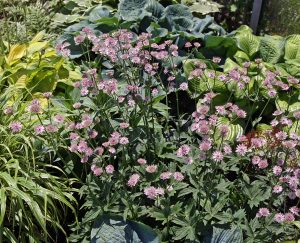
Astrantia adds interest in perennial beds and borders, cottage gardens, and shade or woodland gardens where they can be viewed up close so their small, exotic-looking flowers can be appreciated. These plants make good fillers but don’t show particularly well from a distance, as the small size and muted colors of the flowers tend to disappear or blend in with everything else. The relatively fine textured foliage provides good contrast to hostas and other large-leaved plants. Combine astrantia with astible, ligularia, and ferns in shaded sites or with ornamental grasses in sunnier areas. It also grows well in containers, but it needs protection over the winter if left above ground.
Astrantia grows best in part shade in fertile, continuously moist soil with plenty of organic material. Ideal conditions are where the plant receives a few hours of morning sun and dappled shade for the rest of the day. The plants will grow in full shade will not bloom very prolifically. This species does not tolerate dry soil, so must be irrigated if rain is insufficient to keep the soil moist. It is fairly adaptable, and will even tolerate some standing water, so could be included on the edge of a bog garden. It does best in cool climates where night temperatures consistently dip below 70 °F, so it is very suitable for most of the Upper Midwest. Plants can be fertilized in early spring and again at mid-summer, but is usually not necessary in fertile soils. This plant has few pest problems but may be attacked by aphids or slugs.
Propagating Astrantia
Propagate astrantia from fresh seed or divide established plants in early spring or fall. Provide seeds with a period of cold, moist stratification for 2 to 3 months so they will germinate. This is most easily accomplished by sowing directly in the garden in early fall, although they can be started indoors about 6 months before transplanting outdoors after the last frost.
Cultivars of Astrantia
A number of cultivars are available, in a range of flower colors. Most are vegetatively propagated. Some examples include:
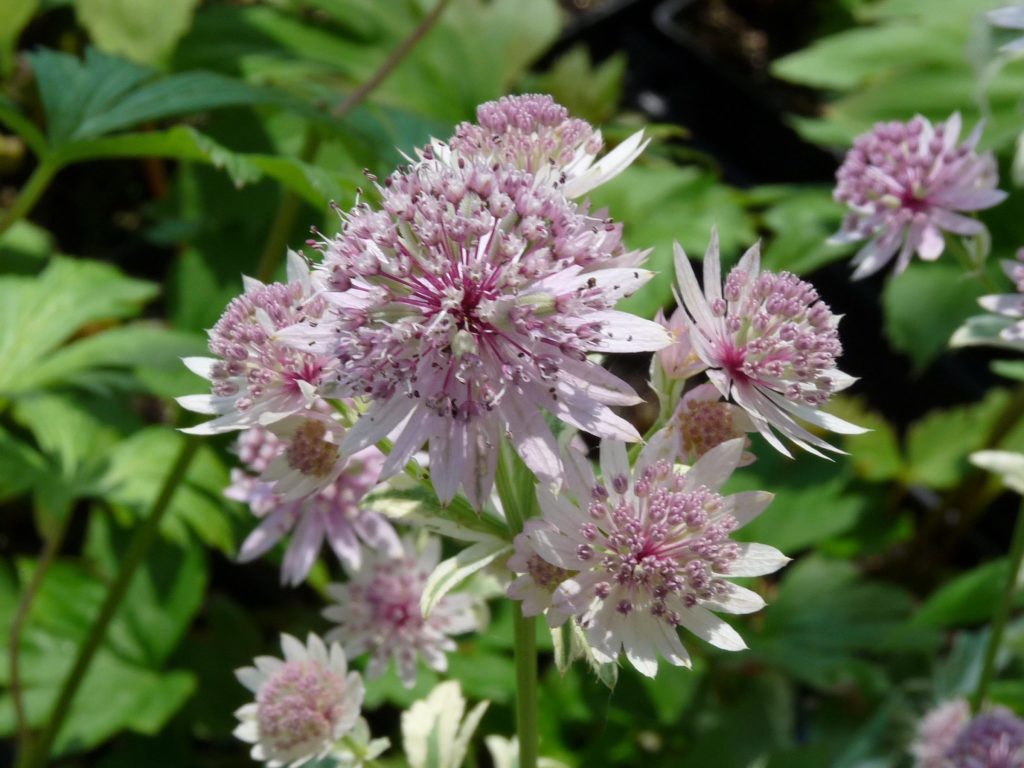
- ‘Abbey Road’ is a vigorous, free-flowering vegetative selection developed for the cut flower industry. It has large, deep green leaves and violet-purple flowers on dark stems up to 28 inches tall.
- ‘Alba’ has greenish white flower heads.
- ‘Buckland’ is one of the earliest varieties to flower. It has dusty-pink flowers surrounded by silver-green bracts veined with green tips.
- ‘Claret’ has dark red flowers on dark (nearly black) stems about 22 inches tall.
- ‘Hadspen Blood’ is a vigorous variety with very dark red flowers held high over the foliage.
- ‘Lars’ is a Danish cultivar with red to maroon bracts and white to pink centers, for an overall pink effect, on dark stems.
- ‘Magnum Blush’ is a vigorous, heavily reblooming cultivar with large pink buds that open to large, pink-blushed, ivory-colored flowers.
- ‘Moulin Rouge’ is a patented cultivar (PP16549) with deep red, pointed bracts with purple-red to black tips surrounding the green and red flowers. It may rebloom in fall if cut back.
- ‘Roma’ is a vegetative cultivar with rose-red florets and light silver-pink bracts. This cross of A. major ‘Ruby Wedding’ and an unnamed selection of A. major var. involucrata does not produce seed.
- ‘Rosensinfonie’ (“rose symphony” in German, sometimes listed as ‘Primadonna’) is a seed propagated strain with red to pink flowers that grows 30 inches tall.
- ‘Rubra’ is very floriferous with dark red bracts and flowers.
- ‘Ruby Cloud’ has red florets with greenish or pinkish-tinged bracts.
- ‘Ruby Wedding’ has blooms early with dark red flowers and may rebloom.
- ‘Shaggy’ (sometimes listed as ‘Margery Fish’) has large flowers with especially long white bracts with green tips surrounding pale pink centers.
- ‘Snowstar’ has large, pale greenish-white flowers that are larger than the flowers of ‘Alba.’
- ‘Star of Beauty’ has a two toned effect with pink-purple bracts and white and purple flowers.
- ‘Star of Billions’ is a vigorous, floriferous selection with white flowers with greenish tips and a long bloom period.
- ‘Star of Fire’ has pink bracts tipped with black and dark stems.
- ‘Star of Magic’ has leaves that are green with white variegation and have a purple tint when young. Flowers are red-purple, and plants often rebloom in fall.
- ‘Sunningdale Gold’ has golden foliage and ivory white flowers.
- ‘Sunningdale Variegated’ has variegated foliage with gold edges on many leaves (the younger leaves may be all gold) and pale pinkish white and green flowers. The variegation tends to fade as the leaves age.
- ‘Superstar’ (sometimes listed as ‘White Giant’) has greenish white flowers and dark green foliage. Plants grow 1½ to 2½ feet tall and 1 to 2 feet wide.
- ‘Vanilla Gorilla’ has foliage with white and pinkish variegation and pink flowers.
- ‘Venice’ has exceptionally dark red flowers and upright habit, growing 2 to 3 feet tall and 1 to 2 feet wide.
Author: Susan Mahr, University of Wisconsin—Madison
Reviewers: Allen R. Pyle, Horticulture Outreach Specialist, Bruce Spangenberg, Horticulture Outreach Specialist, UW—Madison Extension
Revised: September 2026