

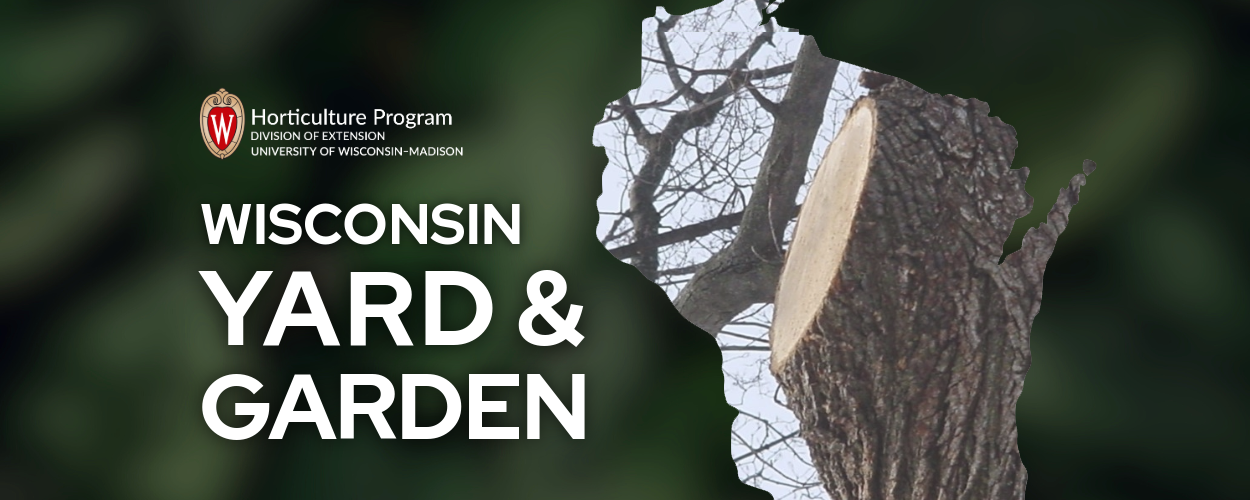
Now that February has arrived and weather conditions moderate across Wisconsin, gardeners can consider venturing outside for the task of dormant pruning of trees. Bare trees this time of year makes it easy to see what issues can be corrected via pruning. While individual trees may vary in specific pruning needs, some general guidelines ensure success.
Start by removing damaged or broken branches. Always cut back to a side branch or lateral twig, rather than leaving a stub. Make clean cuts using the proper tool for the size of branch that needs to be removed, choosing from pruning shears, loppers, or pruning saws. Avoid flush cuts against the trunk. Instead, allow the collar region where branches meet trunks to remain, as wounds will be smaller and create callus, or “heal” better.
Use caution when removing any limb requiring a saw so excessive bark is not damaged. Make the first cut a few inches from the trunk on the underside of the limb, cutting about one-third of the way into the limb. Next, make a second cut further out on the branch, starting on the upper side and cutting all the way through, removing the limb. Any bark peeling will thus stop at the first cut, rather than continuing down trunks and making large wounds. Finally, make cut three by removing the remaining stub.
With younger landscape trees, promote a strong branching framework with evenly spaced limbs. Remove competing branches that appear too congested or crowded. When deciding what branches to remove, consider where the branch is growing and what potential problems it may run into as it grows larger. Choose the more favorable of competing limbs to remain on the tree.
There are two basic categories of cuts: heading back and thinning out. Heading back involves cutting into the newer growth only. This stimulates more shoots developing into lateral branches within a foot or so of the cut. The net result is denser, more compact growth and appearance to the tree. Thinning-out cuts shorten or remove entire branches, thus reducing the number of laterals growing off large limbs or the trunk. The general effect is more open, rangy type of growth.
Finally, do not bother with wound dressings. Make a good clean cut and the tree will callus wounds on its own. Help the process by allowing the collar area to remain after removing a branch, rather than cutting it perfectly flush with the trunk. Do not leave stubs to invite decay, however.
When pruning projects look to be too much to take on yourself, especially with large trees, consider hiring a professional licensed arborist.

About the Author
Bruce Spangenberg is a Horticulture Outreach Specialist with UW-Madison Division of Extension. Get answers to your lawn, landscape and garden questions anytime at “Ask Your Gardening Question.”