Overview of Spotted Deadnettle
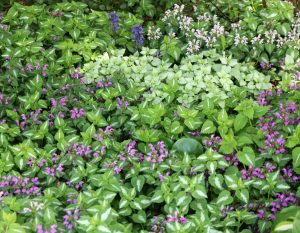
Spotted deadnettle, Lamium maculatum, is one of about 50 species in the type genus for the mint family (Lamiaceae), native to Europe, temperate western Asia and North Africa. The common name of “deadnettle” refers to the resemblance of the leaves to stinging nettles, but without the sting (therefore “dead”). This prostrate, herbaceous perennial is hardy in zones 3a to 8b.
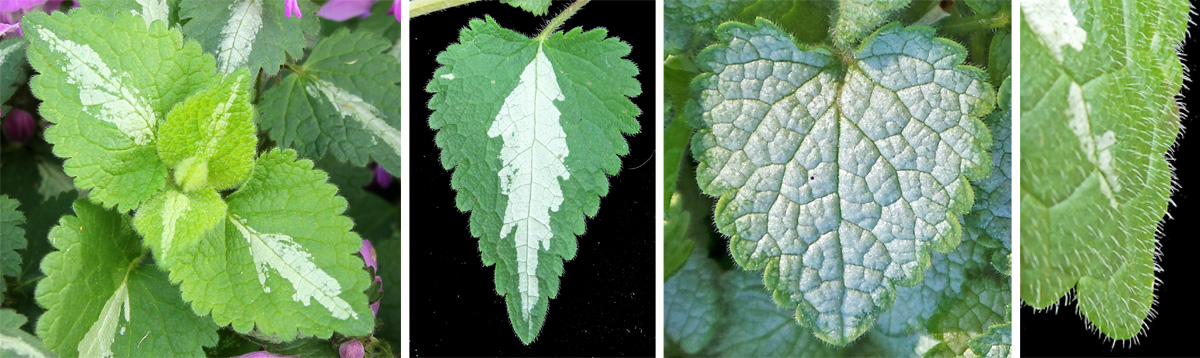
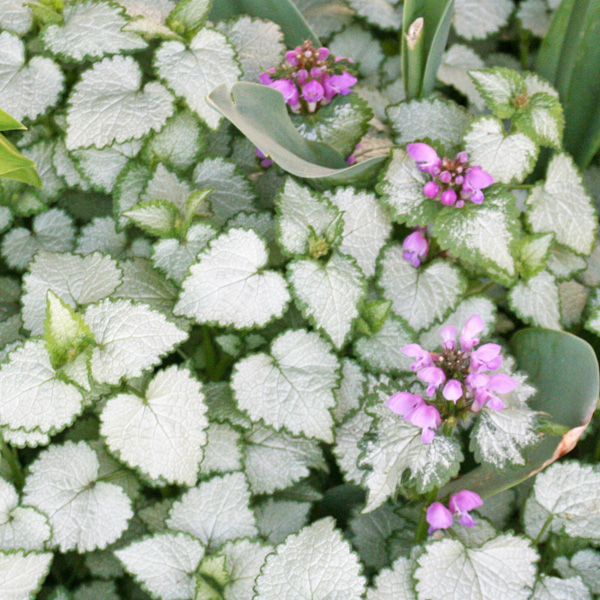
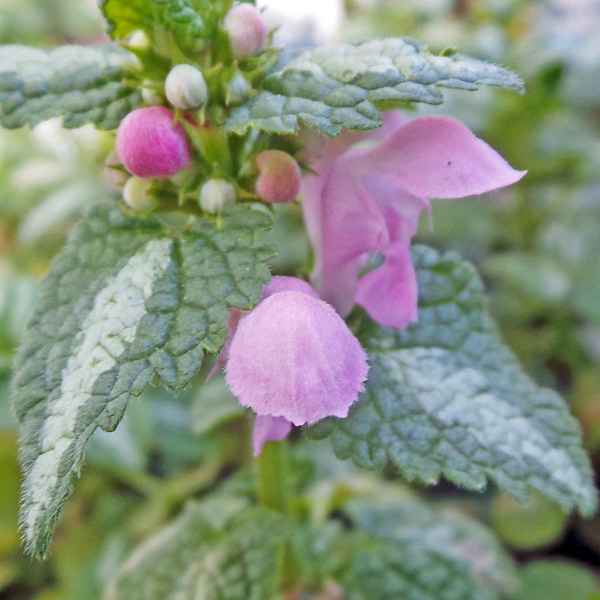
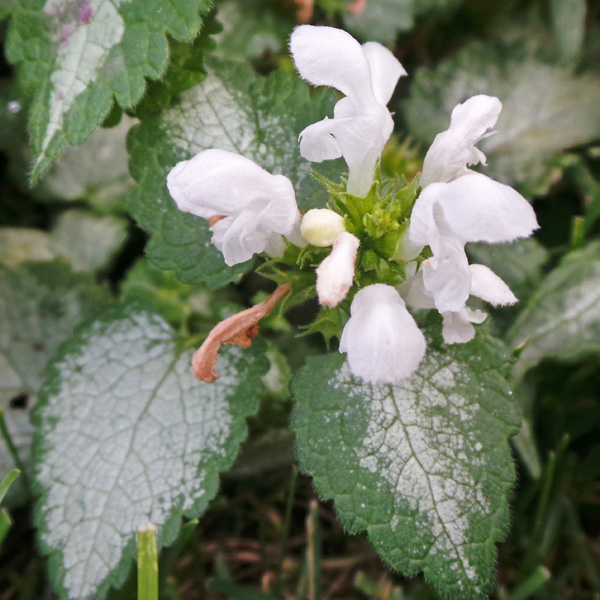
The species can be evergreen in mild climates, but it dies back in cold climates. It is low-growing (6 to 8 inches tall), with a spreading habit. Plants branch at the base and the square, hollow, trailing stems root as they spread to form a dense mat. The opposite leaves are toothed, pointed oval to triangular to heart-shaped, and can grow to over 3 inches long on petioles up to 1½ inches long. The downy to softly hairy leaves, which are unpleasantly scented when bruised, are green with a white or silver stripe down the midvein. Named cultivars may have different leaf markings or patterns. Leaf size, shape, variegation and hairiness is quite variable.
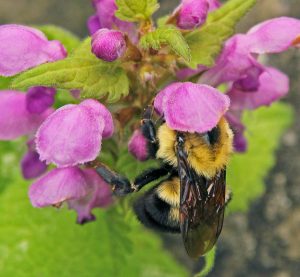
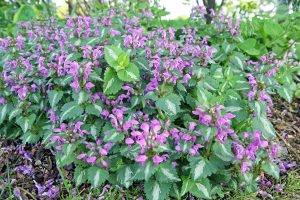
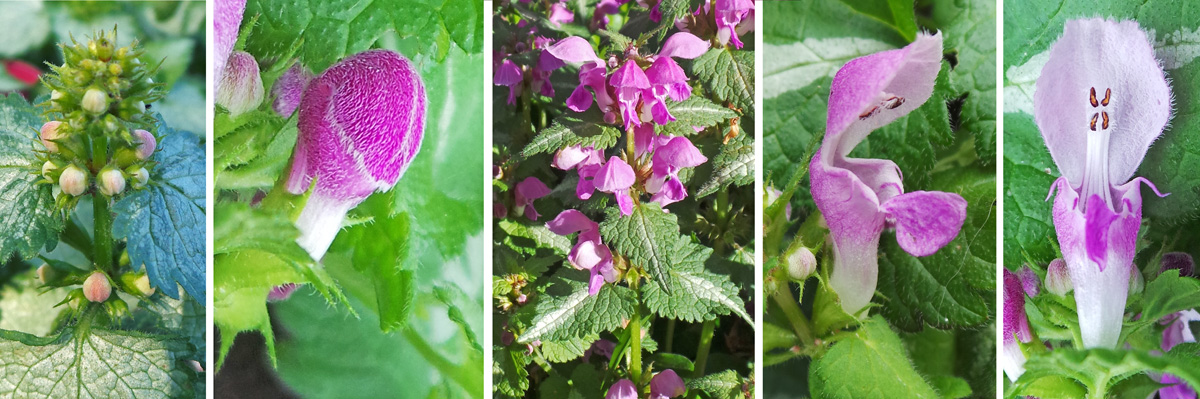
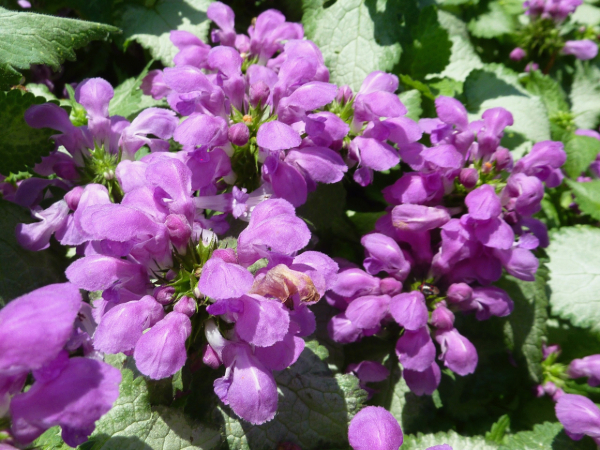
Spotted deadnettle blooms prolifically from late spring to early summer and continues sporadically into fall. The flowers attract bees, especially bumblebees.
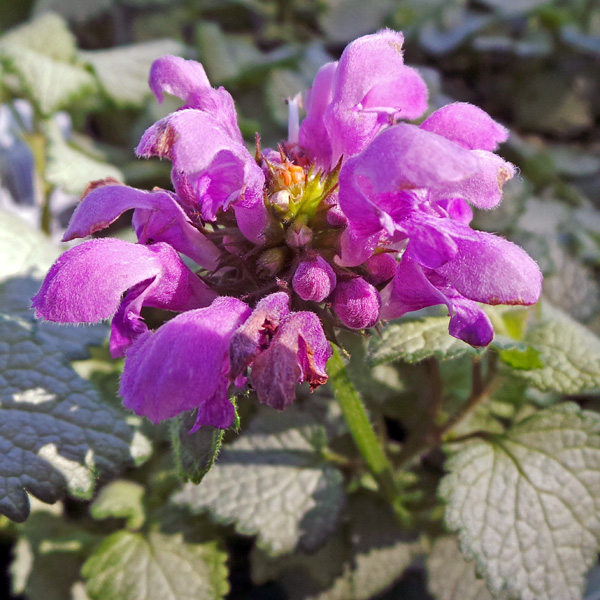
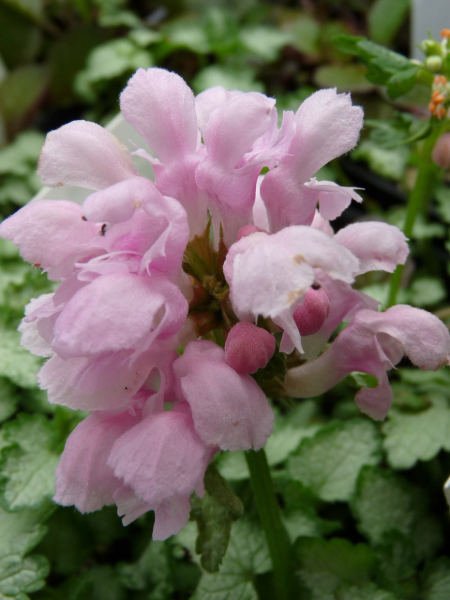
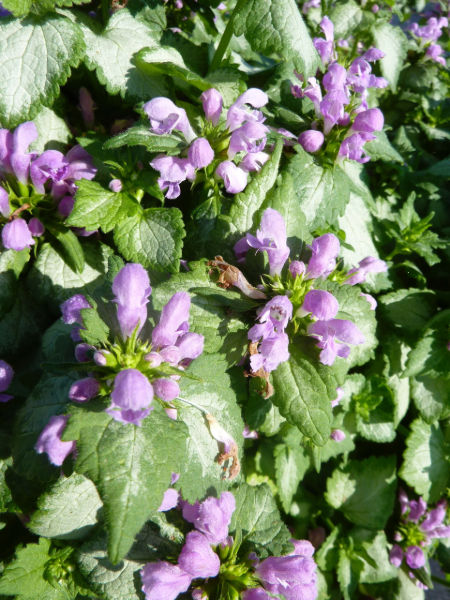
The flowers occur in leafy heads (verticillasters) formed at nodes on the upper half to upper third of the stems and terminals, but not on all stems. Each inflorescence has 2 to 8 widely spaced pink to purple, or sometimes white, two-lipped flowers, up to ¾ of an inch long. The upper lips of the flowers are hood or helmet-shaped, like a roof over the stamens with their orange pollen. The bisected lower lips are often whitish with purple dots, but color and patterning can vary by cultivar.
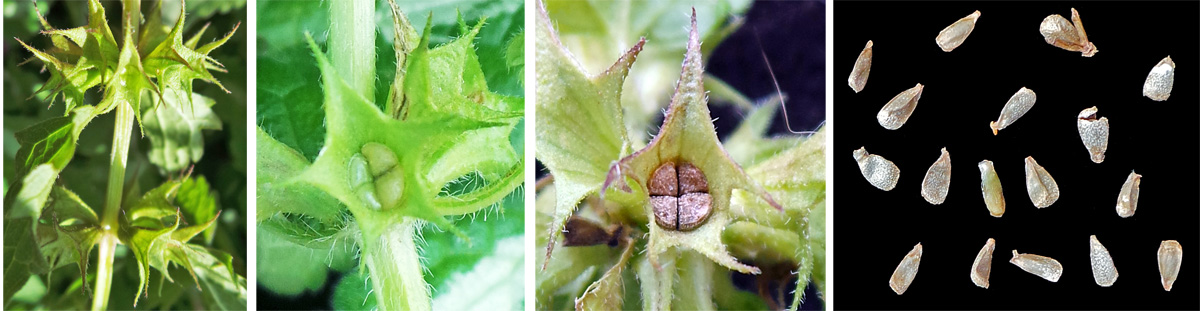
Flowers are followed by small, inconspicuous fruits hidden by the leafy parts of the inflorescence that start out green and change to brown as they mature. Each fruit is comprised of four nutlets.
Landscape Use of Spotted Deadnettle
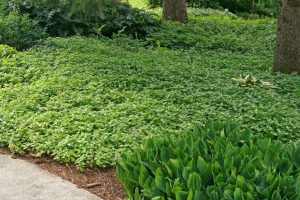
This plant is typically used as a groundcover in shady areas, and can cover large areas quickly. Since it is adaptable to a variety of light regimes, it is an ideal plant to use in transition areas between shade and sun. It fills in nicely between other, larger or more upright perennials such as ostrich or cinnamon fern, bleeding heart, hellebore, goatsbeard (Aruncus dioicus), Siberian bugloss (Brunnera macrophylla), Japanese forest grass (Hakonechloa macra), or medium to large hostas. It is often too vigorous to site near shorter perennials which it tends to overrun (although it is easy to cut back or pull off wayward stems throughout the growing season to prevent this from happening, if desired). It works well to cover dying bulb foliage and smothers many weeds. Try growing several varieties with different leaf colors together or in combination with sweet woodruff, Galium odoratum, as a tapestry for an attractive groundcover beneath small trees or around roses.
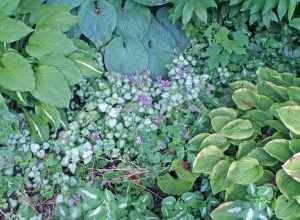
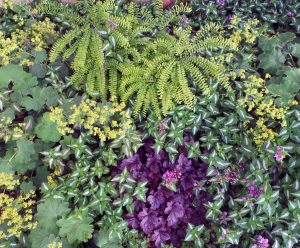
Since it has a relatively fine texture, combine it with plants with large leaves for textural contrast, and dark-leaved plants such as coral bells (Heuchera, various cultivars) or black snakeroot (Cimicifuga racemosa ‘Hillside Black Beauty’) for color contrast. It can also be used for edging, but will have to be cut back regularly to keep it in bounds. It can also be used as a “spiller” in hanging baskets or mixed containers.
General Care of Spotted Deadnettle
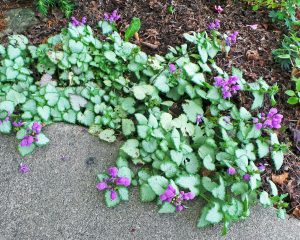
Lamium maculatum grows best in part shade (especially silver leaf types which often need more light to maintain leaf color) or shade in moist, humus-rich, well-drained soil, but in our climate will even grow in full sun. Although it does best in moist conditions it is drought tolerant and will grow in dry shade, but does not thrive in compacted or poorly drained soils, and many varieties suffer winter injury in wet soils.
In hot and humid climates the foliage may decline in midsummer; plants may be cut back or sheared to stimulate new growth. It has few pest problems and is not favored by deer or rabbits. Crown or stem rot can occur when the soil remains too wet.
Propagating Spotted Deadnettle
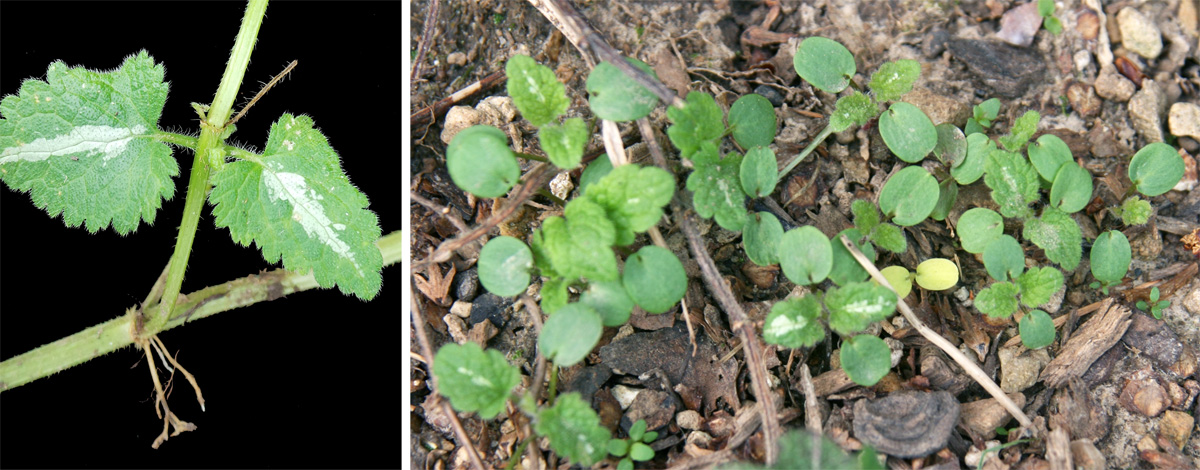
Spotted deadnettle is easy to propagate at any time during the growing season from cuttings of basal stems (not flowering stems) or by division. Cuttings root easily without the need for rooting hormone. Stems root where the stems touch the ground and once established these can be cut from the original plant and easily moved. It will also self-seed, although the cultivars will not come true from seed, and if volunteers are not removed (which can be challenging for the silver-striped varieties which can initially look very similar to the original plants) they may overtake the parents. Plants will spread indefinitely to fill a large area, so spacing is not that important, unless quick coverage is desired.
Cultivars of Spotted Deadnettle
Some common cultivars include:
- ‘Album’ has dark green leaves with a slight amount of silver in the center and white flowers. A top performing variety in Chicago Botanic Garden Lamium maculatum trials.
- ‘Anne Greenaway’ has tricolored leaves, dark green edged in chartreuse and a silver stripe down the center, and light purple-pink flowers.
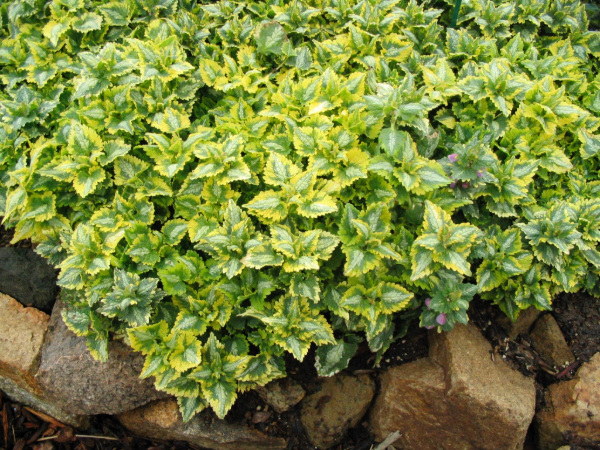
- ‘Aureum’ has light centered, golden yellow to chartreuse leaves with irregular white centers and pale pink flowers. Leaf color is best in part shade to shade, and leaves may scorch in sites with too much sun.
- ‘Beacon Silver’ has silvery gray leaves with thin green edges and dark lavender flowers. A top performing variety in Chicago Botanic Garden Lamium maculatum trials.
- ‘Beedham’s White’ has bright yellow foliage with a central white stripe and white flowers. It may be somewhat less floriferous than other varieties and can be susceptible to winter dieout.
- ‘Chequers’ is a vigorous variety with green leaves with a prominent silver stripe down their centers and rosy purple flowers. A top performing variety in Chicago Botanic Garden Lamium maculatum trials.
- ‘Cosmopolitan’ is a miniature sport of ‘Shell Pink’ with very small, nearly all-silver leaves and pale pink flowers. Its compact habit (reaching 3 to 6 inches tall) makes it particularly useful in combination containers where it won’t overgrow other plants in the container.
- GOLDEN ANNIVERSARY™ (variety ‘Dellam’, USPP 11,783 , expired) features tricolor leaves that are green with yellow to chartreuse margins and grey-green centers and lavender pink flowers. It was discovered as a mutation of ‘Gold Nuggets’ and its trade name is in reference to the 50th anniversary of the coronation of Queen Elizabeth II in 2002.
- LAMI™ Dark Purple has silver leaves with dark green margins. It is early flowering, with purple flowers produced in abundance.
- ‘Orchid Frost’ (USPP 11,122, expired) has blue-green leaves with a silver midvein and orchid-pink flowers. It is more vigorous and resistant to foliar diseases than other varieties. Discovered as a chance seedling.
- ‘Orchid Frost Grande’ (USPP 33,573) is a tetraploid cultivar developed from a colchicine induced mutation of ‘Orchid Frost’. It has a vigorous habit, large light pink flowers, and large silver leaves with narrow, uniform, dark green margins.
- ‘Pink Nancy’ has silver leaves with thin green margins and pale pink flowers.
- ‘Pink Pewter’ has small, ruffled silver-gray leaves with narrow green margins and deep salmon-pink flowers. A top performing variety in Chicago Botanic Garden Lamium maculatum trials.
- PINK CHABLIS® (variety ‘Checkin’) has a mounded habit, silver leaves with irregular green margins, and pink flowers produced in abundance. It was developed from a seedling of ‘Chequers’.
- ‘Purple Dragon’ has larger pink-purple flowers than most other cultivars and small silver leaves with a wide green edge.
- ‘Red Nancy’ has silver leaves with thin green margins, red-tinted stems (although color can vary throughout the growing season), and deep purple-pink flowers held well above the foliage. Spreads vigorously. A top performing variety in Chicago Botanic Garden Lamium maculatum trials.
- ‘Shell Pink’ has clear pink flowers and dark green leaves with silver central stripes. It has a mounded, vigorously spreading habit and a long bloom time. A top performing variety in Chicago Botanic Garden Lamium maculatum trials, and the only variety to receive an excellent (five-star) rating.
- ‘White Nancy’ has silvery-white leaves with narrow green margins and white flowers. Its leaves may scorch when grown in full sun.
Author: Susan Mahr, University of Wisconsin—Madison
Reviewers: Allen Pyle, Horticulture Outreach Specialist, UW—Madison Extension, Bruce Spangenberg, Horticulture Outreach Specialist, UW—Madison Extension
Revised: July, 2026