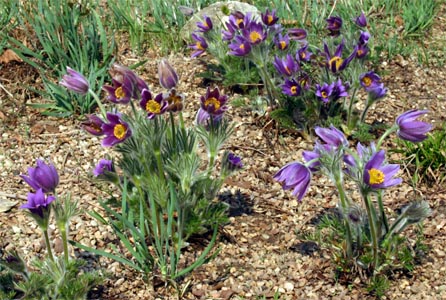
Overview of Pasque Flower
Pasque flower is one of the first herbaceous perennials to bloom in spring. There are about 30 species in the genus Pulsatilla, in the buttercup family (Ranunculaceae), but the most common garden species planted is the European native pasque flower, Pulsatilla vulgaris. Pulsatilla is closely related to the genus Anemone, and P. vulgaris was once classified as A. pulsatilla. It is sometimes still listed under this name. Other common names include wind flower, meadow anemone, and Easter flower.
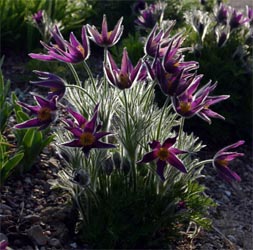
P. vulgaris is native to dry meadows of central and northern continental Europe and the British Isles. It is hardy in zones 4a to 8b. All parts of this plant are toxic and may cause severe pain and digestive upset if eaten. Sap can also cause skin inflammation and blistering.
The plant has a thick and fibrous rootstock that becomes woody with age. The finely divided, stalked leaves emerge from this base in early spring, although the majority of the leaves develop after the flowers. The leaves are pinnate, cleft to the base, forming a mound 10 to 12 inches tall. The entire plant is covered with soft, silvery hairs. Plants remain attractive through the summer, although the leaves may die back in late summer.
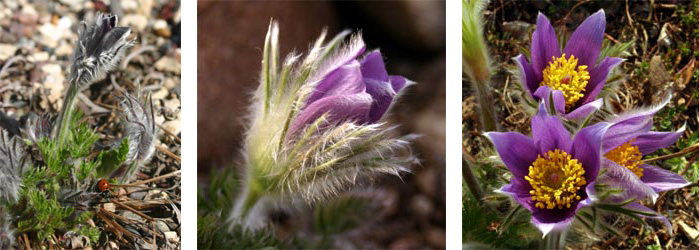
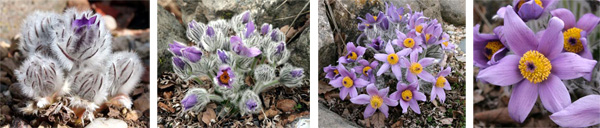
Upright, bell-shaped flowers emerge shortly after the first leaves. The 1½ inch flowers are borne singly on stems 5 to 8 inches tall. The flowers are fuzzy on the outside and silky inside, with bright golden stamens. The juice of the purple sepals produces a non-permanent stain, which has been used to color Easter eggs in some European countries. Color in the species varies from deep to pale purple and occasionally red-purple or white.
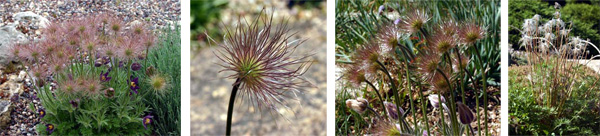
Fertilized flowers produce a spherical seedhead with silky plume-like styles. These attractive silvery seedheads remain on the plant for several weeks. Ripe seed is dispersed by the wind.
Cultivars of Pasque Flower
A few cultivars have been developed. These include:
- ‘Alba’ (sometimes listed as ‘White Bells’ or ‘White Swan’) has creamy white flowers. It tends to be slower growing and later blooming than the species.
- ‘Glocke’ series (also known as the ‘Bells’ series) includes ‘Blau Glocke’ (‘Violet Bells’), ‘Perlen Glocke’ (‘Pearl Bells’, with very pale pink flowers), ‘Rosen Glocke’ (‘Rose Bells’), and ‘Rote Glocke’ (‘Red Bells’).
- ‘Prima Papagena’ is an improved version of ‘Papageno’ released in 2018 by Jelitto Perennial Seeds. It features fringed to semi-double flowers in a mix of shades, including cream, bright pink, dark red, violet, and light blue.
- ‘Rubra’ has wine red flowers.
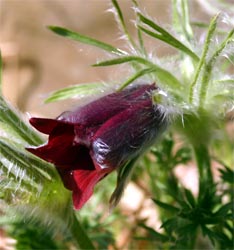
There are a few other species of Pulsatilla that are good garden plants, but may not be commonly available. They include:
- Pulsatilla patens, called Eastern Pasqueflower or American Pasqueflower, is native to meadows and prairies of northern Europe, northern Asia and North America from Illinois to Alaska. It has lilac flowers and is hardy in zones 3a to 8b. Seed of this species can be difficult to germinate, especially when stored, due to dormancy. It is best sown outdoors in fall, to allow natural freeze-thaw cycles to overcome dormancy.
- P. vernalis, called Spring Pasque Flower, is hardy to zone 4a, with evergreen leaves with few hairs, and white flowers with a bluish purple reverse. It is native to alpine areas of Europe and Siberia.
Landscape Use of Pasque Flower
This low growing plant is suitable for rock gardens or the front of the perennial border. Pasque flower combines well with spring-flowering bulbs and ground covers.
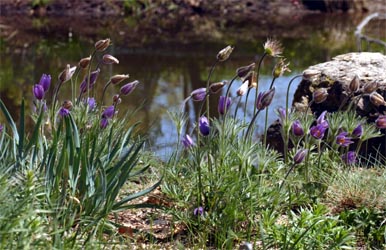
Grow pasque flower in well-drained soil in full sun. It does not tolerate root disturbance well, but can be transplanted. Cut back all of the open flowers and large buds before moving; the plant should produce new growth and become lush and rebloom in about 4 weeks. Do not fertilize heavily. This species is quite drought tolerant once established. Unfortunately, deer like it so it may need protection in some areas.
Propagating Pasque Flower
Pasque flower is propagated by seed, root cuttings, or division. Sow seeds when ripe directly in the garden or in small containers to later transplant when still small. Pasque flower may self-seed. One mature plant can be divided into 4 to 6 new plants.
– Susan Mahr, University of Wisconsin – Madison
Last Update: Allen R. Pyle, UW-Madison Extension, 2026