Article Contents
Making Informed Mosquito Control Decisions
How Do Control Treatments Work?
Questions to Ask Qualified Providers
Who Can Apply Pesticides for Mosquito Control?
Efficacy and Concerns about Beneficial Insects
What Can Homeowners Do Themselves?
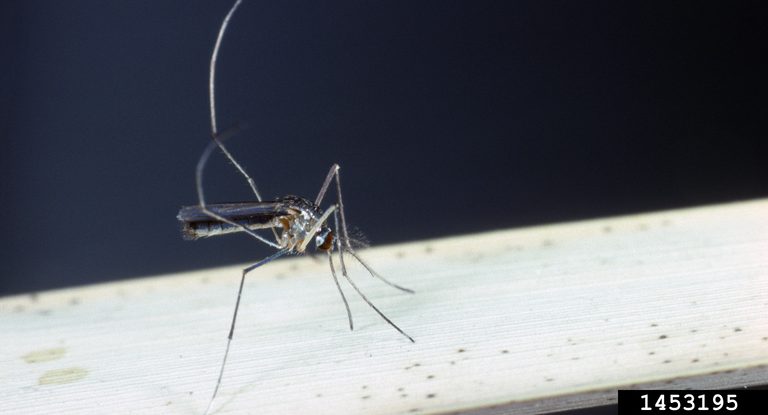
Overview
Mosquitoes can certainly be a nuisance as we enjoy time outdoors over the spring and summer months. But keeping a yard completely mosquito-free all summer is an unrealistic expectation. This article helps you evaluate mosquito control services, ask informed questions, better understand safety and environmental considerations, and learn steps you can take to manage mosquitoes in your yard.
How do the main mosquito control treatments work?
There are two main types of pesticide treatments, larvicides and adulticides, which target different parts of the mosquito life cycle:
Larvicides are applied to standing water where mosquitoes reproduce and offer the longest, most consistent control. Products such as Mosquito Dunks ® contain a microbial active ingredient (Bacillus thuringiensis subspecies israelensis, commonly called “Bti”) that prevents larvae from developing into adults. These products target larvae in a controlled spot before they become biting adults; they are not intended for larger bodies of water, such as lakes or ponds.
In situations where standing water cannot be routinely drained, such as catch basins or ornamental water features, a licensed pesticide applicator can apply larvicides directly to those sites according to label directions. This approach targets mosquito larvae at the source and can reduce the need for broader treatments.
Adulticides target adult mosquitoes and are commonly applied as broad-spectrum sprays, often referred to as fogging. While these treatments may reduce adult mosquito populations temporarily, new mosquitoes can quickly move into treated areas.
Common yard treatments are often marketed as “perimeter,” “barrier,” or “residual” applications. These are applied to vegetation and surfaces around structures to create a treated area that affects mosquitoes (and other insects) when they land. Adulticide treatments typically use pyrethroid products that can remain active for several weeks, depending on the formulation, and are also labeled for control of other yard and household pests.
Broad spectrum insecticides can affect a wide variety of insects, not just mosquitoes. Mosquito adulticide treatments contain pyrethroids, which are synthetic insecticides made to mimic pyrethrins, natural compounds derived from chrysanthemum flowers. Pyrethrins have been used in pest control since the 1950s and are toxic to a wide variety of insects. Pyrethroids were developed to increase persistence and stability, making them longer-lasting in the environment. Pyrethrins and pyrethroids (the synthetic version) are still harmful to a number of beneficial insects. Another aspect of the pyrethroids is that several of the common active ingredients are considered to be PFAS compounds (e.g., bifenthrin, cyfluthrin, lambda-cyhalothrin). The impact of regular applications of these to yards via mosquito barrier treatments is not known at this time.
Questions to ask qualified providers
If you are considering hiring a commercial pesticide applicator to apply insecticides in your yard as a mosquito treatment, here are some questions that you can ask the service provider:
Are you certified to apply pesticides in Wisconsin? (Note: proper certification ensures the applicator has the training required to safely and effectively use pesticides)
Do you use Integrated Pest Management (IPM)? Do you inspect the property for standing water and other mosquito habitat management tactics?
How does the product work?
What is the active ingredient in the product you’re using? (Be careful of “all natural” claims)
How long is it expected to last? What if it rains after the application?
What is the re-entry interval for the product they are using? (This is required wait time after a pesticide is sprayed before people can safely go into that area).
How much product are you applying (or what is the rate for the size area you are treating)?
What are the post-application precautions such as irrigation restrictions, allowing pets into the area, etc.?
Can you provide a product label and safety data sheet before the application?
How will you protect pollinators and other beneficial insects at my site?
If you are close to water, how do you protect local water bodies?
Who can apply pesticides for mosquito control?
Terrestrial (land-based) applications
Individuals who apply pesticides for mosquito control on land must be certified in Commercial Category 5.0 (Aquatic and Mosquito) in Wisconsin. This certification ensures the applicator has the training required to safely and effectively use pesticides.
Aquatic applications
Applying pesticides to surface waters for mosquito control, such as targeting larvae, typically requires a Wisconsin Department of Natural Resources (DNR) Aquatic Plant Management Permit (NR 107). This permit is required for treatments in lakes, ponds, and other waters of the state on both public or private land.
Efficacy and concerns about pollinators and other beneficial insects
Mosquito spray services that use barrier or perimeter treatments can reduce mosquito activity for a short time, but they do not address where mosquitoes develop, so populations can return. For example, certain mosquito species in Wisconsin are able to fly or get blown in from over 10 miles away, meaning they can trump local treatments.
These treatments are designed to remain on plants and surfaces for days to weeks, meaning their effects can persist well beyond the initial application. Studies show they can leave detectable pesticide residues on vegetation, with the highest amounts in treated yards and smaller amounts sometimes found nearby.
While these products are commonly used, there is less research on how they affect other insects in residential settings. Available evidence suggests that insects that land on treated plants can be exposed, and in some cases, residue levels have been high enough to indicate potential risk to pollinators. Some studies have found that non-target insects, such as monarchs and honeybees, can be harmed several weeks after the original barrier treatment. A single treatment before an outdoor event (e.g., wedding) may be needed if mosquito numbers are high, but regularly scheduled yard treatments throughout the warmer months can pose concerns for non-target insects.
This makes a difference because reducing standing water and managing mosquito habitat are the most effective ways to lower mosquito populations. Spray treatments can provide temporary relief, but they do not replace these core strategies and may result in longer-lasting pesticide residues in the yard.
What steps can homeowners take to manage mosquitoes?
As part of an Integrated Pest Management (IPM) approach, managing mosquitoes in your yard relies on multiple tactics, including reducing breeding habitat, avoiding mosquito activity, and using personal protection. Because these strategies limit where mosquitoes can reproduce and how often they come into contact with people, they are the most effective way to reduce mosquito activity, even when pesticides are used.
Habitat Management
Mosquitoes need water to develop. Adult mosquitoes lay their eggs in standing or still water, or in low-lying areas prone to flooding, where they hatch and the larvae will feed on microorganisms in the water. Mosquito larvae and pupae can develop in as little as one inch of water. Depending on the mosquito species and the temperature, mosquitoes can complete their development and reach the adult stage in roughly a week and a half to two weeks.
- Eliminate or minimize standing water by dumping any standing water weekly. Common sources of standing water include bird baths, kids’ toys, buckets, garbage, flower pots, clogged gutters, loose or low-lying portions of tarps, and other places where water can puddle or pool.
- If you have a permanent water body like a pond, add a fountain or small pump to keep the water moving.
- Planting native plants and maintaining a healthy yard can help encourage beneficial insects like dragonflies, and support birds and other wildlife that eat mosquitoes.
Avoidance
Screens (e.g., porch, tent, etc.) act as a physical barrier to help keep adult mosquitoes from reaching you. With their small body mass, mosquitoes have a hard time flying in a breeze, so setting up a fan or two can be another easy option.
Personal Protection
Wear light colored and long-sleeved clothing. Mosquitoes are more attracted to dark colored clothing.
Repellants
Personal or topical repellants include EPA-registered products that can be sprayed on your skin and clothing. Make sure to apply correctly (read the label) and reapply as directed. Common EPA-registered products contain the ingredients DEET, picaridin, IR3535, or oil of lemon eucalyptus. These can be found at most hardware or big-box stores.
Area repellants include citronella candles, coils, and devices that emit vapor to repel mosquitoes from a small area. The effectiveness of candles and coils are often very limited. There are also devices that heat and release a volatile pyrethroid ingredient to create a repellent “bubble” around an area.
There are also other tactics such as traps and devices, however, many of these do not have scientific evidence to back up their claims. Find out more about these devices from the UW-Madison Department of Entomology website.
Do home remedies and mosquito control gadgets work?
You might hear or read about a variety of other methods to use against mosquitoes, but do they actually work?
Dietary Supplements
Products like garlic or vitamin B are sometimes promoted to reduce mosquito attraction, but research has not found evidence that they work.
Repellent Plants
Some plants, such as citronella, contain compounds that can repel mosquitoes. However, these effects are only released when the plant is crushed or processed into oils, not from simply planting them in the yard.
Bug zappers and UV lights
Bug zappers and similar devices tend to kill many types of insects, most of which are not biting mosquitoes. As a result, they are generally not effective for mosquito control and can affect beneficial insects.
Sonic and electronic devices
Devices that use sound or electronic signals to repel mosquitoes are not supported by scientific evidence and have not been shown to be effective.
Conclusion
The most effective approach to controlling mosquitoes in your yard is to recognize that your yard is part of a system. By using an integrated approach, you can create a healthy yard that supports beneficial insects and wildlife that eat mosquitoes, reduce habitat where mosquitoes reproduce, treat standing water as needed, and protect yourself against mosquitoes.
Author: Julie Hill, Horticulture Educator for UW-Madison Extension Rock, Jefferson, and Walworth Counties; and Janell Wehr, Horticulture Educator for UW-Madison Extension Wood and Marathon Counties
Reviewers: PJ Liesch, Entomologist at UW-Madison; and Bruce Spangenberg, Margaret Murphy, Kaitlin Bricco, Josie Dillon, Kimberly Miller, and Susan Taylor from the UW-Madison Division of Extension
Published: August 6, 2026
References and Additional Resources
- https://insectlab.russell.wisc.edu/2022/07/28/do-mosquito-yard-sprays-harm-other-insects/
- https://mosquitosite.russell.wisc.edu/
- https://xerces.org/press/study-pesticide-sprays-for-mosquitos-may-kill-pollinators-drift-into-neighboring-yards
- https://xerces.org/blog/mosquito-management-at-home
- https://npic.orst.edu/ingred/pyrethrins.html
- https://www.dhs.wisconsin.gov/mosquito/bite-prevention.htm
- https://datcp.wi.gov/Documents/HTCAqMosqApplications.pdf
- Oberhauser, K.S., S.J. Brinda, S. Weaver, R.D. Moon, S.A. Manweiler, N Read. 2006. Growth and survival of monarch butterflies (Lepidoptera: Danaidae) after exposure to permethrin barrier treatments. Environmental Entomology 35 (6): 1626-1634.
- https://www.mda.state.mn.us/environment-sustainability/pfas-pesticide-active-inert-ingredients
- Featured Image by Sturgis McKeever, Georgia Southern University, Bugwood.org