

Degree Days for Common Insect Pests
🔍
Degree days (also known as heat units or thermal units) are a way of incorporating both temperature and time into one measurement to quantify the rate of plant or insect development. All plants and insects develop in response to temperature. The warmer the weather, the more quickly they develop, and the cooler the temperature, the slower they develop.
A
Apple Maggot* | Learn More
Base temperature = 50°F
- 1st adult fly emergence = 900 DD50
- 1st egg laying = 1,100 DD50
- Peak fly emergence 1,600 = DD50
- Peak egg laying = 1,750 DD50
- End of fly emergence = 2,800 DD50
* These degree days assume normal soil moisture. Under dry conditions, all apple maggot events will be delayed until the soil is moist.
Ash Borer
Base temperature = 50°F
- 1st instar larvae = 275-500 DD50
Asparagus Beetle | Learn More
Base temperature = 50°F
- Egg laying = 150 – 240 DD50
(Phenology: Amelanchier in full bloom, redbud early to full bloom, Black Hills spruce bud caps splitting)
B
Birch Leafminer
Base temperature = 50°F
- 1st generation larvae = 275-500 DD50
Black Vine Weevil | Learn More
Base temperature = 50°F
- 1st generation adults = 400-600 DD50
- 2nd generation adults = 900-1,000 DD50
Bronze Birch Borer
Base temperature = 50°F
- Larvae = 400-500 DD50
C
Cabbage Maggot | Learn More
Base temperature = 43°F
- 1st generation flies = 300 DD43
- 2nd generation flies = 1,476 DD43
- 3rd generation flies = 2,652 DD43
(Phenology: 1st generation eggs are laid when the common lilac is in full bloom)
Codling Moth | Learn More
Base temperature = 50°F
- 1st generation moth emergence = 150 DD50
- Eggs laid = 250 DD50
- 1st generation peak moth emergence = 500 DD50
- Peak egg laying = 550 DD50
- 2nd generation first moth emergence =1,150 DD50
- 2nd generation peak moth emergence = 1,600 DD50
- 2nd generation peak egg laying = 1,700 DD50
Colorado Potato Beetle (First generation)
Base temperature = 50°F
- Begin counting when first eggs appear
- 1st instar larva = 185 DD50
- 2nd instar larva = 240 DD50
- 3rd instar larva = 300 DD50
- 4th instar larva = 400 DD50
- Pupa = 675 DD50
Cooley Spruce Gall Adelgid
Base temperature = 50°F
- Adults = 50-100 DD50
- Egg hatch = 210 DD50
- Galls forming = 250 DD50
- 2nd generation nymphs = 2,800-3,000 DD50
Corn Rootworm
Base temperature = 50°F
- Adult beetles = 1,300 DD50
(Phenology: Canada thistle seed ripe, Queen Anne’s lace early bloom)
E
Eastern Spruce Gall Adelgid
Base temperature = 50°F
- Adults = 50-100 DD50
- Egg hatch = 90 DD50
- 1st instar larvae = 100 DD50
- 2nd generation nymphs = 2,800-3,000 DD50
Eastern Tent Caterpillar | Learn More
Base temperature = 50°F
- Egg hatch = 50 DD50
- 1st instar larvae = 100 DD50
- 2nd instar larvae = 140 DD50
- 3rd instar larvae = 350 DD50
- Adults = 725 DD50
Elm Leaf Beetle
Base temperature = 50°F
- Larvae = 400-500 DD50
Elm Sawfly | Learn More
Base temperature = 50°F
- Larvae = 365 DD50
Euonymous Scale | Learn More
Base temperature = 50°F
- Crawlers = 500-700 DD50
European Corn Borer
Base temperature = 50°F
- 1st spring moths = 375 DD50
(Phenology: Spiraea x vanhouttei in full bloom)- 1st eggs = 450 DD50
(Phenology: Pagoda dogwood late bloom)- Peak spring moths = 631 DD50
(Phenology: Black locust full bloom)- 1st summer moths = 1,400 DD50
(Phenology: Mountain-ash fruit golden yellow, most Canada thistle seed ripe)- 1st eggs laid = 1,450 DD50
- 1st egg hatch = 1,550 DD50
- Peak summer moths = 1,733 DD50
- Summer treatment period = 1,550–2,100 DD50
(Phenology: From when Queen Anne’s lace full bloom to goldenrod early bloom)
European Pine Sawfly | Learn More
Base temperature = 50°F
- 1st instar larvae = 50-100 DD50
European Pine Shoot Moth
Base temperature = 50°F
- Spring larvae active = 50-100 DD50
- Adults = 900 DD50
- Egg hatch = 200-100 DD50
F
Fall Webworm | Learn More
Base temperature = 50°F
- Larvae = 850 DD50
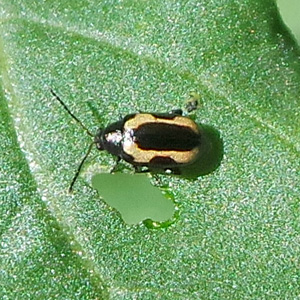
Fleabeetle | Learn More
Base temperature = 50°F
- 150-200 DD50
(Phenology: Norway maple late bloom, Amelanchier blooming, redbud early bloom)
Fletcher Scale
Base temperature = 50°F
- Adults = 100-200 DD50
- Egg hatch = 600 DD50
- Crawlers active = 900-1,200 DD50
H
Hawthorn Leafminer
Base temperature = 50°F
- Larvae = 275-500 DD50
Honeylocust Plantbugs
Base temperature = 50°F
- 100-200 DD50
I
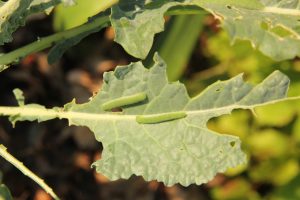
Imported Cabbageworm | Learn More
Base temperature = 50°F
- Adult butterflies at 150-240 DD50
(Phenology: Amelanchier full bloom, redbud early to full bloom, Black Hills spruce bud caps splitting)
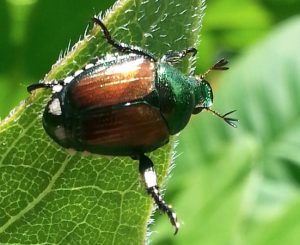
Imported Willow Leaf Beetle
Base temperature = 50°F
- 200-350 DD50

M
Mountain Ash Sawfly | Learn More
Base temperature = 50°F
- 500 DD50
O
Obliquebanded Leafroller
Base temperature = 43°F
- 1st generation moth emergence 600 DD43
- 1st generation peak moth emergence 800 DD43
- 1st generation peak egg laying 1,250 DD43
- 2nd generation moth emergence 2,050 DD43
- 2nd generation first eggs laid 2,300 DD43
Onion Maggots | Learn More
Base temperature = 40°F
- 1st generation flies = 680 DD40
- 2nd generation flies = 1,950 DD40
- 3rd generation flies = 3,230 DD40
- 1st generation eggs laid = 230-280 DD40
Oystershell Scale (brown race) | Learn More
Base temperature = 50°F
- Egg hatch = 265 DD50
- 1st generation crawlers = 275-500 DD50
- 2nd generation crawlers = 1,600-1,700 DD50
Oystershell Scale (grey race) | Learn More
Base temperature = 50°F
- 1st generation crawlers = 400-600 DD50
P
Pine Needle Scale | Learn More
Base temperature = 50°F
- 1st generation crawlers = 200-350 DD50
- 2nd generation crawlers = 1,600-1,700 DD50
Pine Spittlebug | Learn More
Base temperature = 50°F
- 1st generation egg hatch = 145 DD50
- 2nd generation egg hatch = 1,500 DD50
- 2nd generation crawlers = 1,500-1,600 DD50
S
Seed Corn Maggot
Base temperature = 39°F
- 1st generation flies = 200 DD39
- 2nd generation flies = 600 DD39
Spongy Moth | Learn More
Base temperature = 50°F
- Egg hatch = 100-200 DD50
- Larvae = 200-350 DD50
Spruce Spider Mite | Learn More
Base temperature = 50°F
- 100-200 DD50
Squash Vine Borer | Learn More
Base temperature = 50°F
- Egg laying at 900-1,000 DD50
(Phenology: Chicory in full bloom)
T
Taxus Mealybug | Learn More
Base temperature = 50°F
- 275-500 DD50
V
Viburnum Crown Borer | Learn More
Base temperature = 50°F
- 1st instar larvae = 500-600 DD50
Z
Zimmerman Pine Shoot Moth | Learn More
Base temperature = 50°F
- 1st generation larvae (1st instar) = 100 DD50
- 2nd generation larvae (1st instar) = 2,700-2,900 DD50
Special thanks to Karen Delahaut (formerly UW-Madison Fresh Market Vegetable Program) for work on earlier versions of this document.