

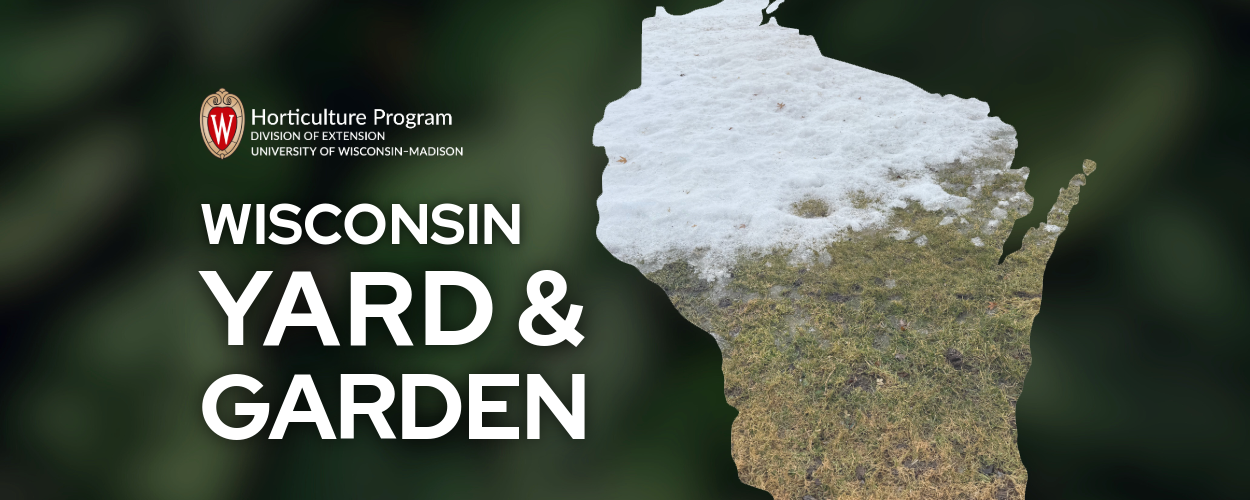
Unusually mild weather across Wisconsin gave us a break from what has been a very frigid winter. The warm weather was nice, but winter is not over. Since it is just mid-February, is a thaw such as this a concern for plants in landscapes and yards?
Trees and shrubs should not be negatively impacted as they are still dormant. True dormancy has two requirements to be met before growth resumes in spring. First, trees and shrubs need to be exposed to a minimum temperature for the required time to release buds from dormancy. That requirement has not been met yet, and the fact we saw significant subzero temperatures did not accelerate the process.
The second requirement to break dormancy in spring is an accumulation of warm temperatures measured in heat units called degree days. So even when cold requirements are met, trees and shrubs need to then be exposed to a certain amount of heat units to trigger growth processes allowing buds to break. Degree days accumulate as the average daily temperature goes above 50 degrees. So even though it may have hit daytime highs in the 50s or even sixty last week, nighttime temperatures were back in the 30-degree range. As a result, degree days did not really have a chance to start accumulating as the daily average was not above 50. The net result? Dormancy continues.
Despite warm temperatures, most of far northern and northwest Wisconsin still has plenty of snow cover. For much of southern and eastern Wisconsin, lack of snow cover presents a concern for a variety of herbaceous landscape plantings, such as perennials, groundcovers, and strawberries. If winter mulch was applied last fall, these plantings should be fine. If not, the concern with the mild weather is that the soil surface thaws during the day but freezes again at night. This alternating freezing and thawing can damage crowns and roots. It is not too late to add beneficial mulch such as straw.
Snow melting away may reveal feeding damage from rabbits or voles on stems of shrubs this winter. Not much can be done for tissue already damaged. However, take steps to prevent further damage this winter and early spring by protecting stems with a chicken wire barrier.
Lawns that are bare of snow should just be left alone. Resist the temptation to start any lawn care practices until the ground thaws. Once conditions dry out, the only thing that should be done is raking up any leaves or debris. Wait until sometime in May, depending on spring weather and specific location in Wisconsin, before considering fertilization or crabgrass control.

About the Author
Bruce Spangenberg is a Horticulture Outreach Specialist with UW-Madison Division of Extension. Get answers to your lawn, landscape and garden questions anytime at “Ask Your Gardening Question.”