

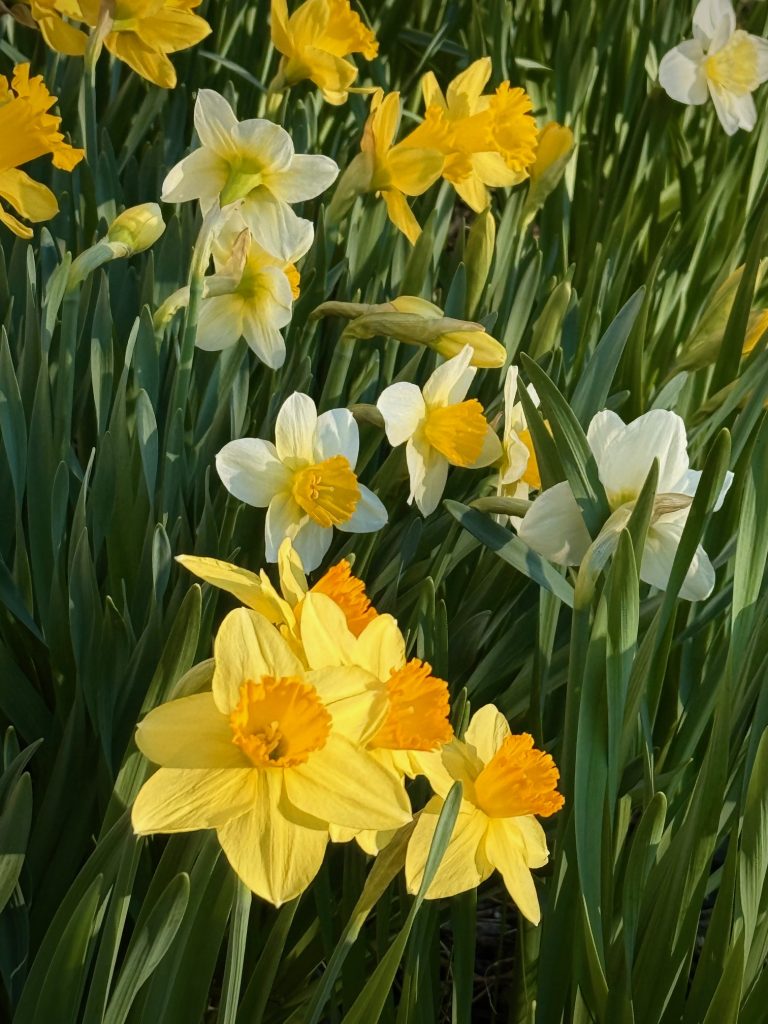
Spring-flowering bulbs providing dependable splashes of color are a welcome sight as winter fades. Now is the time to plan for a dazzling landscape display next spring. Following just a few simple guidelines for planting this fall provides great color every spring!
Bulbs purchased to plant this fall, or those that are already in place in the landscape, are packed with all the energy they need to start growing next spring. The energy necessary to break dormancy, grow shoots, and develop flowers is produced and stored during the prior growing season. This is why one important rule of spring-flowering bulb care is to allow leaves to remain after bloom each year. These green leaves take in sunlight and convert to storable energy. Bulbs grown in production nurseries for sale this fall have gone through this same process.
Spring-flowering bulb structures are remarkably similar to seeds. Like seeds, there is a dormant living portion that becomes the growing plant, stored energy, and some sort of protective cover. Examples include true bulbs such as tulips, narcissus (daffodils), snowdrops, and hyacinth, along with corms, such as crocus. When choosing bulbs at garden center outlets, look for healthy, unblemished structures and avoid those that are off-color, soft, and diseased. Smaller yet healthy-looking bulbs mixed in with larger ones of the same kind may not flower the first spring after planting.
Choose the proper location, and spring-flowering bulbs will be dependable year after year. Good soil drainage is the first critical criteria for planting sites; sitting in wet soils is the one big reason plantings may fail. Heavier clay soils can be amended with organic matter, such as compost, peat, or rotted manure, to a depth of about eight inches. Likewise, adding these materials to excessively dry, sandy soils can help hold more moisture.
Ensure there will be adequate sunlight for spring-flowering bulbs, even after bloom. Allowing green leaves to produce the energy needed for ongoing productivity is a second key criteria for planting sites. Oftentimes those that bloom early planted under shade trees have enough time before the tree foliage develops and casts significant shade. Bulbs planted in excessively shaded sites, however, may decline each successive year because of insufficient sunlight.
Squirrels digging up recently planted bulbs in fall is often an issue. One remedy is spreading poultry wire just under the soil surface after planting. This prevents squirrels from digging them up, but next spring shoots will easily emerge through the holes in the buried wire.
Do some research on all spring-flowering bulb choices and their bloom time. With some planning, landscapes may have continuous color displays from early to late spring!

About the Author
Bruce Spangenberg is a Horticulture Outreach Specialist with UW-Madison Division of Extension. Get answers to your lawn, landscape and garden questions anytime at “Ask Your Gardening Question.”